
United Wagon Company Wins Major Deutsche Bahn Contract
United Wagon Company’s innovative Sggrs80 flatcar secured a major Deutsche Bahn contract, proving Russian railcar manufacturing’s global competitiveness. Discover how they mastered European standards!
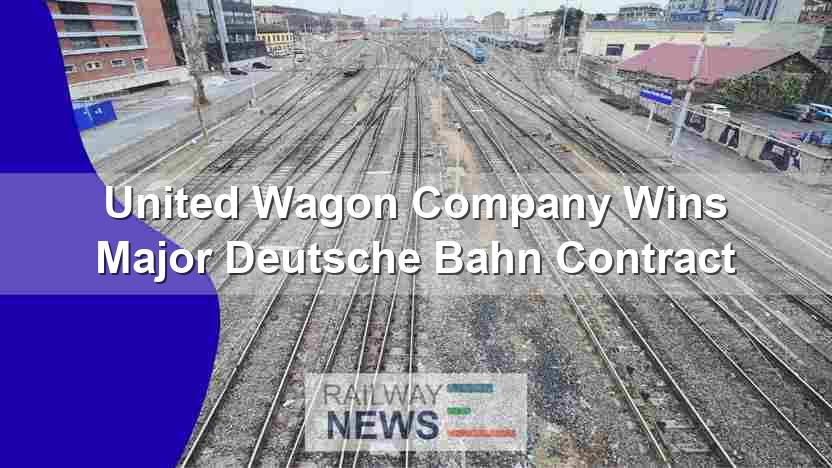
This article examines the significant contract awarded to United Wagon Company (UWC) by Deutsche Bahn (DB), Germany’s national railway company, for the supply of Sggrs80 articulated container flatcars. This deal represents a notable achievement for UWC, demonstrating its capacity to meet the stringent quality and technical standards demanded by a leading European railway operator. The success highlights the growing international competitiveness of Russian railcar manufacturing and the complexities involved in navigating international regulations and supply chains. The analysis will delve into the technical specifications of the Sggrs80 flatcar, the strategic implications for UWC’s international expansion, and the broader context of the global rail freight market. We will explore the challenges faced by UWC in securing the contract, the innovative design features of the flatcar, and the long-term prospects for this collaboration between a Russian manufacturer and a major European customer. Finally, we will assess the implications of this deal for both UWC and the wider rail freight industry.
Technical Specifications and Design Innovations of the Sggrs80 Flatcar
The Sggrs80 articulated container flatcar (a specialized railcar designed to transport multiple containers) boasts a payload capacity of 108.6 tonnes, allowing it to efficiently transport several standard-sized ISO containers, tank containers, and swap bodies with a combined mass of up to 36 tonnes. A key feature is its lightweight design compared to existing European models, achieved through advanced materials and manufacturing techniques. The reduced weight contributes to increased efficiency by maximizing payload while maintaining compliance with axle load limits (22.5 tonnes per axle). Additionally, the flatcar is built to operate on the standard 1,435mm European rail gauge. This attention to detail and adherence to European Technical Specifications for Interoperability (TSI) standards reflects UWC’s commitment to meeting DB’s exacting requirements.
UWC’s Strategic Expansion into the European Market
Securing this contract represents a significant milestone in UWC’s strategic expansion into the European market. The company successfully competed against established European and American manufacturers, demonstrating its ability to offer competitive products and services. UWC’s Managing Director, Maxim Kuzemchenko, emphasizes the ambitious nature of this undertaking, noting the decision to offer a sophisticated design rather than a simpler model aimed at less demanding freight companies. This proactive approach underscores UWC’s commitment to quality and its ability to meet the highest industry standards. The contract also provides UWC with the opportunity to showcase its manufacturing capabilities and build stronger relationships with European customers and suppliers.
Meeting European Standards and Regulatory Compliance
Compliance with European regulations and standards was paramount in securing the DB contract. UWC underwent a rigorous process, including research and development, collaboration with German engineers, and thorough study of existing European standards. The company also invested in preparing its manufacturing facilities and personnel to meet the necessary certifications. The successful completion of car assembly certification for compliance with the European TSI standard is a testament to UWC’s dedication to meeting these stringent requirements. This commitment to regulatory compliance is crucial for accessing and successfully operating within the European market.
Conclusion: Implications for UWC, DB, and the Global Rail Freight Industry
The UWC-DB contract signifies a notable development in the global rail freight industry. For UWC, it represents a major breakthrough in penetrating the competitive European market, showcasing its capabilities and solidifying its position as a significant player in international railcar manufacturing. The successful delivery of high-quality, compliant rolling stock strengthens UWC’s reputation and opens doors for future contracts. For DB, the partnership with UWC provides access to a reliable supplier of high-capacity, efficient flatcars, contributing to its efforts to increase rail freight business. The collaboration showcases the potential for international cooperation in the rail sector, highlighting the benefits of leveraging diverse manufacturing expertise. The lightweight design of the Sggrs80 demonstrates advancements in rail technology, driving efficiency gains throughout the industry. The success of this project highlights the importance of meeting stringent quality and safety standards, as well as the benefits of international collaboration in the rail industry. This contract serves as a model for future partnerships between Eastern and Western railway companies, demonstrating the potential for mutual benefit and growth within the global rail freight market. The long-term implications of this agreement could lead to further technological advancements in railcar manufacturing and increased collaboration between manufacturers across geographical boundaries.

Railway infrastructure, rolling stock and transport technologies specialist focused on global rail industry developments, high-speed rail systems, signaling technologies and freight transportation. Covering railway investments, public transport modernization, rail operations and international mobility projects across Europe, Asia and North America.
RELATED POSTS
September 6, 2026 5:19 am
Hitachi delivered Taiwan's first N700ST high-speed train from Japan in...

September 5, 2026 4:19 pm
CPK launched formal tender talks with four consortia to design...
September 6, 2026 1:17 am
Hitachi Toshiba Supreme Consortium confirmed the first of 12 N700ST...
September 6, 2026 6:17 am
Hungary ordered a national ban on most freight trains from...
September 5, 2026 6:17 pm
Universal Signalling won a deal to install its U-Cross system...
September 6, 2026 8:17 am
DB InfraGO reopened the Nuremberg-Regensburg line in Bavaria on 31...