
ADB’s Rail Revolution: Transforming CAREC Connectivity
Unlock Central Asia’s rail potential! ADB’s technical assistance boosts efficiency, interoperability, and economic growth through strategic railway development.
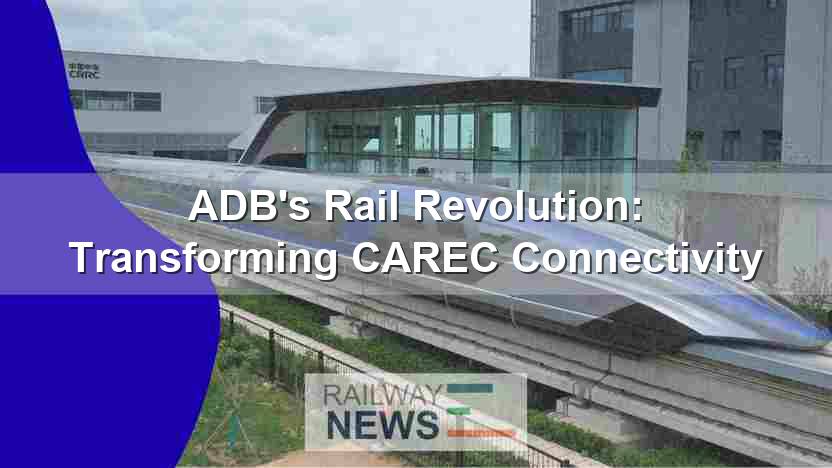
This article examines the Asian Development Bank’s (ADB) crucial role in bolstering railway infrastructure and operations within the Central Asia Regional Economic Cooperation (CAREC) member states. The ADB’s commitment extends beyond mere financial investment; it encompasses vital technical assistance designed to transform the region’s railway sector. This assistance is strategically focused on enhancing efficiency, promoting interoperability, and ultimately, fostering economic growth by shifting freight transport from road to rail. The multifaceted approach adopted by the ADB addresses critical issues, including market research, financial restructuring, and the development of a detailed regional rail traffic model. By facilitating the transition from landlocked to land-linked economies, the ADB’s initiative aims to unlock the immense potential of rail transport in the CAREC region and foster significant economic integration within Central Asia and beyond.
Improving Rail Connectivity in CAREC
The CAREC region, encompassing eleven countries including Afghanistan, Azerbaijan, China, Georgia, Kazakhstan, Kyrgyzstan, Mongolia, Pakistan, Tajikistan, Turkmenistan, and Uzbekistan, faces significant infrastructure challenges. Over-reliance on road transport for freight contributes to increased costs, delays, and inefficiencies. The ADB recognizes the strategic importance of developing a robust and efficient regional railway system to overcome these limitations. Their technical assistance is pivotal in addressing these challenges by fostering cooperation among member states, harmonizing railway standards, and implementing best practices in railway operations and management.
ADB’s Technical Assistance Grant: A Multifaceted Approach
The ADB’s $2 million grant represents a targeted investment in upgrading Central Asian rail networks. This funding is not simply directed at infrastructure development but also focuses on crucial soft-infrastructure improvements. The grant facilitates market research to identify areas requiring immediate attention and to inform the development of a detailed regional rail traffic model. This model will provide critical data for optimized route planning, efficient resource allocation, and ultimately, enhanced capacity utilization. Additionally, the grant will procure essential expertise in several key areas: financial restructuring to improve the fiscal health of railway companies, effective marketing strategies to attract greater freight volumes, robust asset management practices to maximize the lifespan and efficiency of rail infrastructure, and crucial improvements in interoperability and railway safety standards.
Addressing Challenges and Promoting Interoperability
A significant hurdle to efficient regional rail transport lies in the lack of standardization and interoperability between national railway networks. Different gauge widths (the distance between the rails), signaling systems, and operational procedures create bottlenecks and hinder seamless cross-border transport. The ADB’s technical assistance program explicitly addresses this by supporting the harmonization of railway standards and the implementation of modern interoperability technologies. This includes facilitating the adoption of internationally recognized safety standards, which enhances both the efficiency and safety of rail operations throughout the CAREC region. Addressing these challenges is essential for the long-term success and viability of the regional rail network.
The 2030 CAREC Railway Strategy and Beyond
The CAREC member states have adopted a long-term railway development strategy extending to 2030. This strategy provides a roadmap for the coordinated development of rail infrastructure and operations throughout the region. The ADB, serving as the CAREC Secretariat since 2001, plays a crucial coordinating role in this initiative. The technical assistance grant directly supports the goals outlined in this strategy by providing the necessary tools and expertise to overcome critical bottlenecks and ensure the successful implementation of the long-term vision. Looking beyond 2030, the ADB’s ongoing commitment signifies a long-term partnership dedicated to sustainable rail development and regional economic growth within CAREC.
Conclusions
The ADB’s provision of technical assistance to CAREC countries represents a significant step towards modernizing and optimizing the region’s railway infrastructure. The $2 million grant is not just a financial injection; it is a strategic investment in capacity building, technological advancement, and operational efficiency. The multifaceted approach, encompassing market research, financial restructuring, asset management, interoperability enhancements, and safety improvements, addresses a broad spectrum of challenges hindering efficient rail transport. The initiative’s success hinges on fostering collaboration among member states, harmonizing standards, and implementing best practices. The project’s long-term goal is to transform the CAREC region from landlocked to land-linked, shifting freight transportation from road to rail, leading to reduced costs, improved transit times, and significant economic growth. By facilitating this transition and supporting the implementation of the 2030 CAREC Railway Strategy, the ADB is not only contributing to improved transportation but also fostering sustainable economic development and regional integration. The ADB’s commitment signifies a long-term partnership, promising a future where railways play a central role in the economic prosperity of the CAREC region. The sustained collaboration and implementation of the strategies outlined will undoubtedly create a more efficient, safer, and economically viable rail network for the benefit of all CAREC member states.

Railway infrastructure, rolling stock and transport technologies specialist focused on global rail industry developments, high-speed rail systems, signaling technologies and freight transportation. Covering railway investments, public transport modernization, rail operations and international mobility projects across Europe, Asia and North America.
RELATED POSTS

October 8, 2026 12:18 pm
Siemens Mobility signed an agreement with VinSpeed to supply 350...

October 5, 2026 6:12 pm
AECOM and Jacobs secured a contract in September 2026 to...

October 4, 2026 11:08 pm
Sound Transit confirmed the September 30 opening of Seattle Pinehurst...
October 6, 2026 9:17 am
Illinois approved $1.1M in state funds to upgrade two McHenry...

October 6, 2026 2:14 am
Union Pacific launched export rail shipments with Ferromex to deliver...
October 6, 2026 5:12 pm
Cleveland RTA confirmed the deferral of planned bus and rail...