
Warsaw Tram Expansion: Training, EU Funding, and Growth
Warsaw’s trams expand with operational training and EU funding, aiming to modernize the city’s rail system through comprehensive drills for a newly extended line, ensuring efficient service under emergency conditions, all supported by EU support for urban transit improvements.
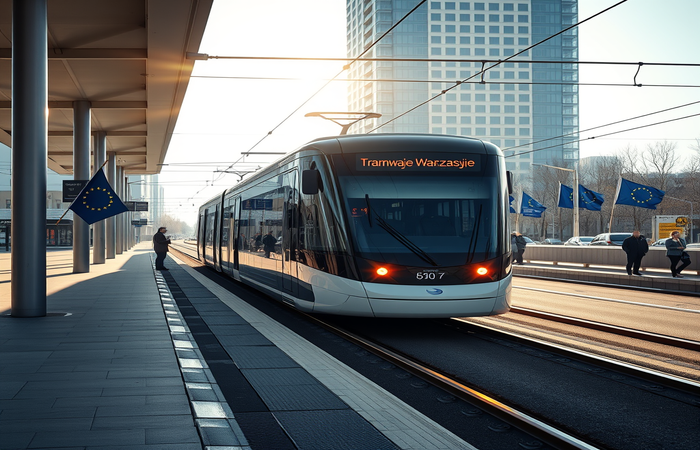
Warsaw, Poland – June 14, 2024 – The Warsaw Municipal Transport Authority (ZTM) is actively preparing for the expansion of its tram network with detailed operational training exercises focusing on the new Line 19 extension to the Stegny terminus, a key segment of the Wilanów tram route. These exercises are designed to ensure the efficient and safe operation of the extended line, particularly under emergency conditions. This expansion is part of a broader initiative to modernize and expand Warsaw’s urban rail system, supported significantly by European Union (EU) funding. The project involves not only extending the existing tram network but also procuring new, low-floor trams and upgrading supporting infrastructure, emphasizing passenger comfort and environmental sustainability. This article will delve into the details of the operational training, the progress of the Wilanów tram route, and the pivotal role of EU funding in shaping the future of Warsaw’s public transportation.
Preparing for Launch: Operational Training on the New Line
The ZTM’s recent operational training exercises on the Line 19 extension to Stegny represent a crucial step in preparing for the new route’s launch. These drills were designed to simulate a variety of potential emergency scenarios, encompassing technical failures, track obstructions, and the need for collaborative responses from different operational teams. The exercises went beyond simply testing the readiness of individual trams and equipment; their primary objective was to assess the effectiveness of teamwork and communication among various service departments. Tasks included simulating incidents requiring fault repairs, restoring track usability, and managing tram traffic safely. Specifically, the training included complex tasks like the recovery of derailed trams or the lifting of damaged units. These exercises aim to enhance the speed and efficiency of responses to any incidents affecting tram operations, thus ensuring service continuity and passenger safety.
The Wilanów Tram Route: Connecting Communities
The Wilanów tram route is a strategically important project designed to improve connectivity within Warsaw, especially for the residents of the southern districts. The new extension to Stegny, which will be served by Line 19, will connect the Św. Bonifacego terminus, thereby linking Dolny Mokotów with the Central Railway Station and the major thoroughfare of Jana Pawła II Avenue. This extension complements the existing lines 14 and 16, which already serve the Wilanów district, connecting it with the city center and other key areas, including Żoliborz, Bielany, and Ochota. The initial phases of the Wilanów tram route have already shown remarkable success, with the two launched lines experiencing a high ridership. Within the first six months of operation, lines 14 and 16 collectively carried over 10.5 million passengers, demonstrating the public’s strong preference for the efficient and reliable tram service. Line 16, in particular, has proven to be significantly popular, accounting for a majority of the passenger volume. The introduction of the Stegny extension is expected to further enhance the network’s utility and attract even more users by providing better transportation options for both long-distance and local trips.
EU Funding: A Catalyst for Modernization
European Union (EU) funding has been instrumental in driving the modernization and expansion of Warsaw’s urban rail system. This support has allowed for the development of vital infrastructure and the procurement of new rolling stock, directly contributing to significant improvements in the city’s public transport network. The construction of the Wilanów tram route extension, for example, has benefited from over EUR 120 million in EU funding, which is part of a broader project with a total cost of EUR 280 million. Additionally, the EU has supported projects like the construction of the Annopol tram depot, which incorporates green technologies and is partially powered by renewable energy sources. The EU’s contribution has also been crucial in funding the acquisition of new metro trains, low-floor tram cars, and low-emission buses, substantially improving the quality, efficiency, and sustainability of public transport services across Warsaw. These investments demonstrate the EU’s commitment to urban development and improving the quality of life for Warsaw’s residents.
Looking Ahead: Continued Growth and Development
Warsaw’s ongoing investments in its tram and public transport infrastructure, supported by substantial EU funding, highlight the city’s commitment to building a modern, efficient, and sustainable transport system. The completion of the Stegny extension and the launch of Line 19 will be a significant milestone, expanding the network’s reach and providing residents with improved transportation options. The ZTM’s focus on rigorous operational training ensures that the new lines will operate safely and efficiently from the outset. The city’s continued procurement of new trams, particularly low-floor models that emphasize passenger comfort and accessibility, underscores its commitment to providing a high-quality transit experience. The EU’s financial support has been and continues to be critical in making these advancements possible, enabling Warsaw to invest in the future of its public transportation, thus promoting urban mobility, sustainability, and the overall well-being of its citizens.
Conclusion
To summarize, the expansion of Warsaw’s tram network, particularly the upcoming launch of the Line 19 extension to the Stegny terminus, marks a significant step forward in the city’s commitment to modernizing and enhancing its public transportation infrastructure. The recent operational training exercises conducted by the ZTM are a critical element in ensuring the safe and efficient operation of the new route, refining emergency response protocols, and fostering seamless cooperation among various operational teams. The Wilanów tram route, with lines 14 and 16 already in service, has proven to be extremely popular, highlighting the public’s demand for efficient and reliable tram services. The extension to Stegny will further improve connectivity, linking key areas and enhancing accessibility for residents. The pivotal role of EU funding in supporting these developments cannot be overstated. These funds have enabled the city to invest in new rolling stock, upgrade infrastructure, and implement sustainable practices. Warsaw’s strategic approach to urban development, combining technological advancements, operational preparedness, and substantial financial backing, positions the city as a leader in providing modern, accessible, and environmentally conscious public transit.
**Summary of Companies:**
* **Warsaw Municipal Transport Authority (ZTM):** The primary public transport operator in Warsaw, responsible for the planning, operation, and maintenance of the tram and bus networks.
* **Tramwaje Warszawskie (Warsaw Trams):** A subsidiary of ZTM, specifically focused on the operation and maintenance of the tram system.

Railway infrastructure, rolling stock and transport technologies specialist focused on global rail industry developments, high-speed rail systems, signaling technologies and freight transportation. Covering railway investments, public transport modernization, rail operations and international mobility projects across Europe, Asia and North America.
RELATED POSTS

September 5, 2026 4:19 pm
CPK launched formal tender talks with four consortia to design...
September 5, 2026 7:14 pm
HS2 Ltd signed renegotiated civils contracts with EKFB and Align...

September 6, 2026 4:12 am
Alstom delivered the first of 100 new G Class trams...
September 6, 2026 8:17 am
DB InfraGO reopened the Nuremberg-Regensburg line in Bavaria on 31...
September 5, 2026 6:17 pm
Universal Signalling won a deal to install its U-Cross system...
September 6, 2026 12:20 pm
Indian Railways ordered a probe after a fire destroyed 2...