
AI in Rail Systems: Innovations Shaping Future Transportation
AI is transforming rail systems worldwide by optimizing maintenance through predictive analytics and enhancing safety with autonomous trains, all while aligning with Industry 5.0 principles of human-centric innovation and circular economies, aiming to reduce downtime, improve energy efficiency, and enhance passenger experiences.
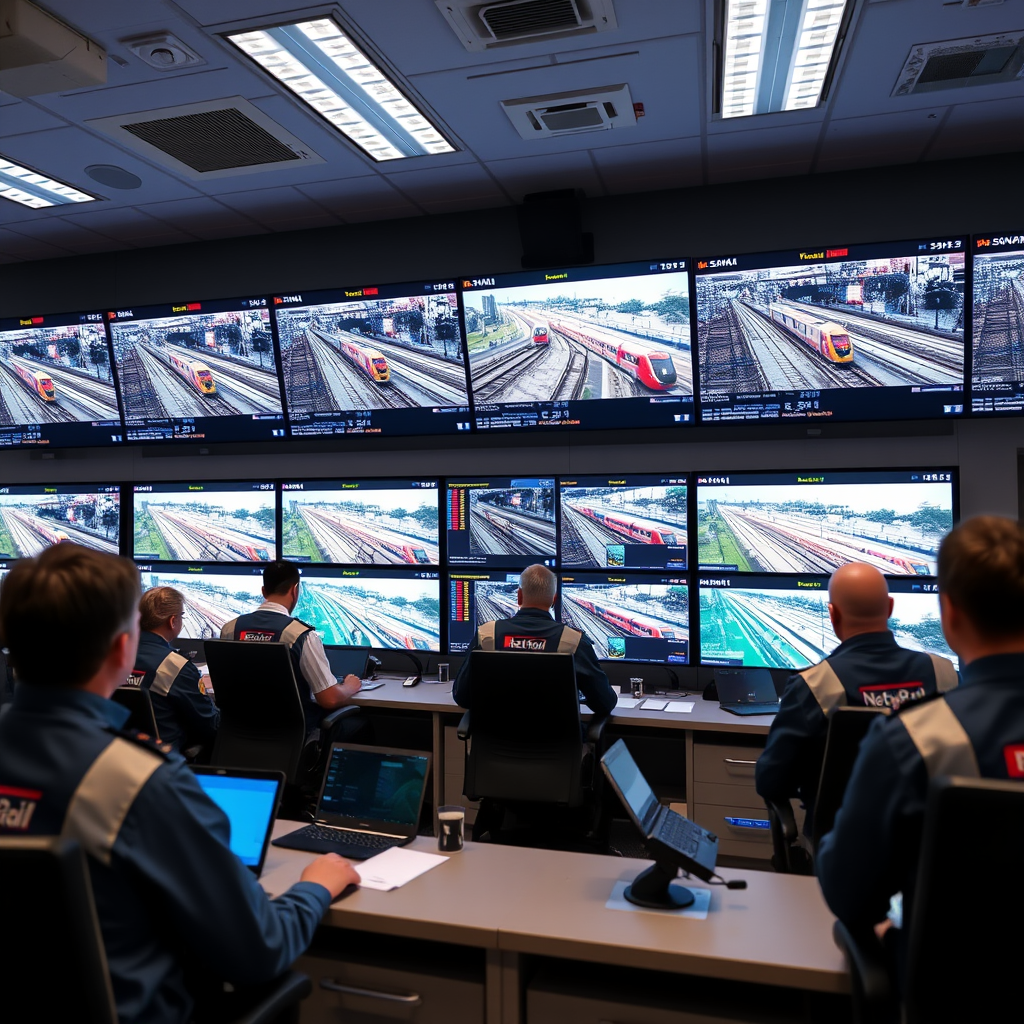
Introduction
The railway industry, a cornerstone of global mobility for over two centuries, is undergoing a seismic shift driven by artificial intelligence (AI). As urbanization intensifies and sustainability becomes imperative, rail networks worldwide are adopting AI to address systemic challenges: aging infrastructure, operational inefficiencies, and rising passenger expectations. By 2025, AI has transitioned from experimental pilots to mission-critical deployments, reshaping maintenance, safety, and passenger experiences while aligning with Industry 5.0 principles of human-centric innovation and circular economies 3 7.
From predictive maintenance systems that preempt equipment failures to autonomous trains navigating complex environments, AI’s applications are vast. Hitachi Rail’s HMAX platform, for instance, leverages NVIDIA’s edge AI to reduce service delays by 20%, while Alstom’s AI-driven HealthHub™ monitors 150,000 vehicles globally 2 8 3. Yet, this transformation is not without hurdles: cybersecurity risks, ethical data governance, and the need for global standardization loom large. This article explores how AI is redefining rail systems, balancing breakthroughs with challenges, and spotlighting the collaborative efforts steering the industry toward a smarter, sustainable future.
Predictive Maintenance: From Reactive Repairs to Proactive Solutions
AI is revolutionizing rail maintenance by replacing rigid schedules with data-driven predictions. Hitachi Rail’s HMAX, powered by NVIDIA’s IGX edge computing platform, integrates IoT sensors across trains and tracks to monitor parameters like vibration and temperature. This enables operators to predict bearing failures or track defects days in advance, reducing unplanned downtime by 30% and extending maintenance cycles by 25% 28. Alstom complements this with HealthHub™, which uses machine learning to analyze historical and real-time data from 150,000 supervised vehicles, optimizing energy use and preempting communication failures in signaling systems 3 9.
Europe’s Rail-funded projects like DAYDREAMS further refine predictive models by incorporating environmental data and human behavior patterns. These systems not only forecast maintenance needs but also simulate repair impacts on service continuity, enabling operators to schedule work during low-traffic windows 7. The result? A 40% reduction in idling fuel costs and a leaner, greener maintenance paradigm 8.
Autonomous Trains and Intelligent Signaling
Fully autonomous trains are no longer speculative. Projects like safe.trAIn, led by Siemens and funded by the German government, are developing AI frameworks for driverless regional trains. Using sensor fusion (LiDAR, radar, and cameras), these systems detect obstacles up to 1,000 meters ahead, classify threats, and initiate emergency braking—surpassing human reaction times 5 10. Thales Alenia Space’s collaboration with Delfox on Smart Collision Avoidance employs reinforcement learning to automate satellite-like decision-making for trains, reducing collision risks in dense networks 5.
Signaling systems are also evolving. Alstom’s AI-enhanced Communications-Based Train Control (CBTC) optimizes traffic flow by dynamically adjusting train speeds and headways, increasing network capacity by 17% on routes like Stuttgart’s core line 6 7. Meanwhile, digital twins simulate network-wide scenarios, enabling operators to test AI-driven adjustments in virtual environments before real-world implementation 7.
Enhancing the Passenger Journey
AI is personalizing rail travel while streamlining operations. Deutsche Bahn’s SEMMI, an AI-powered chatbot, provides real-time updates via voice or text, reducing station staff workload by 35% and improving passenger satisfaction scores 6. At stations, video analytics tools like Peak Spotting predict crowd surges, allowing operators to deploy additional trains or redirect passengers during peak hours 6.
Onboard, IoT sensors adjust cabin conditions based on passenger preferences, while AI-driven platforms like Alstom’s My-TRAC offer multimodal travel suggestions, integrating real-time data from buses, bikes, and ride-shares 7. For accessibility, projects like DIVA (Distributed Intelligent Video Analytics) guide visually impaired travelers through stations using real-time navigation cues 7.
Cybersecurity and Ethical Governance
As rail systems digitize, cybersecurity becomes paramount. The safe.trAIn consortium addresses this by developing the DIN DKE SPEC 99004 standard, which establishes safety architectures for AI in autonomous trains 10. Alstom’s Trustworthy AI Framework prioritizes transparency, with explainable algorithms audited against ISO 9000 standards to ensure decisions align with human oversight 9.
Ethical challenges persist, particularly in data privacy. Europe’s General Data Protection Regulation (GDPR) mandates strict controls over passenger data usage, requiring anonymization in crowd analytics tools 7. Additionally, AI’s energy footprint—a concern for sustainability-focused operators—is being mitigated through edge computing solutions like NVIDIA’s IGX, which processes data locally on trains, reducing cloud dependency 2 8.
Collaboration: The Engine of Innovation
No single entity can drive AI adoption alone. Hitachi Rail’s partnership with NVIDIA exemplifies cross-industry synergy, combining edge AI with railway expertise to optimize HMAX’s predictive capabilities 2 8. Similarly, Alstom collaborates with academia to refine AI models for obstacle detection, while Europe’s Rail funds pan-European projects like RAILS, which tests AI-driven health monitoring for level crossings 7.
Standardization bodies like DIN and DKE harmonize safety protocols, ensuring interoperability between legacy systems and AI upgrades. The EU’s Connecting Europe Facility (CEF) accelerates 5G rollout, providing the low-latency connectivity essential for autonomous train operations 7.
Conclusion
AI is undeniably redefining rail transportation, offering solutions to age-old challenges while unlocking new efficiencies. Predictive maintenance slashes downtime, autonomous trains enhance safety, and passenger-centric tools elevate travel experiences. Yet, the journey is fraught with complexities: cybersecurity threats demand robust safeguards, ethical AI requires transparent governance, and legacy infrastructure struggles to integrate with cutting-edge systems.
Collaboration emerges as the linchpin of progress. Hitachi and NVIDIA’s edge AI, Siemens’ safe.trAIn, and Alstom’s HealthHub™ exemplify how partnerships bridge technological gaps. Standardization efforts, led by bodies like DIN and DKE, provide the frameworks needed for scalable, secure AI adoption.
Looking ahead, the rail industry must balance innovation with responsibility. Investments in workforce reskilling, ethical AI training, and inclusive infrastructure will determine whether AI becomes a force for equitable mobility or a source of fragmentation. By embracing this balance, the sector can harness AI to build resilient, sustainable networks capable of meeting 21st-century demands—proving that the future of rail is not just automated, but profoundly human-centric.
Key Companies Leading the AI Rail Revolution
Hitachi Rail: Partners with NVIDIA on HMAX, reducing delays by 20% through predictive maintenance 2 8.
Alstom: Supervises 150,000 vehicles with HealthHub™ and pioneers GDPR-compliant AI for signaling 3 9.
Siemens Mobility: Leads safe.trAIn, setting safety standards for autonomous trains 10.
Deutsche Bahn: Deploys SEMMI chatbots and AI-driven crowd management 6.
Thales: Develops collision avoidance systems for autonomous rail operations 5.
These innovators exemplify the synergy of technology and collaboration, positioning AI as the cornerstone of rail’s future.

Railway infrastructure, rolling stock and transport technologies specialist focused on global rail industry developments, high-speed rail systems, signaling technologies and freight transportation. Covering railway investments, public transport modernization, rail operations and international mobility projects across Europe, Asia and North America.
COMMENTS