
Israel Railways Expands: Bombardier TWINDEXX Vario Acquisition
The acquisition of 74 Bombardier TWINDEXX Vario double-deck coaches by Israel Railways (ISR) represents a strategic modernization effort that enhances operational flexibility and resource management, aligning with the company’s long-standing partnership with Bombardier to improve passenger experience and infrastructure efficiency.
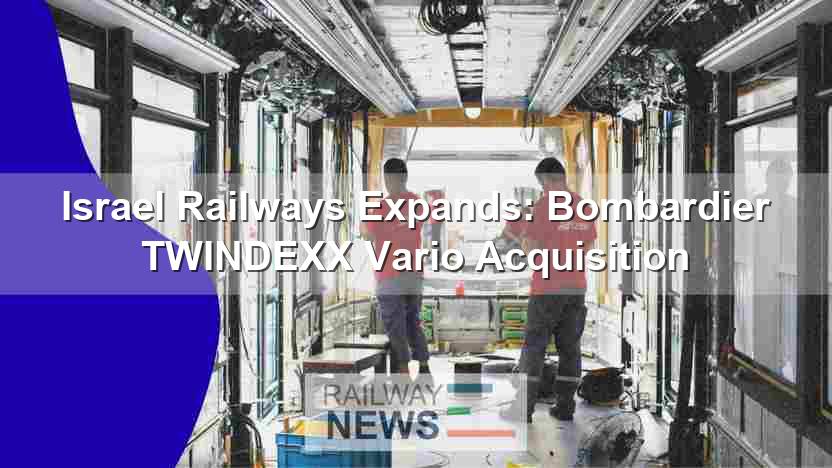
The Expansion of Israel Railways’ Fleet: An Analysis of the Bombardier TWINDEXX Vario Acquisition
This article explores the strategic decision by Israel Railways (ISR) to procure an additional 74 Bombardier TWINDEXX Vario double-deck coaches. This significant investment, representing the seventh consecutive order placed with Bombardier, underscores the ongoing modernization and expansion efforts of ISR. The acquisition, valued at approximately $166 million, builds upon a long-standing partnership and significantly increases ISR’s operational capacity. We will examine the rationale behind this purchase, focusing on the benefits of the single-car concept, the technical specifications of the new rolling stock, the implications for passenger experience, and the broader impact on the Israeli railway industry and infrastructure. The analysis will also touch upon the collaborative aspects of the project, highlighting Bombardier’s commitment to local industry development within Israel.
The Single-Car Concept and Operational Flexibility
The core advantage of the TWINDEXX Vario lies in its single-car design. This modular approach allows ISR to configure trainsets according to fluctuating passenger demand. Unlike fixed-length trainsets, this flexibility enables ISR to operate trains with varying numbers of cars, optimizing capacity for peak and off-peak hours. This adaptable system ensures efficient resource allocation, minimizing unnecessary energy consumption and operational costs associated with running partially filled longer trains. The ability to easily modify train length provides a significant advantage in terms of managing service frequency and responding to seasonal or event-related changes in passenger volume.
Technical Specifications and Enhancements
The order comprises a mix of car types: 11 control cars (equipped with driver cabs), 11 intermediate cars (with dedicated accessibility features for passengers with reduced mobility), and 52 trailer cars. The control cars are designed to be compatible with both TRAXX electric locomotives and diesel locomotives, offering operational versatility. A notable detail is the standardization of the driver’s desk in the control cars, mirroring the design found in the TRAXX locomotives to enhance operational consistency and driver familiarity. This consistency minimizes training requirements and reduces the potential for human error. The entire fleet adheres to high safety, comfort, and efficiency standards.
Passenger Experience and Accessibility
The increased capacity resulting from this acquisition directly benefits passengers. With seating for approximately 1,000 passengers in an eight-car configuration, the expansion significantly improves passenger comfort by reducing overcrowding, especially during peak travel times. The inclusion of dedicated space for passengers with reduced mobility demonstrates ISR’s commitment to inclusivity and accessibility. The overall improved passenger experience fosters greater ridership, making rail travel a more attractive and comfortable option compared to other modes of transportation.
Economic Impact and Industrial Collaboration
This order isn’t merely about acquiring new rolling stock; it signifies a commitment to boosting the Israeli railway industry. Bombardier’s strategy of progressively developing the local supply base and engaging M.T.R. Dimona, an Israeli final assembly site, underscores the economic benefits of this partnership. This localized production creates jobs, transfers technological know-how, and fosters the growth of the domestic railway sector. Moreover, the investment in Bombardier’s facilities in Saxony, Germany – Görlitz (car body production) and Bautzen (serial production) – further emphasizes the global collaborative nature of this project, benefiting both Israeli and European economies.
Conclusions
The procurement of 74 additional Bombardier TWINDEXX Vario coaches by Israel Railways represents a strategic move with far-reaching implications. The decision is grounded in the advantages offered by the single-car concept, which provides unmatched operational flexibility and allows ISR to adapt to fluctuating passenger demands. The technical specifications of the new rolling stock, including the standardization of driver cabs and dedicated accessibility features, enhance operational efficiency and passenger experience. The project demonstrates a commitment to improving both the capacity and accessibility of the Israeli railway network. The collaboration between ISR and Bombardier extends beyond the simple acquisition of trains. It represents a significant investment in the local Israeli economy through job creation and technological transfer, fostering growth within the domestic railway industry. This acquisition, therefore, is not simply an upgrade to the railway system; it’s a strategic investment in the future of both passenger transportation and economic development in Israel, showcasing a successful example of international collaboration in the rail sector. The long-term benefits are expected to be substantial, improving the efficiency, capacity, and overall attractiveness of Israel’s rail network. The success of this project serves as a model for other railway operators looking to modernize their fleets while simultaneously stimulating economic growth in their respective regions. The emphasis on local industry involvement is particularly noteworthy and sets a positive precedent for future rail infrastructure projects globally.

Railway infrastructure, rolling stock and transport technologies specialist focused on global rail industry developments, high-speed rail systems, signaling technologies and freight transportation. Covering railway investments, public transport modernization, rail operations and international mobility projects across Europe, Asia and North America.
RELATED POSTS

September 5, 2026 4:19 pm
CPK launched formal tender talks with four consortia to design...
September 5, 2026 7:14 pm
HS2 Ltd signed renegotiated civils contracts with EKFB and Align...
September 6, 2026 4:12 am
Alstom delivered the first of 100 new G Class trams...
September 5, 2026 6:17 pm
Universal Signalling won a deal to install its U-Cross system...
September 6, 2026 8:17 am
DB InfraGO reopened the Nuremberg-Regensburg line in Bavaria on 31...
September 7, 2026 11:16 pm
China Railway Tunnel Group completed the 11.3-km underwater Yangtze tunnel...