
$326M US Rail Upgrade: Safety, Efficiency, & Economic Growth
The $326 million federal investment in US railway infrastructure focuses on enhancing safety, efficiency, and economic vitality across various projects, underscoring the commitment to modernizing and improving America’s rail network.
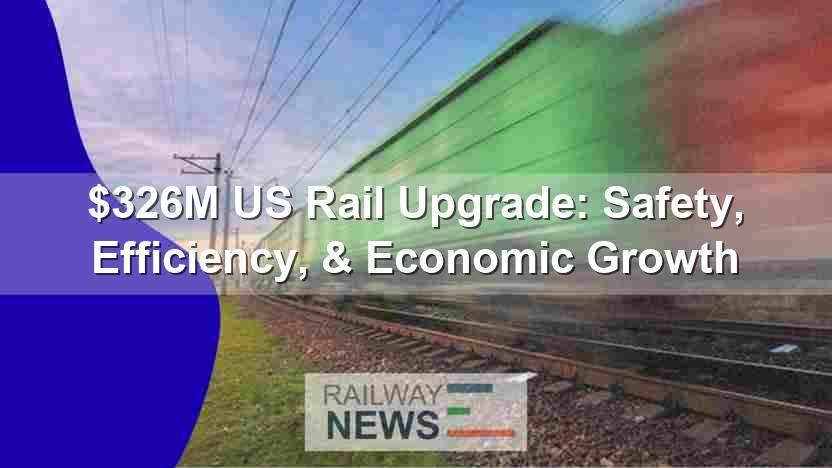
This article examines a significant investment in US railway infrastructure, focusing on the allocation of $326 million in federal funding for various projects across the nation. The funding, awarded by the Federal Railroad Administration (FRA), a branch of the US Department of Transportation, highlights a crucial commitment to improving the safety, efficiency, and economic vitality of the American rail network. This investment underscores the vital role rail transportation plays in the US economy, facilitating both freight movement and intercity passenger travel. We will delve into the specifics of the funding distribution, the types of projects supported, and the broader implications for the future of rail in the United States. The analysis will consider the geographical distribution of the funds, the emphasis on safety improvements, and the potential long-term economic benefits resulting from these infrastructure upgrades. Ultimately, this examination will provide insight into the ongoing efforts to modernize and enhance the nation’s railway system.
Funding Allocation and Project Highlights
The $326 million in funding was dispensed through two primary programs: the Consolidated Rail Infrastructure and Safety Improvements (CRISI) Program and the Special Transportation Circumstances Program. The CRISI Program, authorized under the Fixing America’s Surface Transportation (FAST) Act, prioritizes projects enhancing the safety and efficiency of intercity passenger and freight rail systems. A significant portion, nearly $118 million, targeted rural projects, demonstrating a commitment to improving rail infrastructure in less populated areas. Notable projects included the restoration of intercity passenger rail service along the Gulf Coast ($33 million), the rehabilitation of Sierra Northern Railway’s infrastructure in California ($17 million), and upgrades to Maine’s Pan Am Railways Mainline ($17 million). Improvements at Fullerton Junction Interlocking and the addition of a third main track in California also received considerable funding ($30 million), as did the CREATE Project WA11-Dolton Junction Interlocking in Illinois ($19.2 million).
Safety and Efficiency Improvements
A central theme underlying the funding allocation is the improvement of safety and efficiency across the rail network. Many of the awarded projects directly address these critical aspects. Upgrades to rail crossings, a frequent source of accidents, received substantial investment, contributing to enhanced safety for both rail traffic and road users. The modernization of interlockings (systems controlling the movement of trains through complex junctions) and the addition of extra tracks aim to increase operational efficiency and reduce congestion, ultimately improving reliability and reducing delays. These improvements are not only beneficial for the transportation of goods but also enhance the reliability and appeal of intercity passenger rail service.
Economic Impact and Regional Development
The economic implications of these investments are far-reaching. Improved rail infrastructure fosters economic growth in both rural and urban communities. Efficient freight transport lowers the cost of goods, boosting businesses and consumers alike. Reliable passenger rail service can stimulate tourism and improve accessibility to job centers, contributing to regional development. The projects supported demonstrate the understanding that a robust rail system is not merely a transportation network, but a crucial driver of economic activity. Additionally, the investment in rural areas signifies a commitment to narrowing the economic disparities between urban and rural regions.
Partnerships and Collaboration
The success of these projects hinges on collaboration between various stakeholders. The participation of multiple partners, including state and local governments, private rail companies, and community organizations, underscores the importance of collaborative efforts. This collaborative approach emphasizes the shared responsibility in maintaining and upgrading the nation’s rail infrastructure. The successful implementation of these initiatives will depend on the continued commitment from all parties involved, ensuring the efficient utilization of the awarded funds and the long-term benefits of the projects.
Conclusions
The $326 million investment in US railway infrastructure represents a significant commitment to modernizing and improving the nation’s rail network. The funding, channeled through the CRISI and Special Transportation Circumstances Programs, is targeted towards enhancing safety, efficiency, and economic development. The projects funded exemplify a multifaceted approach, addressing both rural and urban needs, focusing on improving intercity passenger and freight rail service, and promoting increased safety at grade crossings. The allocation demonstrates a clear understanding of the interconnectedness of rail infrastructure, economic growth, and regional development. The emphasis on collaboration between various stakeholders underscores the significance of partnerships in achieving successful implementation and maximizing long-term benefits. This initiative signifies a crucial step towards ensuring the continued viability and competitiveness of the US railway system, contributing to a more efficient, safer, and economically prosperous future for the nation. The long-term effects of these investments will be felt through improved transportation efficiency, increased economic activity in communities across the country, and the enhancement of passenger rail experiences. The success of this funding initiative underscores the critical need for continued investments in railway infrastructure as a vital component of sustainable transportation and economic development in the United States.

Railway infrastructure, rolling stock and transport technologies specialist focused on global rail industry developments, high-speed rail systems, signaling technologies and freight transportation. Covering railway investments, public transport modernization, rail operations and international mobility projects across Europe, Asia and North America.
RELATED POSTS

September 5, 2026 4:19 pm
CPK launched formal tender talks with four consortia to design...

September 5, 2026 7:14 pm
HS2 Ltd signed renegotiated civils contracts with EKFB and Align...

September 6, 2026 4:12 am
Alstom delivered the first of 100 new G Class trams...
September 5, 2026 6:17 pm
Universal Signalling won a deal to install its U-Cross system...
September 6, 2026 8:17 am
DB InfraGO reopened the Nuremberg-Regensburg line in Bavaria on 31...
September 7, 2026 11:16 pm
China Railway Tunnel Group completed the 11.3-km underwater Yangtze tunnel...