
India’s Rail Revolution: LTE, ATP & Safer Trains
The modernization initiative by Indian Railways, involving the implementation of ATP systems and LTE-based MTRC in four critical railway sections, aims to enhance safety, capacity, and punctuality across India’s extensive network, focusing on strategic corridors with high passenger and freight volumes.
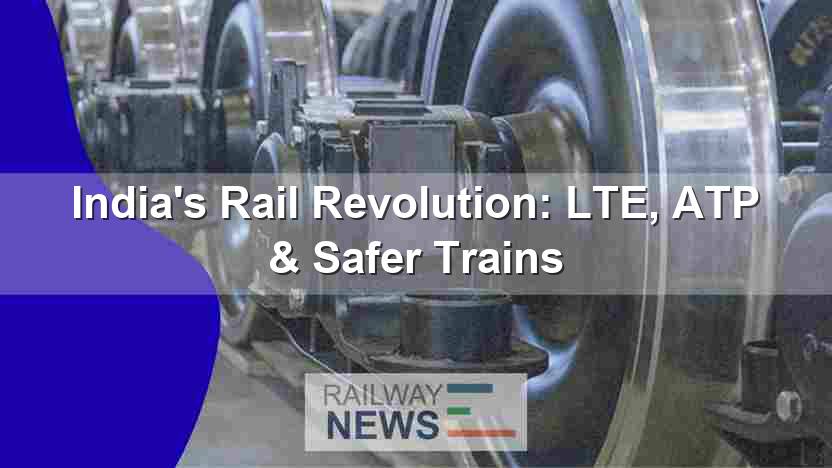
This article explores the significant modernization initiative undertaken by Indian Railways (IR) to upgrade its signaling systems. The project, a collaboration between IR and RailTel Enterprises (REL), a subsidiary of RailTel Corporation of India, focuses on enhancing safety, capacity, and punctuality across four crucial sections of its network. This modernization involves the implementation of cutting-edge technologies, such as the Automatic Train Protection (ATP) system and a Long Term Evolution (LTE)-based Mobile Train Radio Communication System (MTRC). The scale of the project, encompassing hundreds of locomotives and spanning multiple railway zones, underscores its strategic importance in bolstering India’s railway infrastructure and facilitating smoother, safer, and more efficient rail operations. The economic implications, including the substantial investment involved and the potential for future expansion, will also be examined. The implications for improved passenger experience, operational efficiency, and overall railway safety will be analyzed throughout the discussion. The successful execution of this project has the potential to serve as a model for other railway systems globally, facing similar modernization challenges.
Modernizing Signaling Systems: A Focus on Safety and Efficiency
The core of the modernization effort lies in implementing the ATP system. This crucial safety feature automatically applies brakes if a train exceeds a defined speed limit or approaches a signal at danger, significantly reducing the risk of accidents. The integration of ATP with the LTE-based MTRC is a strategic move that enhances operational efficiency and communication. This system provides real-time data transfer, enabling better coordination between train drivers, guards, and control offices, promoting timely interventions and proactive management of rail operations. The improved communication is vital for swift decision-making, particularly during emergencies or unforeseen events.
Network-Wide Impact: Selected Sections and Future Expansions
The initial phase of this upgrade focuses on four high-traffic sections: the Renigunta-Yerraguntla section (South Central Railway), the Jhansi-Bina section (North Central Railway), the Vizianagaram-Palasa section (East Coast Railway), and the Nagpur-Badnera section (Central Railway). The selection of these routes highlights IR’s prioritization of strategic corridors with high passenger and freight volumes. The successful implementation in these sections will likely serve as a pilot project, paving the way for a broader nationwide rollout in the future, further improving the entire Indian railway network’s operational capability.
Technological Advancements: LTE-Based MTRC and Electronic Interlocking
The adoption of LTE technology for the MTRC represents a significant leap forward. LTE offers high-speed data transmission and reliable connectivity, crucial for seamless communication between various stakeholders in the rail network. This allows for real-time monitoring of trains, improved scheduling, and faster response to any issues that may arise. Further improving the system, Electronic Interlocking (EI) systems will be deployed where needed, replacing older electromechanical systems, leading to improved safety and reliability of the system.
Economic Considerations and Project Timeline
The project’s estimated cost of Rs16.09bn ($230.5m) reflects the scale and complexity of the undertaking. While the initial investment is substantial, the long-term benefits in terms of increased safety, improved operational efficiency, and enhanced capacity are expected to outweigh the costs. The planned 24-month completion timeline underlines IR’s commitment to delivering this crucial infrastructure upgrade efficiently.
Conclusion
Indian Railways’ modernization initiative, encompassing the implementation of the ATP system and the LTE-based MTRC, represents a significant step towards enhancing the safety, capacity, and efficiency of its network. The strategic selection of four high-traffic sections for the initial rollout is a testament to a phased approach focused on maximizing impact. The project’s success will not only improve the passenger and freight experience but also demonstrate the power of technological advancements in modernizing railway infrastructure. The adoption of LTE technology for MTRC highlights the commitment to utilizing cutting-edge solutions for enhanced communication and data transfer, which will optimize rail operations. The economic investment underscores the importance placed on infrastructure development and showcases a long-term vision to establish a robust, safe, and efficient rail system. The successful implementation and subsequent expansion of this project will undoubtedly serve as a benchmark for similar modernization efforts globally, demonstrating the positive impacts that investments in modern signaling and communication technologies can have on railway networks worldwide. The collaboration between IR and REL underscores the importance of public-private partnerships in driving crucial infrastructure projects. This project sets a precedent for the integration of advanced technologies into railway systems, improving safety, efficiency, and overall passenger experience, ultimately shaping the future of rail travel in India and influencing best practices globally.

Railway infrastructure, rolling stock and transport technologies specialist focused on global rail industry developments, high-speed rail systems, signaling technologies and freight transportation. Covering railway investments, public transport modernization, rail operations and international mobility projects across Europe, Asia and North America.
RELATED POSTS

September 5, 2026 4:19 pm
CPK launched formal tender talks with four consortia to design...

September 6, 2026 4:12 am
Alstom delivered the first of 100 new G Class trams...

September 5, 2026 7:14 pm
HS2 Ltd signed renegotiated civils contracts with EKFB and Align...
September 19, 2026 11:19 am
China launched an experimental 1.11-tonne maglev test sled to 800...
September 7, 2026 4:15 pm
Zimbabwe approved the EUR 3 billion Harare Light Rail project,...
September 5, 2026 6:17 pm
Universal Signalling won a deal to install its U-Cross system...