
ION LRT: Waterloo’s Successful Light Rail Transit Model
The successful implementation of Phase I of the ION Light Rail Transit system in Waterloo showcases how public-private partnerships can effectively combine financial expertise with construction capabilities to deliver large-scale public transit infrastructure projects, emphasizing technological efficiency and operational reliability.
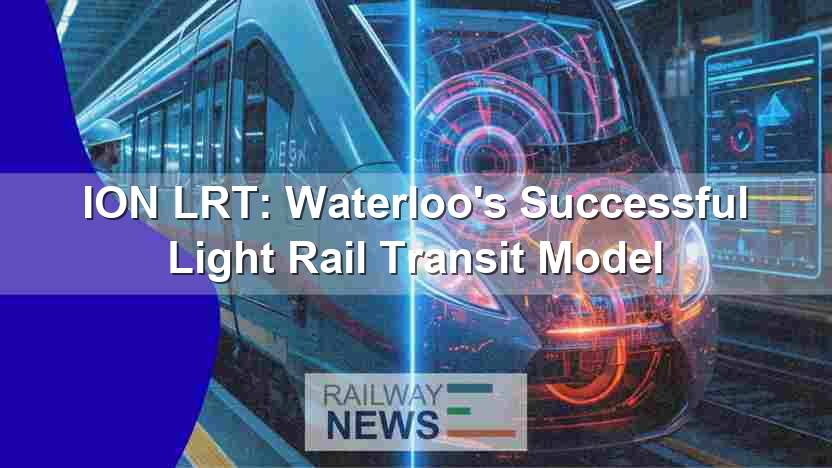
This article explores the successful implementation and launch of Phase I of the ION Light Rail Transit (LRT) system in the Region of Waterloo, Ontario, Canada. The project, a significant undertaking in public transit infrastructure development, showcases a public-private partnership (P3) model and highlights key considerations in light rail deployment, from initial planning and construction to ongoing operation and maintenance. We will delve into the intricacies of the project’s development, focusing on the consortium responsible for its execution, the technological aspects of the LRT system, and the long-term operational strategies employed. Finally, we will analyze the implications of this successful project for future LRT development in Canada and beyond, considering factors such as ridership projections, environmental impact, and economic benefits. The case study of the ION LRT provides valuable insights into the complexities and potential rewards of large-scale public transit initiatives.
Project Development and Consortium
The ION LRT Phase I project, a 16km light rail line connecting Kitchener, Waterloo, and Cambridge, was delivered by the GrandLinq Consortium. This consortium, a prime example of a successful P3 model, comprised Plenary, Meridiam (infrastructure investors), Kiewit and Aecon (construction firms), and Keolis Grand River (the operating and maintenance arm, a subsidiary of Keolis). This collaborative structure effectively combined financial expertise, construction capabilities, and operational experience. The contract awarded in May 2014, ensured a coordinated approach to design, build, finance, and operate the system. The division of responsibilities amongst consortium members proved crucial in mitigating risks and ensuring timely project delivery.
Technological Aspects and Operational Efficiency
The ION LRT utilizes 14 Bombardier-built low-floor electric light rail vehicles (LRVs), each with a capacity of 200 passengers. The use of low-floor LRVs enhances accessibility and ease of boarding for passengers. The trams operate on dedicated rights-of-way, separated from regular traffic for most of the route, minimizing delays and ensuring efficient transit times. This dedicated infrastructure contributes to the system’s overall reliability and speed. Peak hour service frequency is set at 8-minute headways, which offers a balance between service capacity and operational efficiency. A central 15-employee control center manages the daily operations of the entire system, coordinating service and responding to any operational issues efficiently.
Long-Term Operation and Maintenance
Keolis Grand River, with extensive experience operating transit systems globally, was awarded a 30-year contract for the operation and maintenance of the ION LRT. This long-term commitment ensures continuity and consistency in service delivery and provides a stable framework for future system upgrades and enhancements. This approach allows for a focus on long-term sustainability and optimized asset management. Keolis’s international expertise, managing 25 tram networks worldwide, contributes to efficient and cost-effective system management. The 10-year operating contract provides an initial window for performance evaluation and optimization, with the long-term maintenance contract safeguarding the system’s long-term viability.
Impact and Future Implications
The ION LRT Phase I, serving approximately 25,000 passengers daily, demonstrates the positive impact of high-quality public transit on urban mobility. The success of this project lays the groundwork for future LRT expansion (Phase II currently under study) and reinforces the viability of P3 models for large-scale infrastructure projects. The experience gained from the ION LRT can inform future transit initiatives, both in Canada and internationally, by showcasing best practices in planning, construction, and operation. Additionally, the project’s commitment to accessibility, sustainability, and efficient operations sets a high benchmark for future light rail implementations.
Conclusions
The successful launch of the ION LRT Phase I in Ontario represents a significant achievement in Canadian public transit infrastructure. The project’s success is directly attributed to the effective collaboration within the GrandLinq Consortium, a testament to the power of the P3 model. The careful consideration of technological aspects, from the selection of low-floor LRVs to the implementation of dedicated rights-of-way, ensured efficient and reliable service. The 30-year maintenance agreement with Keolis Grand River provides a stable framework for the long-term sustainability of the system, incorporating both operational expertise and financial stability. The project’s positive impact on ridership, urban mobility, and the environment highlights the value of strategic investments in public transit. The successful completion and launch of this project serves as a valuable case study, offering crucial insights for similar future LRT projects. It demonstrates that a meticulously planned, collaboratively executed project employing a P3 model can produce significant returns in terms of improved urban infrastructure and mobility, showcasing a replicable template for successful light rail development. The ION LRT’s continuing success will undoubtedly influence future transit planning and investment strategies across Canada and globally.

Railway infrastructure, rolling stock and transport technologies specialist focused on global rail industry developments, high-speed rail systems, signaling technologies and freight transportation. Covering railway investments, public transport modernization, rail operations and international mobility projects across Europe, Asia and North America.
RELATED POSTS

September 5, 2026 4:19 pm
CPK launched formal tender talks with four consortia to design...

September 6, 2026 4:12 am
Alstom delivered the first of 100 new G Class trams...

September 5, 2026 7:14 pm
HS2 Ltd signed renegotiated civils contracts with EKFB and Align...
September 5, 2026 6:17 pm
Universal Signalling won a deal to install its U-Cross system...

September 6, 2026 8:17 am
DB InfraGO reopened the Nuremberg-Regensburg line in Bavaria on 31...
September 7, 2026 11:16 pm
China Railway Tunnel Group completed the 11.3-km underwater Yangtze tunnel...