
Turin-Lyon High-Speed Rail: A Political & Economic Minefield
The Turin-Lyon high-speed rail project, despite decades of planning and opposition, continues to face significant delays due to environmental concerns and public opposition, highlighting deep political divisions and challenges in balancing national economic development with environmental sustainability and public opinion.
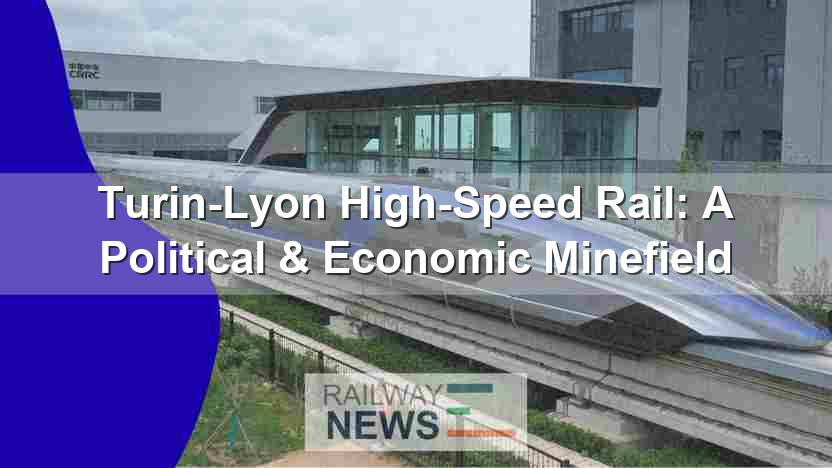
This article explores the complex political and economic landscape surrounding the Turin-Lyon high-speed rail project (TAV), a crucial infrastructure undertaking connecting Italy and France. The project, decades in the planning, has faced significant opposition, primarily focused on environmental concerns and cost-benefit analyses. This opposition has created deep fissures within the Italian government, highlighting the challenges of balancing national economic development with environmental sustainability and public opinion. We will explore the historical context of the TAV project, examining the various arguments for and against its construction, the political battles it has engendered, and the potential long-term impacts on Italy’s infrastructure, economy, and environment. Additionally, we will analyze the financial implications, considering both the initial investment and the projected long-term economic returns. Finally, we will examine the broader implications of this project for trans-European high-speed rail development and international cooperation.
The Turin-Lyon High-Speed Rail Line: A Decades-Long Struggle
The TAV project, initially conceived over thirty years ago, aims to create a high-speed rail link between Turin, Italy, and Lyon, France, spanning approximately 270 kilometers. This project promises significant reductions in travel time between the two cities, facilitating increased passenger and freight transport. However, the project has been embroiled in controversy since its inception, facing consistent delays due to persistent opposition from various stakeholders.
Political Divisions and Public Opposition
The Italian Senate’s approval of the TAV project, despite opposition from a significant portion of the ruling coalition (the 5-Star Movement), underscores the deep political divisions surrounding this initiative. The 5-Star Movement’s opposition stems primarily from environmental concerns and a preference for investing in upgrading existing rail infrastructure. Conversely, proponents, including the League party, emphasize the economic benefits, job creation, and potential for reducing carbon emissions by shifting freight transport from road to rail. This conflict demonstrates the difficulty of balancing competing political priorities and public concerns in major infrastructure projects.
Economic Viability and Financial Projections
The economic viability of the TAV project remains a contentious issue. While proponents argue that it will stimulate economic growth and job creation, a government-commissioned report projected significant financial losses (€7 billion by 2059), raising serious questions about its long-term sustainability. The report’s findings highlight the critical need for thorough cost-benefit analyses and transparent financial planning in such large-scale undertakings. The increased EU contribution, while reducing Italy’s financial burden, doesn’t fully address the fundamental concerns about the project’s overall profitability.
Environmental Considerations and Sustainable Transportation
Environmental concerns form a central aspect of the debate surrounding the TAV. While proponents argue that shifting freight from road to rail will reduce carbon emissions, opponents express concerns about the environmental impact of construction, particularly its potential effects on sensitive ecosystems. This highlights the importance of integrating environmental impact assessments into all phases of large-scale infrastructure development. The project necessitates a detailed environmental mitigation plan to minimize negative impacts and demonstrate a commitment to sustainable development.
Conclusions: Navigating the Complexities of Large-Scale Infrastructure Projects
The Turin-Lyon high-speed rail project exemplifies the complexities inherent in large-scale infrastructure projects. The project’s long history of delays and political battles underscores the need for careful planning, transparent cost-benefit analyses, and inclusive public engagement from the outset. While the Senate’s approval marks a significant step forward, the concerns regarding its financial viability and environmental impact cannot be ignored. The projected financial losses, as highlighted by the government report, necessitate a critical review of the project’s economic model and a reassessment of potential cost-saving measures without compromising safety and quality. Additionally, a robust and transparent environmental mitigation strategy is essential to address the concerns raised by environmental groups and ensure the project’s long-term sustainability. The experience with TAV provides valuable lessons for future large-scale infrastructure projects, emphasizing the importance of collaborative decision-making, detailed environmental impact assessments, and realistic financial projections to ensure successful and sustainable outcomes. The resolution of this project’s challenges will ultimately shape not only Italy’s transportation future but also the approach to future trans-European rail infrastructure developments and the balance between economic growth and environmental protection.

Railway infrastructure, rolling stock and transport technologies specialist focused on global rail industry developments, high-speed rail systems, signaling technologies and freight transportation. Covering railway investments, public transport modernization, rail operations and international mobility projects across Europe, Asia and North America.
RELATED POSTS

September 5, 2026 4:19 pm
CPK launched formal tender talks with four consortia to design...

September 6, 2026 4:12 am
Alstom delivered the first of 100 new G Class trams...

September 5, 2026 7:14 pm
HS2 Ltd signed renegotiated civils contracts with EKFB and Align...
September 5, 2026 6:17 pm
Universal Signalling won a deal to install its U-Cross system...
September 6, 2026 8:17 am
DB InfraGO reopened the Nuremberg-Regensburg line in Bavaria on 31...
September 7, 2026 11:16 pm
China Railway Tunnel Group completed the 11.3-km underwater Yangtze tunnel...