
Inland Rail: SNC-Lavalin’s Program Management Prowess
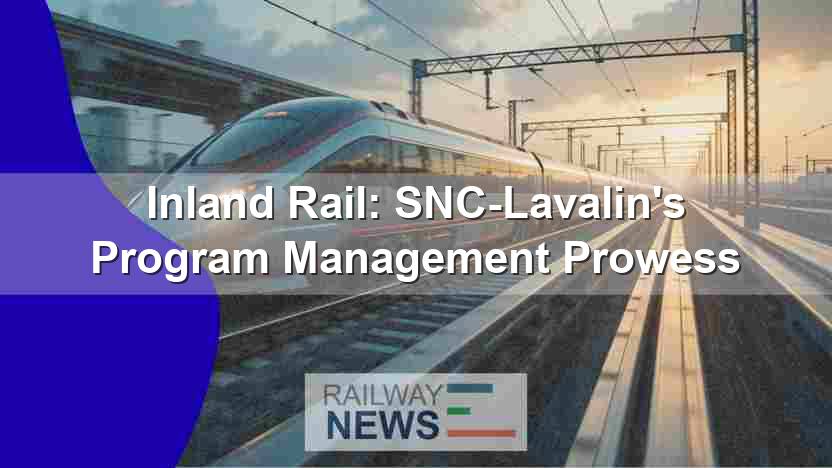
SNC-Lavalin’s role in the Inland Rail project involves providing comprehensive program management services for a major infrastructure initiative that connects Melbourne and Brisbane, enhancing Australia’s transportation infrastructure through efficient freight transport and economic development.
Introduction
This article examines the significant role of program management in large-scale infrastructure projects, specifically focusing on SNC-Lavalin’s contract to provide Program Management Office (PMO) services for Australia’s Inland Rail project. The Inland Rail initiative, a substantial undertaking involving the construction of a 1,710-kilometer freight line connecting Melbourne and Brisbane, exemplifies the complexities and challenges inherent in such ventures. Effective program management is crucial for success, ensuring projects are delivered on time, within budget, and to the required specifications. This analysis will delve into the key aspects of SNC-Lavalin’s contribution, the challenges of managing such a large-scale project, and the broader implications for Australia’s transportation infrastructure and economic development. We will explore the various components of PMO services, the importance of leveraging both local expertise and global capabilities, and the potential impact on various stakeholders, including industries reliant on efficient freight transport and the environment. The role of public-private partnerships (PPPs) in such projects, and the methods utilized to optimize project value, will also be discussed.
SNC-Lavalin’s Role in Inland Rail
SNC-Lavalin, in collaboration with Turner & Townsend, secured a contract to provide detailed PMO services for the Inland Rail project. This encompasses a wide range of responsibilities, including thirteen distinct work packages. These packages likely include overseeing various design and construction contracts, managing the complexities of a major public-private partnership (PPP), and implementing robust control systems. The company’s commitment to improving program value underscores its strategic approach, focusing on effective project support and seamless system integration. This demonstrates a commitment not just to meeting deadlines but also to optimizing resource allocation and achieving the project’s overall objectives efficiently and cost-effectively.
Inland Rail: A National Infrastructure Project
The Inland Rail project is a cornerstone of Australia’s national infrastructure development strategy, representing a significant investment within a larger A$75 billion ($50.4 billion USD) infrastructure pipeline. The 1,710-kilometer freight line will fundamentally transform Australia’s freight transport network. By connecting Melbourne and Brisbane, it will significantly enhance connectivity, reduce transport times and costs, and alleviate pressure on existing road networks. This will not only benefit the freight industry but also contribute to broader economic development in the regions it traverses. Additionally, the project aims to reduce carbon emissions associated with freight transport, aligning with broader environmental sustainability goals.
Challenges and Opportunities in Program Management
Managing a project of this scale presents substantial challenges. Coordinating numerous contractors, managing complex interfaces, and mitigating potential risks across three states (Victoria, New South Wales, and Queensland) demands meticulous planning and execution. The involvement of a public-private partnership adds another layer of complexity, requiring skillful negotiation and management of differing stakeholder interests. Successfully navigating these challenges necessitates a deep understanding of the Australian regulatory environment, strong stakeholder engagement, and robust risk management protocols. However, successful project delivery will also present significant opportunities, showcasing the capabilities of SNC-Lavalin and establishing a benchmark for future large-scale infrastructure projects in Australia.
Conclusion
SNC-Lavalin’s involvement in the Inland Rail project highlights the critical role of effective program management in the successful delivery of complex infrastructure projects. The company’s contract, encompassing thirteen work packages and incorporating a major public-private partnership, underlines the multifaceted nature of PMO services required for such a large-scale undertaking. The Inland Rail project itself represents a substantial investment in Australia’s future, aiming to modernize freight transport, boost economic activity, and improve environmental sustainability. The project’s success depends heavily on skillful management, and SNC-Lavalin’s expertise in PMO services, combined with its understanding of local conditions and global best practices, positions it well to contribute to this success. The project’s completion will not only improve the efficiency of Australia’s freight transport network but will also serve as a case study for future national infrastructure initiatives, emphasizing the importance of detailed program management in realizing large-scale, long-term infrastructural goals. The challenges encountered and overcome during this project will undoubtedly inform future approaches to similar large-scale developments, enhancing efficiency and minimizing risks for subsequent projects. The successful completion of the Inland Rail project promises significant economic benefits, improved logistical efficiency, and environmental gains, reinforcing the value of strategic infrastructure investments and sophisticated program management expertise.

Railway infrastructure, rolling stock and transport technologies specialist focused on global rail industry developments, high-speed rail systems, signaling technologies and freight transportation. Covering railway investments, public transport modernization, rail operations and international mobility projects across Europe, Asia and North America.
RELATED POSTS

September 5, 2026 4:19 pm
CPK launched formal tender talks with four consortia to design...

September 5, 2026 7:14 pm
HS2 Ltd signed renegotiated civils contracts with EKFB and Align...

September 6, 2026 4:12 am
Alstom delivered the first of 100 new G Class trams...
September 5, 2026 6:17 pm
Universal Signalling won a deal to install its U-Cross system...
September 6, 2026 8:17 am
DB InfraGO reopened the Nuremberg-Regensburg line in Bavaria on 31...
September 6, 2026 12:20 pm
Indian Railways ordered a probe after a fire destroyed 2...