
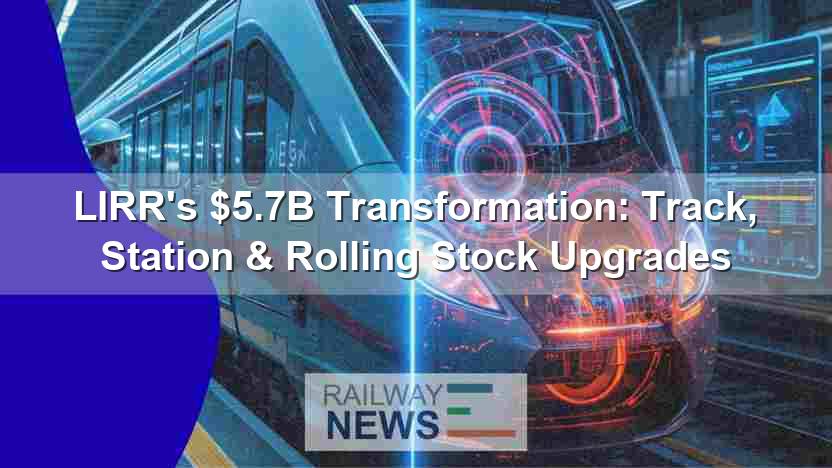
LIRR’s $5.7B Transformation: Track, Station & Rolling Stock Upgrades
The $5.7 billion capital investment plan by the Metropolitan Transportation Authority (MTA) for the Long Island Rail Road (LIRR) from 2020 to 2024 aims to modernize and upgrade the LIRR, focusing on track upgrades, station accessibility enhancements, signal and switch replacements, and new rolling stock acquisitions, with a specific emphasis on preparing the system for increased ridership following major projects like East Side Access and Main Line expansion.
Introduction
This article examines the significant $5.7 billion capital investment plan proposed by the Metropolitan Transportation Authority (MTA) for the Long Island Rail Road (LIRR) spanning from 2020 to 2024. This investment represents a crucial step in modernizing the LIRR, enhancing its operational efficiency, and improving the overall passenger experience. The plan encompasses a wide range of improvements, including extensive track upgrades, station accessibility enhancements, signal and switch replacements, and the acquisition of new rolling stock. The overarching goal is to prepare the LIRR for the anticipated increase in ridership following the completion of major projects like East Side Access and the Main Line expansion by December 2022. The planned improvements are not isolated initiatives but rather interconnected elements designed to create a more reliable, efficient, and accessible commuter rail system for the Long Island region. This analysis will delve into the specific components of the plan, examining their individual contributions to the overall modernization effort and their collective impact on the LIRR’s future.
Track and Infrastructure Upgrades
A substantial portion of the allocated funds, approximately $1 billion, is earmarked for track upgrades. This investment focuses on improving the resilience and longevity of the LIRR’s infrastructure. Key initiatives include the widespread installation of concrete ties, known for their superior durability and resistance to degradation compared to traditional wooden ties, and the implementation of continuous welded rail (CWR). CWR significantly reduces track maintenance requirements by eliminating the need for frequent joint repairs, leading to smoother rides and fewer service disruptions. These upgrades are essential for supporting increased train speeds and heavier loads, which are anticipated with the projected ridership growth.
Station Accessibility and Improvements
Accessibility is another key focus, with a significant $910 million investment dedicated to station improvements and accessibility upgrades. This commitment reflects the MTA’s dedication to ensuring equal access for all passengers, aligning with the Americans with Disabilities Act (ADA) requirements. The plan includes constructing seven new ADA-compliant stations, and modernizing existing stations with essential upgrades such as new elevators, escalators, and platform enhancements. These improvements not only enhance accessibility but also improve the overall passenger experience, creating more comfortable and user-friendly stations.
Rolling Stock and System-wide Improvements
The capital plan also addresses the need for modernized rolling stock. The LIRR plans to acquire 160 new M9A electric cars, 20 coaches, and over ten locomotives to serve non-electrified sections of the line. This investment in new equipment will significantly improve passenger comfort, reliability, and overall operational efficiency. Further, a significant investment of $364 million is allocated to replace aging switches, track circuits, and grade crossing equipment as part of the LIRR’s Forward Plan, focusing on enhancing infrastructure reliability and reducing maintenance needs. These system-wide improvements work in tandem with the other upgrades to create a more robust and reliable railway network.
Conclusions
The MTA’s proposed $5.7 billion investment in the Long Island Rail Road represents a transformative plan for the future of this critical commuter rail system. The strategic allocation of funds across various infrastructure improvements, including track upgrades using concrete ties and continuous welded rail (CWR), significant station accessibility enhancements to meet ADA standards, and the acquisition of new rolling stock demonstrates a commitment to improving service reliability, safety, accessibility, and the overall passenger experience. The plan’s focus on system-wide improvements, such as replacing aging switches and track circuits, contributes to enhanced operational efficiency and reduced maintenance costs. The synergy between these individual projects creates a detailed modernization strategy, preparing the LIRR for increased ridership anticipated with the completion of East Side Access and the Main Line expansion. This investment not only benefits the millions of Long Island commuters but also contributes to the continued economic growth and improved quality of life for the entire region. The successful implementation of this plan will solidify the LIRR’s position as a vital component of the New York metropolitan area’s transportation infrastructure. The focus on modernizing infrastructure and enhancing the passenger experience sets a positive precedent for other transit agencies facing similar challenges in upgrading aging infrastructure and meeting the demands of a growing population. The detailed nature of the plan, which addresses not only immediate needs but also long-term sustainability and operational efficiency, ensures a lasting impact on the LIRR’s effectiveness and its contribution to the community it serves.

Railway infrastructure, rolling stock and transport technologies specialist focused on global rail industry developments, high-speed rail systems, signaling technologies and freight transportation. Covering railway investments, public transport modernization, rail operations and international mobility projects across Europe, Asia and North America.
RELATED POSTS

September 5, 2026 4:19 pm
CPK launched formal tender talks with four consortia to design...

September 6, 2026 4:12 am
Alstom delivered the first of 100 new G Class trams...

September 5, 2026 7:14 pm
HS2 Ltd signed renegotiated civils contracts with EKFB and Align...
September 5, 2026 6:17 pm
Universal Signalling won a deal to install its U-Cross system...

September 6, 2026 8:17 am
DB InfraGO reopened the Nuremberg-Regensburg line in Bavaria on 31...
September 7, 2026 11:16 pm
China Railway Tunnel Group completed the 11.3-km underwater Yangtze tunnel...