
DART Silver Line: Reshaping North Texas Transit
The Dallas Area Rapid Transit (DART) Silver Line project is a $1.1 billion expansion that aims to improve regional connectivity through an ambitious 26-mile rail line connecting seven North Texas cities, aiming to alleviate traffic congestion and enhance public transportation infrastructure.
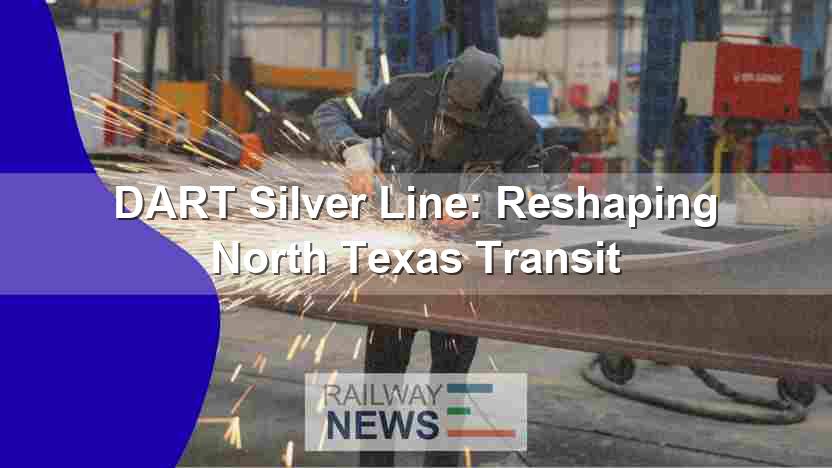
This article examines the Dallas Area Rapid Transit (DART) Silver Line project, a significant expansion of the North Texas regional rail network. The $1.1 billion undertaking represents a substantial investment in public transportation infrastructure, aiming to improve connectivity and alleviate traffic congestion across seven cities in the region. This analysis will delve into the project’s scope, engineering challenges, operational considerations, and its overall impact on the North Texas transportation landscape. We will explore the project’s integration with existing DART lines and other regional rail systems, considering the benefits for commuters, economic development, and the broader sustainability goals of the region. The Silver Line’s success will be crucial in demonstrating the viability of expanding commuter rail services and improving access to major employment centers and transportation hubs, such as Dallas/Fort Worth (DFW) International Airport.
Project Scope and Infrastructure
The Silver Line is a 26-mile regional rail line extending from Plano to DFW International Airport. This ambitious project encompasses the construction of ten new stations strategically located across seven cities: Grapevine, Coppell, Dallas, Carrollton, Addison, Richardson, and Plano. The line’s design incorporates considerations for future expansion and integration with existing and planned transit networks. The selection of Stadler for the supply of eight diesel multiple unit (DMU) trains reflects a commitment to utilizing modern, reliable rolling stock optimized for regional rail operations. The project’s complexity lies not only in its geographical expanse but also in the coordination required to integrate it seamlessly with the existing DART system and other regional transportation modes. This demands careful planning and execution to minimize disruptions during construction and ensure smooth operational integration upon completion.
Intermodal Connectivity and System Integration
A key feature of the Silver Line is its strategic integration with the existing DART Light Rail Transit (LRT) network. The line will intersect with three LRT lines: the Red/Orange Lines in Richardson/Plano, the Green Line in Carrollton, and the Orange Line at DFW International Airport. This intermodal connectivity allows for seamless transfers between different modes of transit, enhancing overall accessibility and convenience for passengers. Additionally, the Silver Line’s connection at DFW Airport with the Trinity Metro TEXRail Regional Rail Line to Fort Worth creates a crucial link, enabling passengers to travel across a 60-mile expanse of the North Texas region. This expanded regional connectivity significantly benefits commuters and travelers, offering efficient alternatives to congested roadways.
Operational Efficiency and Service Frequency
The Silver Line is designed to operate with a frequency of 30-minute headways during peak hours and 60-minute headways during off-peak periods. This service frequency is aimed at providing adequate capacity to meet anticipated passenger demand, while balancing operational costs and resource allocation. The choice of DMU trains contributes to operational efficiency, providing flexibility and reliability in regional rail operations. The success of the planned service frequency hinges on effective scheduling, robust maintenance procedures, and a proactive approach to addressing potential operational challenges. Data collection and performance monitoring post-implementation will be vital for optimizing service frequency and adapting to evolving passenger demand patterns.
Economic Impact and Community Development
Beyond its transportation benefits, the Silver Line project carries significant implications for economic development and community growth across the North Texas region. The creation of new stations and improved accessibility to major employment centers, like DFW Airport and the University of Texas at Dallas, is expected to stimulate economic activity. The project’s construction phase generated jobs and economic activity, while its long-term operation will support additional job creation and contribute to the region’s overall economic vitality. Additionally, the increased accessibility provided by the Silver Line could spur residential and commercial development in areas along the corridor, further contributing to the region’s economic growth and transforming the urban landscape.
Conclusions
The DART Silver Line project represents a substantial investment in public transit infrastructure, designed to reshape transportation in North Texas. This 26-mile regional rail line, connecting Plano to DFW International Airport, will significantly enhance connectivity across seven cities, integrating seamlessly with existing DART LRT lines and the Trinity Metro TEXRail system. The project’s success relies on the effective implementation of a 30-minute peak/60-minute off-peak service schedule using Stadler-supplied DMU trains. Beyond its transportation function, the Silver Line promises substantial economic benefits, stimulating job creation and driving development along its route. The project’s completion marks a significant step towards a more sustainable and efficient transportation system in North Texas, offering commuters and travelers a viable alternative to congested roadways. Careful monitoring of operational efficiency, ridership patterns, and economic impact following the December 2022 opening will be crucial to assess the project’s overall success and inform future transit development initiatives. The Silver Line serves as a model for other regions seeking to expand their public transportation networks and enhance their regional connectivity. Its success will undoubtedly influence future decisions regarding investment in rail transit projects across the United States and beyond, highlighting the considerable potential of integrated rail systems for improving urban mobility and fostering sustainable economic growth.

Railway infrastructure, rolling stock and transport technologies specialist focused on global rail industry developments, high-speed rail systems, signaling technologies and freight transportation. Covering railway investments, public transport modernization, rail operations and international mobility projects across Europe, Asia and North America.
RELATED POSTS

September 5, 2026 4:19 pm
CPK launched formal tender talks with four consortia to design...
September 5, 2026 7:14 pm
HS2 Ltd signed renegotiated civils contracts with EKFB and Align...

September 6, 2026 4:12 am
Alstom delivered the first of 100 new G Class trams...
September 5, 2026 6:17 pm
Universal Signalling won a deal to install its U-Cross system...
September 6, 2026 8:17 am
DB InfraGO reopened the Nuremberg-Regensburg line in Bavaria on 31...
September 7, 2026 11:16 pm
China Railway Tunnel Group completed the 11.3-km underwater Yangtze tunnel...