
Alstom Ubunye: Modernized Rail Giant in Africa
This article examines the modernization of Alstom Ubunye, a joint venture rail factory in Ekurhuleni, South Africa, which represents a significant investment in African rail infrastructure by Alstom and signifies their commitment to becoming a regional hub for rail manufacturing excellence.
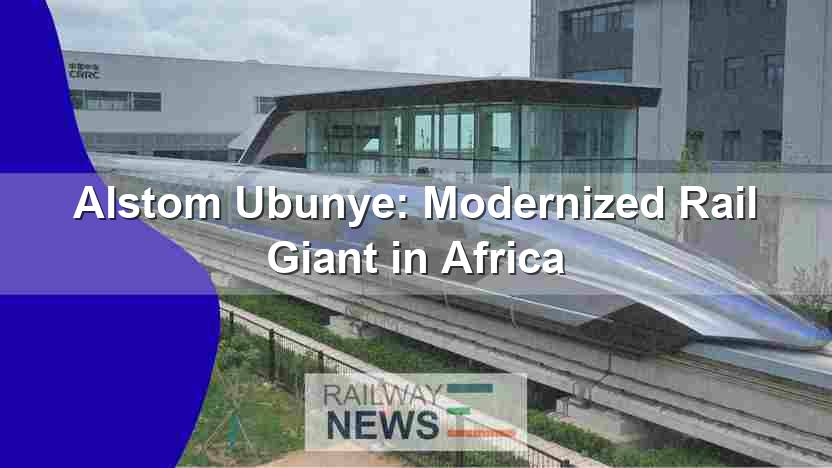
This article explores the significant modernization and expansion of Alstom Ubunye, a joint venture rail factory in Ekurhuleni, South Africa. The revitalization of this facility represents a substantial investment in African rail infrastructure and signifies Alstom’s commitment to becoming a regional hub for rail manufacturing excellence. We will delve into the details of the factory’s refurbishment, its enhanced production capabilities, the technological advancements implemented, and the strategic implications of this project for both Alstom and the broader South African and Sub-Saharan African economies. The analysis will consider the factory’s role in supplying components for larger rail projects, the transfer of global expertise, and the long-term vision for sustainable growth and development within the African rail sector. This case study provides valuable insight into the challenges and opportunities involved in modernizing rail infrastructure in developing economies and the role of foreign direct investment (FDI) in facilitating this progress. The implications for job creation, skills development, and technological advancement within the South African rail industry will also be examined.
Alstom Ubunye: A Modernized Rail Manufacturing Facility
The inauguration of the modernized Alstom Ubunye factory in Ekurhuleni marked a significant milestone. Following Alstom’s 2016 acquisition of a 51% stake in Commuter Transport & Locomotive Engineering (CTLE), a substantial investment was made in refurbishing the plant. This involved the integration of advanced robotic systems and other cutting-edge equipment, significantly enhancing production efficiency and capacity. The factory’s modernization also included detailed staff training programs, ensuring the workforce possessed the skills needed to operate the new technologies. This commitment to human capital development is crucial for long-term success and sustainability.
Enhanced Production Capacity and Capabilities
The modernized facility boasts a greatly increased production capacity. At full operational capacity, the plant can manufacture 62 bogies, 62 end underframes, 20 traction cases, and 10 static inverters monthly. Beyond these core components, Alstom Ubunye also produces crucial elements for passenger comfort and safety, including wiring looms, electrical cubicles, and Passenger Public Address, Closed Circuit Television, and Information Systems (PACIS). This diversified production capacity strengthens the factory’s position as a key supplier within the regional rail industry.
Technological Advancement and Certifications
The implementation of advanced robotics and other technologies has not only increased production efficiency but also significantly improved the quality and precision of the manufactured components. Crucially, Alstom Ubunye obtained two prestigious welding certifications: EN 15085 CL1 and ISO 3834-2. These certifications demonstrate the factory’s adherence to the highest international standards for welding quality and safety, a crucial aspect in the rigorous rail industry.
Strategic Importance and Future Outlook
Alstom’s investment in Alstom Ubunye serves a wider strategic purpose. The factory plays a vital role in supplying components for the Gibela Rail project, which is responsible for building new passenger trains for the Passenger Rail Agency of South Africa (PRASA). This highlights the interconnectedness of rail projects and the importance of reliable component manufacturing. Additionally, Alstom aims to leverage Alstom Ubunye as a springboard to serve the growing demand for rail infrastructure across Sub-Saharan Africa, positioning the facility as a regional center of excellence.
Conclusion
The modernization of Alstom Ubunye represents a significant achievement, not just for Alstom, but for the South African and broader Sub-Saharan African rail industries. The factory’s enhanced production capacity, technological advancements, and international certifications solidify its position as a key player in the regional rail market. The strategic investment showcases Alstom’s long-term commitment to Africa and underscores the potential for fostering economic growth and development through foreign direct investment in infrastructure projects. The transfer of technological expertise and skills development within the local workforce are equally critical aspects of this success story. The factory’s ability to supply components for large-scale projects like the Gibela Rail contract illustrates the importance of localized manufacturing in facilitating efficient and cost-effective rail development. The successful inauguration of Alstom Ubunye not only improves South Africa’s rail network but also establishes a significant foundation for future rail infrastructure development across Sub-Saharan Africa, contributing to regional economic growth and sustainable development. The achievement serves as a compelling example of how strategic partnerships and investment in advanced manufacturing can drive progress in developing economies. The long-term vision of Alstom to become a key player in the African rail landscape through this initiative demonstrates a commitment to building sustainable infrastructure and supporting local economic growth.

Railway infrastructure, rolling stock and transport technologies specialist focused on global rail industry developments, high-speed rail systems, signaling technologies and freight transportation. Covering railway investments, public transport modernization, rail operations and international mobility projects across Europe, Asia and North America.
RELATED POSTS

September 5, 2026 4:19 pm
CPK launched formal tender talks with four consortia to design...

September 5, 2026 7:14 pm
HS2 Ltd signed renegotiated civils contracts with EKFB and Align...

September 6, 2026 4:12 am
Alstom delivered the first of 100 new G Class trams...
September 6, 2026 8:17 am
DB InfraGO reopened the Nuremberg-Regensburg line in Bavaria on 31...
September 5, 2026 6:17 pm
Universal Signalling won a deal to install its U-Cross system...
September 6, 2026 12:20 pm
Indian Railways ordered a probe after a fire destroyed 2...