
Uruguay’s Central Railroad: A $1B Infrastructure Revolution
The Uruguay Central Railroad project, led by Sacyr-led Grupo Vía Central (GVC), is a significant infrastructure undertaking aimed at modernizing and expanding Uruguay’s railway network, securing substantial funding from international lenders and private sector investment while the Uruguayan government contributes to ensure national economic growth through improved rail connectivity.
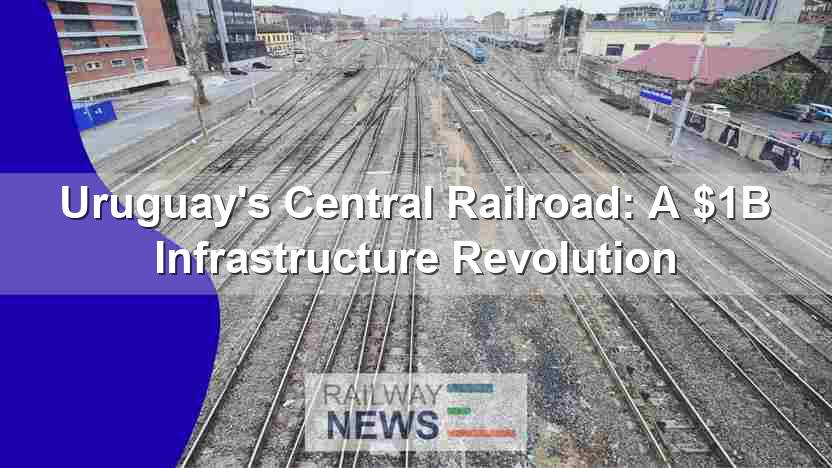
This article examines the financing and scope of the Uruguay Central Railroad project, a significant infrastructure undertaking aimed at modernizing and expanding Uruguay’s railway network. The project, led by the Sacyr-led Grupo Vía Central consortium (GVC), represents a substantial investment in national infrastructure, impacting not only transportation but also economic development. Securing the necessary funding for such a large-scale project is a crucial first step, involving a complex interplay of international lenders, private sector investment, and government contributions. The article explores the financial structure of the project, outlining the sources of funding, the roles of various stakeholders, and the subsequent implications for project implementation, including the timeline and scope of work. This analysis will also explore the broader economic and logistical benefits expected from this improved rail connection, emphasizing its contribution to Uruguay’s economic growth and its impact on the integration of Uruguay’s national infrastructure. The project is more than just rail rehabilitation; it is a strategic investment in the nation’s future.
Project Financing and Stakeholder Involvement
The Uruguay Central Railroad project boasts a total investment of $1.07 billion. This substantial sum is secured through a combination of sources. A senior loan of $855 million was successfully raised by GVC from several key financial institutions: Sumitomo Mitsui Banking Corporation (SMBC), Intesa Sanpaolo, the Inter-American Development Bank (IDB), the Development Bank of Latin America (CAF), and the Andean Development Corporation (CAFAM). Further capitalizing the project, the consortium partners themselves contributed $155 million, while the Uruguayan government pledged $60 million. This diversified funding model underscores the project’s significance and the confidence it inspires in both the private and public sectors. The consortium’s equity structure reflects a strategic partnership: Sacyr (40%), Saceem (27%), NGE (27%), and Berkes (6%). This blend of international expertise and local knowledge provides a robust framework for successful project execution.
Project Scope and Infrastructure Upgrades
The project’s core objective involves the rehabilitation and construction of a 273km railway line linking Montevideo, the capital city, to Paso de los Toros. This revitalization extends beyond simple track repairs. It encompasses a wide range of improvements, modernizing the entire railway infrastructure. This includes detailed upgrades to the signaling systems, enhancing safety and operational efficiency. The project also addresses railway level crossings, improving safety for road users. Further, the project will overhaul approximately 25 stations and passenger stops along the route, improving passenger experience and accessibility. These upgrades are vital for ensuring the long-term viability and effectiveness of the modernized rail line.
Economic and Logistical Impact
The Uruguay Central Railroad project extends far beyond mere infrastructure development; it has profound economic and logistical implications for Uruguay. A key beneficiary is the UPM cellulose factory, a Finnish firm’s investment which will benefit from direct rail access to the port of Montevideo, streamlining the export process. The improved transport efficiency leads to reduced operational costs and increased competitiveness for the company, and in the wider context, fosters Uruguay’s participation in global markets. The upgraded railway network provides a more efficient and cost-effective alternative to road transport, easing congestion and boosting the overall productivity of the nation’s logistics sector. This will improve the movement of both goods and passengers, enhancing inter-regional connectivity and fostering economic growth across different parts of Uruguay.
Project Timeline and Maintenance
The GVC has a 36-month timeframe for the design, financing, and construction phases of the project. This aggressive timeline reflects the commitment of all stakeholders to delivering this crucial infrastructure asset swiftly. Beyond the construction phase, the consortium assumes responsibility for maintenance services over an 18-year period. This long-term commitment guarantees the continued operation and efficiency of the railway, ensuring a sustained return on investment for all involved and a lasting positive impact on the Uruguayan economy. The detailed maintenance plan ensures the long-term durability and sustainability of the project’s positive effects on the nation’s infrastructure.
Conclusions
The Uruguay Central Railroad project represents a significant investment in Uruguay’s future, demonstrating a commitment to modernizing its infrastructure and boosting its economic competitiveness. The successful securing of $855 million in senior loans, coupled with contributions from the consortium and the Uruguayan government, underscores the project’s viability and importance. The project’s scope extends beyond mere track rehabilitation; it involves detailed upgrades to signalling systems, level crossings, and numerous stations, creating a modern and efficient railway network. The logistical and economic benefits are substantial, particularly for UPM’s cellulose factory and the nation’s wider logistics sector. The project’s 36-month construction phase, followed by an 18-year maintenance agreement, ensures long-term operational efficiency and a sustainable return on investment. The success of this project serves as a model for future infrastructure development initiatives in the region, highlighting the power of public-private partnerships in delivering large-scale improvements in national infrastructure, driving economic growth, and improving the quality of life for Uruguayans. The integration of modern technologies and a long-term commitment to maintenance ensures that this modernized railway will serve as a cornerstone of Uruguay’s economic development for decades to come. The project’s strategic importance is underscored by its role in facilitating efficient trade, improving connectivity, and reinforcing Uruguay’s position in the global market. This detailed approach to railway modernization stands as a testament to the country’s commitment to progress and sustainable economic growth.

Railway infrastructure, rolling stock and transport technologies specialist focused on global rail industry developments, high-speed rail systems, signaling technologies and freight transportation. Covering railway investments, public transport modernization, rail operations and international mobility projects across Europe, Asia and North America.
RELATED POSTS

September 5, 2026 4:19 pm
CPK launched formal tender talks with four consortia to design...
September 5, 2026 7:14 pm
HS2 Ltd signed renegotiated civils contracts with EKFB and Align...

September 6, 2026 4:12 am
Alstom delivered the first of 100 new G Class trams...
September 5, 2026 6:17 pm
Universal Signalling won a deal to install its U-Cross system...

September 6, 2026 8:17 am
DB InfraGO reopened the Nuremberg-Regensburg line in Bavaria on 31...
September 7, 2026 11:16 pm
China Railway Tunnel Group completed the 11.3-km underwater Yangtze tunnel...