
UK Rail’s £20bn Upgrade: A Transformation?
The UK Rail Network faces significant challenges but also substantial investment opportunities with an ambitious program aimed at introducing new rolling stock, increasing service frequency, and modernizing infrastructure, projected to enhance passenger and freight operations while contributing to economic growth.
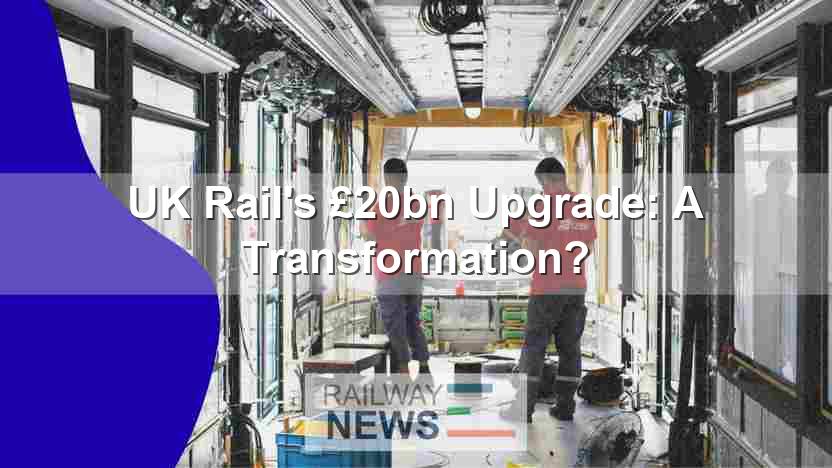
The UK’s railway system, a critical component of its national infrastructure, faces significant challenges and opportunities. This article explores the substantial investment program launched by the Rail Delivery Group (RDG) in 2019, focusing on its projected impact on service improvements, infrastructure upgrades, and the integration of technology. The analysis examines the planned enhancements across various rail networks, including the introduction of new rolling stock (trains), increased service frequency, and the modernization of existing infrastructure. Additionally, the article considers the perspectives of various stakeholders, including industry professionals, small businesses, and passenger advocacy groups, to offer a detailed assessment of the investment’s potential success and the remaining obstacles to overcome. The ultimate goal is to determine whether this ambitious program can adequately address the needs of passengers and freight operators, contributing to economic growth and improved national connectivity. This analysis will delve into the specifics of the planned improvements and consider whether this represents a true transformation of the UK rail network or merely a series of incremental changes.
Significant Service Enhancements and Infrastructure Upgrades
The RDG’s 2020 Investment Report detailed a plan to introduce 8,000 new carriages and over 11,300 additional weekly services. This represents a nearly 10% increase in capacity and aims to cater to the 1.4 million daily commuters, as well as to bolster freight operations, which currently transport £30 billion of goods annually. The report highlighted investments across numerous networks. For example, the TransPennine Express, Merseyrail, LNER, Northern, Hull Trains, and Grand Central networks will receive new trains. Greater Anglia will benefit from £1.4 billion invested in 169 new and refurbished trains, alongside a £27 million route upgrade enabling longer trains between Cambridge and King’s Lynn. This upgrade will also facilitate the movement of ten additional freight trains daily to Felixstowe, removing 760 lorries from roads. Significant infrastructure projects are also planned, including an £80 million upgrade of the Dawlish sea wall in southwest England, the creation of a new half-hourly service between London St Pancras International and Corby, and the introduction of 180 new trains to accommodate 50,000 extra passengers to and from Birmingham. Further investments will focus on Wolverhampton Interchange (£150 million rail hub), 90 new trains for the South Western Railway, a £150 million upgrade to Gatwick Airport station, and significant redevelopments of Glasgow Queen Street Station (£120 million) and Aberdeen Station in Scotland. The sheer scale of these improvements signifies a commitment to modernization and capacity expansion.
Addressing Technological Deficiencies and Enhancing Passenger Experience
While the investment plan focuses primarily on infrastructure and rolling stock, critics highlight the need for technological advancement to enhance the passenger experience. The Federation of Small Businesses (FSB) and technology experts emphasize the importance of reliability, punctuality, and improved in-train amenities such as Wi-Fi and power outlets. Fujitsu’s CTO for transport, Rabih Arzouni, points to the rail industry’s lag behind other sectors like aviation in adopting modern technologies for service management and information dissemination. He stresses the need for real-time, accurate service information and improved disruption management. Transport Focus, a passenger watchdog, echoes the importance of transparent communication with passengers regarding ongoing improvements and disruptions. These observations underscore the necessity of integrating technological solutions to complement the physical infrastructure upgrades and ensure a smoother, more efficient, and user-friendly rail service.
Economic Implications and Government Policy
The RDG argues that this investment will drive economic growth and increase productivity. The projected increase in passenger and freight capacity directly contributes to improved connectivity and enhanced trade. The substantial investment in infrastructure projects creates jobs and stimulates economic activity in the construction and related sectors. The RDG also advocates for a revised fares system that optimizes the financial benefits of rail transport for both commuters and the industry itself. The program is also framed within the context of Brexit, emphasizing the crucial role of a strong and efficient railway system for the UK’s post-EU economic future. This economic focus underlines the necessity of a holistic approach, combining infrastructure improvement with effective policy measures to ensure the long-term viability and success of the investment.
Conclusions: A Balanced Perspective on the Future of UK Rail
The RDG’s £20 billion investment program represents a significant commitment to upgrading the UK’s rail network. The planned introduction of thousands of new carriages and services, alongside substantial infrastructure projects, promises considerable improvements in capacity and connectivity. The plan’s ambition is undeniable, aiming to address the pressing need for increased capacity, improved reliability, and enhanced passenger experience. However, the success of this program hinges not only on the timely completion of the physical upgrades but also on addressing the significant technological shortcomings identified by industry experts. Improved real-time information systems, efficient disruption management, and provision of essential passenger amenities like reliable Wi-Fi and power are paramount for optimizing passenger satisfaction and justifying the investment. The feedback from stakeholders such as the FSB and Transport Focus rightly emphasizes the need for a customer-centric approach, prioritizing reliability and seamless service above simply adding more trains to already congested networks. The government’s role in implementing a fare structure that supports the investment and ensures the long-term financial health of the rail industry is equally crucial. To summarize, while the investment plan offers a promising roadmap for revitalizing the UK’s rail network, its ultimate success depends on a holistic approach that balances infrastructure development with technological innovation, effective communication with passengers, and sound government policy. Only then can the ambitious goals of improved connectivity, economic growth, and enhanced passenger satisfaction be truly realized.

Railway infrastructure, rolling stock and transport technologies specialist focused on global rail industry developments, high-speed rail systems, signaling technologies and freight transportation. Covering railway investments, public transport modernization, rail operations and international mobility projects across Europe, Asia and North America.
RELATED POSTS

September 5, 2026 4:19 pm
CPK launched formal tender talks with four consortia to design...

September 5, 2026 7:14 pm
HS2 Ltd signed renegotiated civils contracts with EKFB and Align...

September 6, 2026 4:12 am
Alstom delivered the first of 100 new G Class trams...
September 5, 2026 6:17 pm
Universal Signalling won a deal to install its U-Cross system...
September 6, 2026 8:17 am
DB InfraGO reopened the Nuremberg-Regensburg line in Bavaria on 31...
September 6, 2026 12:20 pm
Indian Railways ordered a probe after a fire destroyed 2...