
Melbourne Rail Upgrade: A$3.4M Southern Cross Success
The replacement project near Melbourne’s Southern Cross Station showcases how critical railway track maintenance is for ensuring efficient, safe, and reliable operation of regional rail networks, emphasizing the economic and operational implications of neglecting timely infrastructure upgrades.
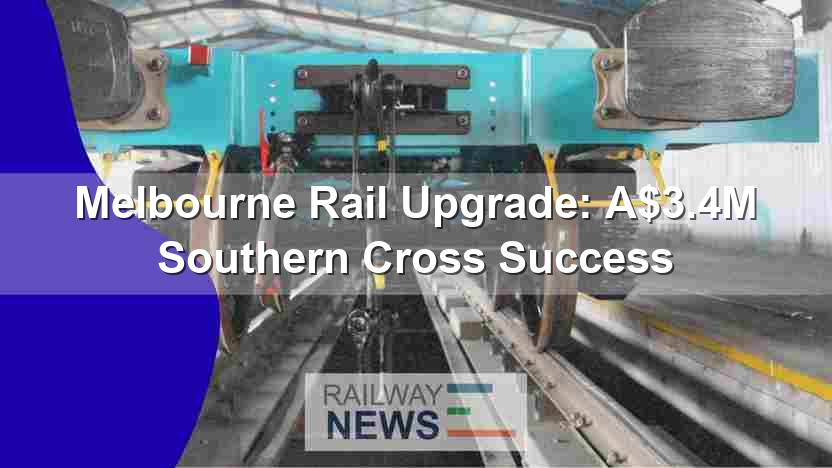
This article examines the critical role of railway track maintenance in ensuring the efficient and safe operation of a regional rail network, using the recent A$3.4 million (approximately US$2.3 million) track replacement project near Melbourne’s Southern Cross Station as a case study. The project highlights the complexities involved in maintaining a heavily utilized section of track within a busy metropolitan area and underscores the economic and operational implications of neglecting timely infrastructure upgrades. We will delve into the specifics of the project, examining the challenges faced, the solutions implemented, and the broader implications for the Victorian rail network and similar systems globally. The discussion will also touch upon the strategic planning involved in procuring next-generation rolling stock, emphasizing the importance of balancing economic considerations with the need for robust, reliable, and safe railway infrastructure.
Southern Cross Station Track Replacement: A Detailed Look
The replacement of two crucial track units near platforms 3, 4, and 5 at Southern Cross Station represented a significant undertaking. This section of track, serving the Ballarat and Albury lines, experiences exceptionally high traffic volume, making maintenance a complex logistical challenge. The project’s success hinged on careful planning and execution. The temporary substitution of train services with coaches minimized disruption to commuters during the maintenance period. This strategic decision, while impacting service frequency, prioritized the long-term benefits of a safer and more reliable rail network over short-term convenience. The efficient deployment of 60 workers within a constrained urban environment exemplifies the effective project management crucial for similar large-scale undertakings.
Addressing Aging Infrastructure and Reducing Operational Risks
The project’s primary objective was to mitigate risks associated with aging infrastructure. Deteriorating track components pose significant threats to operational efficiency and safety. Track failures can lead to delays, cancellations, and even accidents. By replacing the aging track with modern materials and designs, the Victorian government proactively addresses these risks, improving the overall reliability and safety of the rail network. This preventative maintenance approach is far more cost-effective in the long run than reactive repairs following failures, minimizing both financial losses and service disruptions.
Strategic Planning for Future Rolling Stock and Infrastructure Investments
The A$3.4 million track replacement project is only one component of a broader strategic investment in Victoria’s rail infrastructure. The simultaneous announcement of a substantial A$534 million (approximately US$361 million) investment in the Sunbury line and the call for proposals for next-generation trams and trains showcase the Victorian government’s commitment to upgrading its public transport network. The emphasis on at least 50% local content in rolling stock procurement demonstrates a commitment to supporting domestic industries while ensuring the long-term sustainability of the rail system. This integrated approach to infrastructure development, encompassing both track maintenance and rolling stock acquisition, is essential for optimizing operational efficiency and ensuring the long-term viability of the rail network.
Collaboration and Efficiency in Rail Network Management
The successful completion of the Southern Cross Station track replacement project involved effective collaboration between various stakeholders. The Victorian government, Australian Rail Track Corporation (ARTC), contractors, and rail operators worked together to coordinate the maintenance work and minimize disruption to services. The ARTC’s removal of temporary speed restrictions on the Seymour-Albury line after the completion of the works demonstrates the coordinated effort needed to ensure the smooth operation of the broader rail network. This collaborative approach underscores the importance of communication and coordination in managing complex rail infrastructure projects.
Conclusions
The A$3.4 million track replacement project near Melbourne’s Southern Cross Station serves as a compelling case study in the vital role of proactive railway infrastructure maintenance. The project’s success highlights the importance of strategic planning, efficient project management, and effective collaboration between government agencies, contractors, and rail operators. Replacing aging track with modern infrastructure not only improves safety and reliability but also contributes to the long-term economic viability of the rail network by reducing operational disruptions and associated costs. The project’s successful execution, coupled with the government’s broader investments in rail infrastructure and rolling stock, indicates a commitment to providing safe, reliable, and efficient public transport for the people of Victoria. The emphasis on local content in rolling stock procurement is a commendable strategy supporting local industries while ensuring the long-term sustainability of the state’s rail system. The experience gained from this project can inform similar initiatives globally, emphasizing the necessity of investing in timely infrastructure upgrades to enhance the safety, efficiency, and overall performance of railway networks worldwide. The seamless integration of maintenance schedules with broader network operational plans, as demonstrated by the coordination between the project and the ARTC’s speed restriction management, is a key takeaway for enhancing the efficiency and minimizing the disruption of rail maintenance.

Railway infrastructure, rolling stock and transport technologies specialist focused on global rail industry developments, high-speed rail systems, signaling technologies and freight transportation. Covering railway investments, public transport modernization, rail operations and international mobility projects across Europe, Asia and North America.
RELATED POSTS

September 5, 2026 4:19 pm
CPK launched formal tender talks with four consortia to design...

September 6, 2026 4:12 am
Alstom delivered the first of 100 new G Class trams...

September 5, 2026 7:14 pm
HS2 Ltd signed renegotiated civils contracts with EKFB and Align...
September 5, 2026 6:17 pm
Universal Signalling won a deal to install its U-Cross system...
September 6, 2026 8:17 am
DB InfraGO reopened the Nuremberg-Regensburg line in Bavaria on 31...
September 6, 2026 12:20 pm
Indian Railways ordered a probe after a fire destroyed 2...