
Portugal’s Rail Revolution: ETCS & Modernization
This article discusses Portugal’s modernization project for its railway signaling and control systems, focusing on the implementation of ETCS (European Train Control System) and advanced control-command systems to enhance safety, efficiency, and interoperability. The upgrade addresses challenges such as improving level crossing safety, increasing operational flexibility, and reducing manual processes, with a significant financial investment demonstrating the government’s commitment to modernizing its rail network.
This article examines the significant upgrade to Portugal’s railway signaling and control systems undertaken by Infraestruturas de Portugal (IP), a project that exemplifies modern approaches to enhancing railway safety, efficiency, and interoperability. The modernization effort, focusing on the implementation of the European Train Control System (ETCS) and advanced control-command systems, addresses several key challenges facing the Portuguese railway network. This includes improving safety at level crossings, increasing operational flexibility, and reducing reliance on manual processes. The analysis explores the technical aspects of the upgrade, the strategic rationale behind the investment, and the wider implications for the future development of Portugal’s rail infrastructure. The substantial financial investment underscores the Portuguese government’s commitment to modernizing its rail network, bringing it into line with European standards and fostering economic growth. The modernization effort isn’t solely confined to signaling; it also encompasses the procurement of new rolling stock, highlighting a holistic strategy for enhancing the overall performance and capacity of the national railway system.
Modernizing Railway Signaling and Control Systems
The core of IP’s modernization strategy revolves around enhancing its signaling and control systems. This involves the implementation of ETCS (European Train Control System), a crucial element of the European Rail Traffic Management System (ERTMS). ETCS is a sophisticated train control system based on the principle of moving block signaling, allowing for increased train density and speeds while maintaining a high level of safety. The project includes the design, supply, assembly, and maintenance of the control-command system across several key lines, namely the Caíde-Marco section of the Douro Line, the Aveiro-Vilar Formoso Railway Link in the Atlantic Corridor, and the Évora-Elvas-Caia section on the Sines/Elvas Rail Link. This geographical spread ensures a significant impact on the overall network’s capacity and operational efficiency.
Enhanced Safety and Automation at Level Crossings
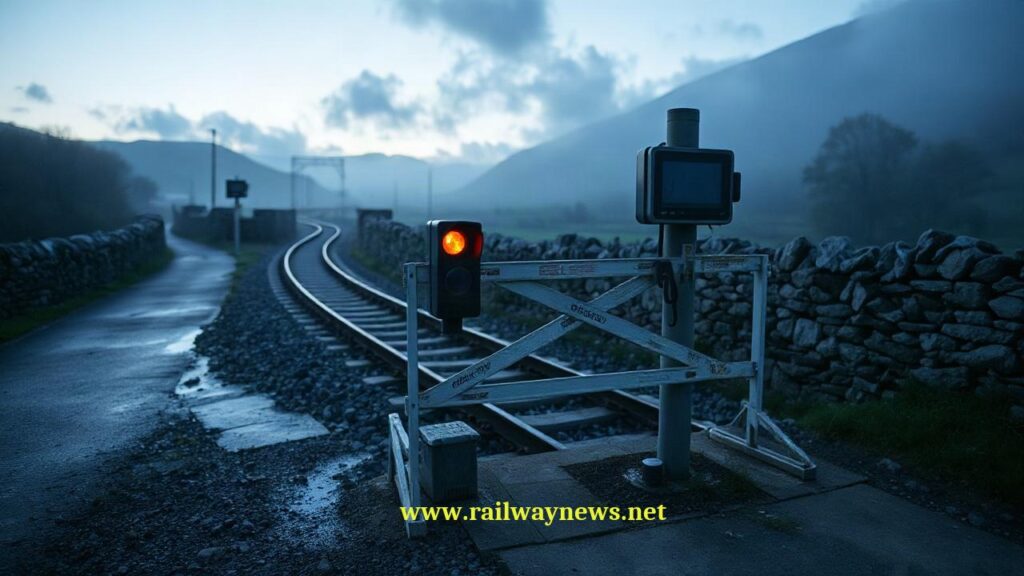
A major aspect of the upgrade centers on improving safety at level crossings. The integration and automation of these crossings are paramount. Traditional level crossings, reliant on manual gate operation or simpler signaling systems, present a considerable risk. The new system will significantly reduce this risk through automated control, improved signaling, and enhanced safety measures. This automation not only increases safety but also reduces operational costs and enhances overall efficiency.
Interoperability and Cross-Border Rail Traffic
The upgraded signaling system is designed for seamless interoperability with neighboring countries’ rail networks. This is a key aspect of the overall modernization effort, enabling smoother cross-border rail traffic flow. The improved interoperability facilitates international freight and passenger transport, significantly enhancing Portugal’s integration into the wider European rail network. The adoption of ETCS, a pan-European standard, is instrumental in achieving this interoperability.
Reduced Human Dependency and Improved Operating Conditions
The modernization project aims to decrease the reliance on human intervention in railway operations. While human expertise remains crucial, the enhanced automation capabilities of ETCS and the upgraded control-command system significantly reduce the risk of human error. This, in turn, leads to improved operational reliability, reduced delays, and increased overall efficiency. Additionally, the modernization enhances operating conditions for railway staff, streamlining their tasks and reducing workload.
Conclusions
The modernization of Portugal’s railway signaling and control systems, spearheaded by Infraestruturas de Portugal, represents a significant investment in the country’s transportation infrastructure. The project’s scope extends beyond simple technological upgrades; it reflects a strategic vision for enhanced safety, efficiency, and interoperability within the national and broader European rail network. The implementation of ETCS (European Train Control System) is a crucial step towards aligning Portugal’s rail infrastructure with European standards, facilitating cross-border connectivity and promoting economic growth. The improved safety at level crossings, achieved through automation and advanced signaling, demonstrably reduces risk and operational costs. The reduction in human dependency through automation contributes to more reliable operations and creates a safer working environment for railway staff. The project’s success hinges on effective implementation, ongoing maintenance, and continuous integration with future technological advancements within the railway sector. The holistic approach, combining signaling upgrades with the procurement of new rolling stock, highlights a commitment to detailed modernization. Looking ahead, the success of this project will serve as a benchmark for future rail infrastructure improvements in Portugal and potentially other European countries striving to achieve similar modernization goals. The integration of these modern signaling systems will not only improve the safety and efficiency of the Portuguese railway network but will also play a vital role in the country’s economic development and its integration into the broader European transport system.

Railway infrastructure, rolling stock and transport technologies specialist focused on global rail industry developments, high-speed rail systems, signaling technologies and freight transportation. Covering railway investments, public transport modernization, rail operations and international mobility projects across Europe, Asia and North America.
RELATED POSTS

September 5, 2026 4:19 pm
CPK launched formal tender talks with four consortia to design...

September 5, 2026 7:14 pm
HS2 Ltd signed renegotiated civils contracts with EKFB and Align...

September 6, 2026 4:12 am
Alstom delivered the first of 100 new G Class trams...
September 5, 2026 6:17 pm
Universal Signalling won a deal to install its U-Cross system...
September 6, 2026 8:17 am
DB InfraGO reopened the Nuremberg-Regensburg line in Bavaria on 31...
September 6, 2026 12:20 pm
Indian Railways ordered a probe after a fire destroyed 2...