
KiwiRail’s Wellington Rail Upgrade: Double-Tracking Success
The Trentham to Upper Hutt double-tracking project by KiwiRail enhances Wellington’s rail network infrastructure, addressing congestion and increasing reliability through improved capacity and passenger/freight efficiency.
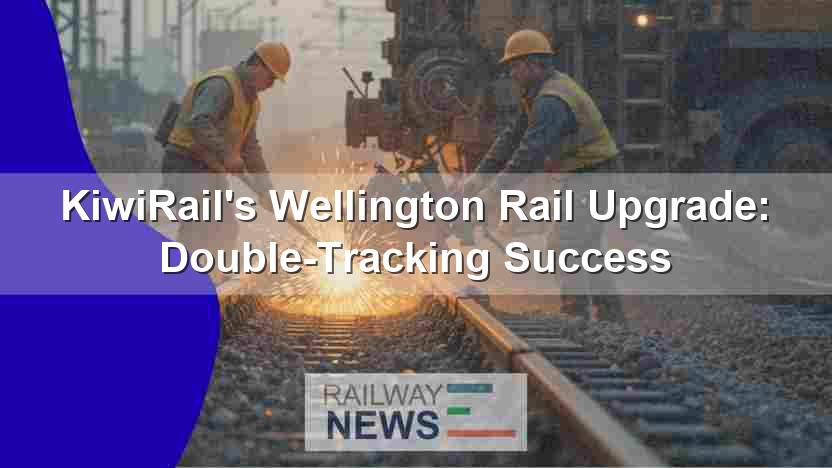
This article examines the significant double-tracking project undertaken by KiwiRail on the Trentham to Upper Hutt rail line in Wellington, New Zealand. This initiative, part of a broader NZD 193 million ($126.6 million USD) investment in the Wellington Metro Rail Network, represents a crucial step in enhancing the region’s railway infrastructure. The project’s scope extends beyond mere track duplication; it encompasses upgrades to stations, level crossings, signaling systems, and the addition of crucial infrastructure like an underpass at Trentham Station. This analysis will delve into the project’s technical aspects, its strategic importance within the larger Wellington rail network, and the wider implications for New Zealand’s national rail investment strategy. We will explore the challenges involved in such a large-scale undertaking, including logistical complexities and potential disruptions to passenger and freight services, and assess the long-term benefits for commuters and freight operators alike. Finally, the analysis will place this project within the context of broader government investment in New Zealand’s rail network, highlighting the country’s commitment to modernizing and expanding its railway capabilities.
Double-Tracking for Increased Capacity and Reliability
The core objective of the Trentham to Upper Hutt double-tracking project is to alleviate congestion and improve the overall reliability of the Wellington rail network. Currently, single-track sections create bottlenecks, particularly during peak hours when commuter trains (Wairarapa Line) and freight services share the line. Double-tracking eliminates this critical constraint, allowing for increased train frequency and improved scheduling flexibility. This translates to shorter commute times for passengers and more efficient freight transportation, boosting both economic productivity and passenger satisfaction. The 2.7km stretch of newly laid track, along with station upgrades, directly addresses the most congested areas, significantly improving network throughput.
Station Upgrades and Supporting Infrastructure
Beyond the double-tracking itself, the project involves substantial improvements to Trentham and Wallaceville stations. These upgrades include the construction of additional platforms and passenger shelters, enhancing passenger comfort and safety. Further investment focuses on improving level crossings and signaling systems throughout the affected area. These safety improvements are critical for minimizing delays and enhancing overall network efficiency. The construction of an underpass at Trentham Station is especially significant; it physically separates road and rail traffic, enhancing safety and preventing delays caused by crossing conflicts.
Strategic Importance within the Wellington Rail Network
The Trentham to Upper Hutt upgrade is not an isolated project; it forms a critical component of the broader Wellington Metro Rail Network modernization plan. By addressing a key capacity constraint, it improves the overall efficiency and resilience of the entire network. The project’s success will have ripple effects across other lines, allowing for improved coordination between commuter and freight services and enabling future expansion opportunities. The integration of upgraded signaling and safety systems enhances the entire network’s operational capabilities, paving the way for more sophisticated train control and management systems in the future. The project showcases a phased approach, demonstrating the strategic planning required for large-scale infrastructure projects.
National Rail Investment and Future Outlook
This project is part of a wider NZD 193 million ($126.6 million USD) investment in the Wellington rail network, further complemented by additional funding from the Greater Wellington Regional Council. This demonstrates a significant commitment to improving public transportation in the region. Additionally, the project aligns with the broader national strategy of investing in railway infrastructure, as evidenced by significant investments in the North Auckland Line. The substantial government funding allocated to KiwiRail over the next two years underscores a long-term vision of modernizing and expanding New Zealand’s rail network to meet future transportation demands. This investment promotes sustainability by prioritizing rail as a more environmentally friendly mode of transport compared to road-based alternatives.
Conclusion
The double-tracking of the Trentham to Upper Hutt rail line represents a significant step forward for New Zealand’s railway infrastructure. This project, costing NZD 193 million ($126.6 million USD), is not merely about adding track; it’s a strategic investment in improving capacity, reliability, and safety within the Wellington Metro Rail Network. The project’s scope, including station upgrades, improved signaling, and an underpass at Trentham Station, highlights a holistic approach to network enhancement. By alleviating congestion, improving passenger experience, and increasing the efficiency of freight transport, the project delivers tangible benefits to commuters and businesses alike. This initiative is a clear demonstration of New Zealand’s commitment to modernizing its rail network, aligning with broader national strategies to improve transport infrastructure and sustainability. The success of this project will undoubtedly serve as a model for future rail upgrades throughout the country, showcasing the significant positive impact of well-planned and executed railway infrastructure projects. The significant investment highlights a forward-thinking approach to transportation, contributing to economic growth and a more sustainable future for New Zealand.

Railway infrastructure, rolling stock and transport technologies specialist focused on global rail industry developments, high-speed rail systems, signaling technologies and freight transportation. Covering railway investments, public transport modernization, rail operations and international mobility projects across Europe, Asia and North America.
RELATED POSTS

September 5, 2026 4:19 pm
CPK launched formal tender talks with four consortia to design...

September 5, 2026 7:14 pm
HS2 Ltd signed renegotiated civils contracts with EKFB and Align...

September 6, 2026 4:12 am
Alstom delivered the first of 100 new G Class trams...
September 5, 2026 6:17 pm
Universal Signalling won a deal to install its U-Cross system...
September 6, 2026 8:17 am
DB InfraGO reopened the Nuremberg-Regensburg line in Bavaria on 31...
September 6, 2026 12:20 pm
Indian Railways ordered a probe after a fire destroyed 2...