
Delhi Metro Blue Line Expansion: Mohan Nagar Extension
The planned 5km expansion of Delhi’s Blue Line Metro from Vaishali to Mohan Nagar showcases India’s commitment to improving urban transportation through large-scale infrastructure projects, highlighting the complexities involved in such ambitious public transit expansions.
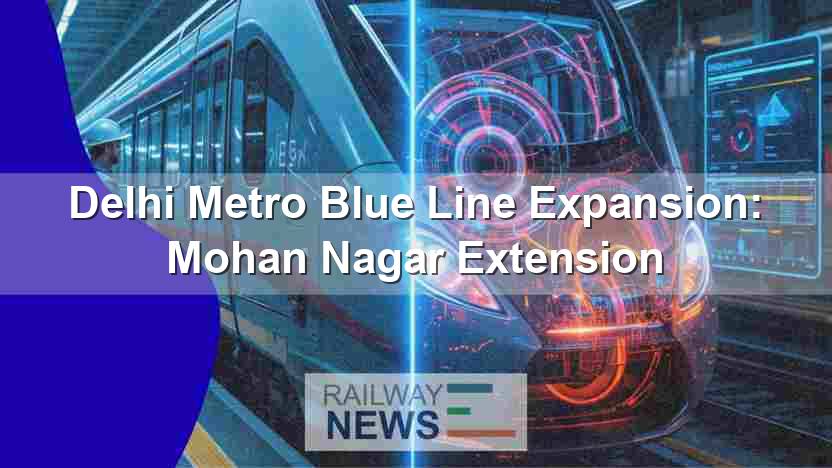
This article explores the planned expansion of Delhi’s Blue Line Metro, focusing on its significance within the broader context of Delhi’s expanding metro network and the complexities involved in such large-scale infrastructure projects. The extension, a 5km stretch from Vaishali to Mohan Nagar in Ghaziabad (Uttar Pradesh), represents a substantial investment and showcases the Indian government’s commitment to improving urban transportation. We will analyze the project’s financial aspects, its impact on the existing network, the logistical challenges of construction, and the potential benefits for commuters. This examination will provide insights into the challenges and successes of major public transit expansions in rapidly developing urban environments. The analysis will delve into the technical aspects of the project, considering factors such as land acquisition, integration with existing lines, and the overall impact on the city’s transportation infrastructure.
The Blue Line Extension: A Detailed Look
The proposed 5km extension of the Delhi Metro Blue Line (DMRC) from Vaishali to Mohan Nagar is a significant undertaking. This expansion will add four new stations: Prahlad Garhi, Vasundhara Sector 14, Sahibabad, and the crucial interchange station at Mohan Nagar, connecting the Blue Line with the existing Red Line. The project necessitates the acquisition of 86,857 square meters of land, posing a considerable logistical challenge. The estimated cost is a substantial Rs18.08 billion ($250.71 million), with the Indian Central Government contributing 18% and the Uttar Pradesh government covering the remainder. The project’s timeline anticipates commencement in April, with completion slated for 2024. This aggressive schedule highlights the importance placed on timely delivery of this critical infrastructure project.
Financial and Political Aspects of the Project
The financial structuring of the project underscores the collaborative nature of large-scale infrastructure development in India. The shared responsibility between the central and state governments illustrates a commitment to investing in public transportation. Securing funding and managing the allocation of resources are critical elements, requiring meticulous financial planning and effective collaboration between various government bodies. The cost-benefit analysis of this extension, considering ridership projections and economic impact on the region, is a key factor in justifying the significant investment. Further, understanding the mechanisms of funding and resource allocation provides insights into the broader framework governing public transportation projects in India.
Integration with Existing Network and Operational Considerations
The planned intersection of the extended Blue Line with the Red Line at Mohan Nagar station is a crucial aspect of the project. This integration aims to enhance connectivity and improve the overall efficiency of the Delhi Metro network. The design and implementation of seamless transfers between lines are essential for passenger convenience and the smooth flow of traffic. Operational considerations, including signal systems, train scheduling, and passenger information systems, must be carefully integrated to ensure optimal performance. The challenges of integrating a new section into an existing, complex network necessitate careful planning and coordination during both the construction and post-commissioning phases. This includes considerations for rolling stock, signalling compatibility, and overall network capacity management.
Construction Challenges and Mitigation Strategies
Constructing a metro line in a densely populated urban area like Ghaziabad presents significant challenges. Land acquisition, often a protracted process, is a primary hurdle. Minimizing disruptions to existing infrastructure, businesses, and residential areas requires sophisticated construction techniques and meticulous planning. Environmental considerations, such as noise and air pollution control, are equally important. The use of advanced construction methods, such as tunnel boring machines (TBMs) for underground sections, can help mitigate some of these challenges. Successful project delivery depends on robust mitigation strategies addressing potential delays and complications, ensuring a timely completion while prioritizing the safety and wellbeing of the community.
Conclusions
The extension of Delhi’s Blue Line Metro to Mohan Nagar represents a significant step in expanding Delhi’s public transportation network. The project’s 5km length, four new stations, and connection to the Red Line at Mohan Nagar are key features. The Rs18.08 billion ($250.71 million) cost highlights the substantial investment required for such infrastructure projects. The shared funding by the Central and Uttar Pradesh governments underscores a commitment to improving urban mobility. The project’s complexities involve land acquisition, integration with existing lines, and mitigation of construction challenges in a densely populated urban area. The successful completion of this project will significantly enhance connectivity, reduce commute times for residents, and stimulate economic activity in the region. However, careful planning, efficient resource management, and effective collaboration between various stakeholders are crucial for mitigating potential challenges and ensuring the timely and successful implementation of the project. The lessons learned from this project can inform future large-scale public transit developments, not only in India but globally, providing valuable insights into best practices in urban planning and infrastructure development.

Railway infrastructure, rolling stock and transport technologies specialist focused on global rail industry developments, high-speed rail systems, signaling technologies and freight transportation. Covering railway investments, public transport modernization, rail operations and international mobility projects across Europe, Asia and North America.
RELATED POSTS

September 5, 2026 4:19 pm
CPK launched formal tender talks with four consortia to design...

September 6, 2026 4:12 am
Alstom delivered the first of 100 new G Class trams...

September 5, 2026 7:14 pm
HS2 Ltd signed renegotiated civils contracts with EKFB and Align...
September 5, 2026 6:17 pm
Universal Signalling won a deal to install its U-Cross system...
September 6, 2026 8:17 am
DB InfraGO reopened the Nuremberg-Regensburg line in Bavaria on 31...
September 7, 2026 11:16 pm
China Railway Tunnel Group completed the 11.3-km underwater Yangtze tunnel...