
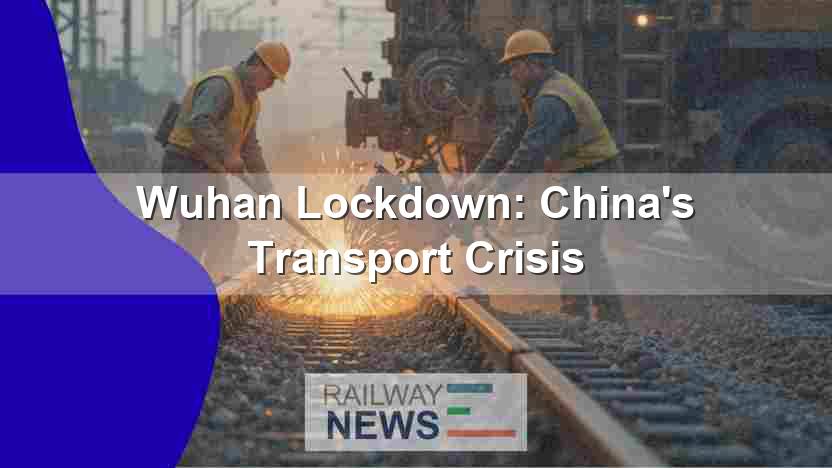
Wuhan Lockdown: China’s Transport Crisis
The 2020 Wuhan coronavirus outbreak led to a complete shutdown of all modes of transport in and out of Wuhan, disrupting global health, supply chains, and international travel networks, highlighting the severe impact on transportation infrastructure and public health strategies worldwide.
The Impact of the 2020 Wuhan Coronavirus Outbreak on China’s Transportation System
In January 2020, the world witnessed the rapid escalation of the novel coronavirus (COVID-19) pandemic, originating in Wuhan, China. This outbreak had a profound and immediate impact on global health, but its effects also rippled through various sectors, significantly disrupting the intricate network of China’s transportation infrastructure. This article explores the unprecedented measures taken by Chinese authorities to contain the virus’s spread, focusing specifically on the complete shutdown of transportation to and from Wuhan, a major transportation hub, and the broader implications for the nation’s transportation systems and the global travel landscape. The analysis will explore the immediate effects of the shutdown, the logistical challenges it presented, and the long-term consequences for transportation planning and emergency response strategies. We will also examine the international repercussions and the lessons learned from this crisis concerning public health emergencies and their impact on global transportation networks.
The Wuhan Lockdown and its Transportation Implications
The decision to completely shut down all modes of transport—air, rail (including High-Speed Rail (HSR)), road, and water—in and out of Wuhan was an extreme but necessary measure to contain the rapid spread of the virus. Wuhan, with a population of approximately 11 million, serves as a crucial transportation hub in China. The closure of Wuhan Tianhe International Airport, a major international airport with connections to numerous global cities, and the city’s extensive railway station, significantly impacted both domestic and international travel. The immediate impact was a dramatic reduction in passenger volume and freight movement, causing widespread disruption to supply chains and the daily lives of millions. The deployment of armed guards at the railway station highlights the seriousness of the situation and the government’s commitment to enforcing the lockdown. Temperature checks conducted by health workers in hazmat suits (hazardous materials suits) at checkpoints further demonstrated the detailed nature of the containment effort.
Disruptions to the National and International Transportation Networks
The Wuhan lockdown had cascading effects on China’s national transportation network. The Lunar New Year holiday, a period of mass migration within China, was significantly impacted. An estimated 400 million people had planned to travel during this period, and the shutdown disrupted countless journeys, impacting family reunions and economic activities. The ripple effect extended beyond China’s borders. Airports worldwide implemented enhanced screening procedures for passengers arriving from China, including the establishment of dedicated arrival zones for those coming from Wuhan. This demonstrated a global effort to prevent the further spread of the virus. The incident showcased the interconnectedness of global transportation networks and the vulnerability of these systems to large-scale health crises.
Logistical Challenges and Emergency Response
The rapid and complete shutdown of Wuhan’s transportation system presented significant logistical challenges. The sudden halt in passenger and freight movements required immediate adjustments to supply chains, resource allocation, and emergency services. Ensuring the continued supply of essential goods and services to the city’s population became a top priority. The mobilization of resources, the establishment of alternative supply routes, and the coordination of emergency services demonstrated the capacity of the Chinese government to respond to a large-scale crisis. However, it also highlighted the need for improved emergency response plans that consider the potential impact of pandemics on transportation systems.
Lessons Learned and Future Preparedness
The 2020 Wuhan coronavirus outbreak and the subsequent transportation shutdown provided invaluable lessons for future pandemic preparedness and response. The event underscored the critical importance of robust public health infrastructure, effective communication strategies, and swift, decisive action in managing large-scale health crises. The experience also highlighted the need for more resilient and flexible transportation systems that can adapt to unexpected disruptions. Future planning should incorporate scenarios that account for the potential impact of pandemics on transportation networks, ensuring the continued flow of essential goods and services while minimizing the disruption to the daily lives of citizens. This includes developing alternative transportation plans, strengthening emergency response capabilities, and enhancing international collaboration to coordinate responses to global health emergencies. The swift response, albeit drastic, demonstrated the capacity for immediate large-scale action in the face of a significant threat, albeit with significant economic and social disruption. The long-term implications require further study regarding the balance between public health and the smooth functioning of global and national transportation systems. Further research into the specific economic and societal impact would add valuable data to future pandemic preparedness planning. The integration of real-time data analysis and predictive modelling into transportation management could enhance response capabilities in future crises. International cooperation regarding health alerts and transportation management protocols should also be enhanced. Finally, investment in robust, flexible, and interconnected transportation systems is a crucial step towards building resilience in the face of unforeseen events.

Railway infrastructure, rolling stock and transport technologies specialist focused on global rail industry developments, high-speed rail systems, signaling technologies and freight transportation. Covering railway investments, public transport modernization, rail operations and international mobility projects across Europe, Asia and North America.
RELATED POSTS

September 5, 2026 4:19 pm
CPK launched formal tender talks with four consortia to design...

September 5, 2026 7:14 pm
HS2 Ltd signed renegotiated civils contracts with EKFB and Align...

September 6, 2026 4:12 am
Alstom delivered the first of 100 new G Class trams...
September 5, 2026 6:17 pm
Universal Signalling won a deal to install its U-Cross system...
September 6, 2026 8:17 am
DB InfraGO reopened the Nuremberg-Regensburg line in Bavaria on 31...
September 6, 2026 12:20 pm
Indian Railways ordered a probe after a fire destroyed 2...