
East West Rail Phase 2: Modernizing Britain’s Railway
The East West Rail Link project aims to modernize Britain’s railway infrastructure through significant upgrades and new construction, focusing on major track and signaling improvements along routes connecting Bicester and Bedford, Aylesbury and Milton Keynes, and between Bletchley and Claydon Junction. This comprehensive upgrade is designed to enhance connectivity, reduce journey times, and stimulate economic growth across multiple regions while ensuring the smooth integration of new infrastructure into existing rail services.
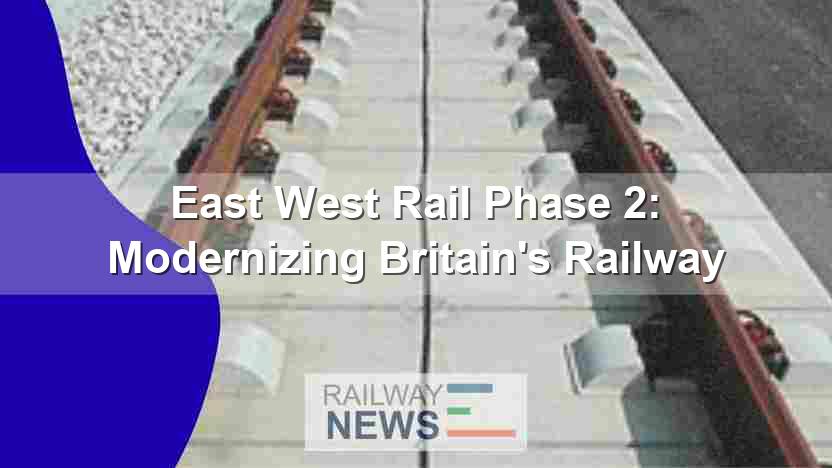
This article explores the significant advancements in the East West Rail (EWR) project, specifically focusing on the recently approved second phase. The EWR represents a crucial investment in Britain’s railway infrastructure, aiming to improve connectivity, reduce journey times, and stimulate economic growth across several key regions. The project’s ambitious scope involves not only the construction of new lines but also the extensive upgrading of existing track and signaling systems. This necessitates careful planning and execution, requiring consideration of various engineering challenges and stakeholder involvement. The ensuing sections will delve into the details of Phase 2, exploring its technical complexities, economic impact, and broader implications for the national transport network. The article will also analyze the strategic importance of interlinking major existing lines, enhancing efficiency and passenger experience. Finally, it will examine the long-term benefits and sustainable transport goals embedded within the project.
Phase 2: A Detailed Upgrade
Phase 2 of the EWR focuses on significant upgrades and new construction between several key locations. This includes major track and signaling works along the routes connecting Bicester and Bedford, Aylesbury and Milton Keynes. The project also involves the crucial rehabilitation of the railway line between Bletchley and Claydon Junction. These improvements are not simply cosmetic; they involve the complete overhaul of aging infrastructure to accommodate higher train speeds, increased frequencies, and improved overall reliability. This necessitates advanced signaling systems, improved track geometry, and potential electrification, depending on the final specifications. Such extensive work requires meticulous planning to minimize disruption to existing rail services and to ensure the smooth integration of new infrastructure into the operational network.
Connecting Major Rail Lines: Strategic Interoperability
One of the most strategic aspects of the EWR is its planned integration with existing major lines. By linking the Great Western Main Line (GWML), Chiltern Main Line, West Coast Main Line (WCML), and Midland Main Line, the EWR creates a significantly enhanced transport network. This interconnectivity facilitates seamless transfers for passengers traveling between different regions, reducing the need for lengthy journeys and multiple changes. Additionally, this integration fosters efficient freight transport, allowing for the movement of goods across a wider area with greater ease. The implications of this enhanced network extend far beyond improved passenger experience, potentially unlocking economic growth in previously underserved areas.
Economic Impact and Sustainable Transport
The economic benefits of the EWR are far-reaching. The project is expected to create numerous jobs, both directly in construction and indirectly through associated industries. Moreover, improved connectivity will stimulate economic growth in the regions served by the line, benefiting businesses and attracting investment. The increased accessibility fostered by the EWR can also lead to the development of new housing and urban expansion in areas previously constrained by limited transport options. Critically, the project is designed with a focus on sustainability. The aim is to provide a “greener, low-carbon transport system,” reducing reliance on road transport and promoting environmentally friendly travel alternatives. This aligns with broader national strategies aimed at reducing carbon emissions and promoting sustainable development.
Conclusion: A Vision for the Future of Rail
The completion of Phase 2 of the East West Rail represents a considerable step towards a more modern, efficient, and sustainable railway network in the UK. The project’s focus on upgrading existing infrastructure, alongside connecting major existing lines, significantly enhances connectivity between key regions. The economic benefits extend beyond job creation; they include stimulating regional growth, improving accessibility, and encouraging sustainable transport choices. The strategic integration of the EWR with the GWML, Chiltern Main Line, WCML, and Midland Main Line creates a cohesive, high-capacity network, facilitating both passenger and freight transport. This ultimately aims to provide a more efficient and environmentally friendly transportation system. The government’s commitment to this project demonstrates a forward-looking approach to infrastructure development, recognizing the crucial role of rail in supporting economic prosperity and sustainable growth. The ongoing success of the EWR serves as a model for future rail investments, highlighting the potential to transform regional economies while simultaneously achieving environmental sustainability targets. The meticulous planning and execution required for such a complex undertaking underscore the importance of strategic infrastructure investments in shaping a modern and efficient transport system for the future. The long-term benefits of the EWR extend far beyond the immediate impact, positioning the UK at the forefront of rail innovation and sustainability.

Railway infrastructure, rolling stock and transport technologies specialist focused on global rail industry developments, high-speed rail systems, signaling technologies and freight transportation. Covering railway investments, public transport modernization, rail operations and international mobility projects across Europe, Asia and North America.
RELATED POSTS

September 5, 2026 4:19 pm
CPK launched formal tender talks with four consortia to design...

September 5, 2026 7:14 pm
HS2 Ltd signed renegotiated civils contracts with EKFB and Align...

September 6, 2026 4:12 am
Alstom delivered the first of 100 new G Class trams...
September 5, 2026 6:17 pm
Universal Signalling won a deal to install its U-Cross system...
September 6, 2026 8:17 am
DB InfraGO reopened the Nuremberg-Regensburg line in Bavaria on 31...
September 6, 2026 12:20 pm
Indian Railways ordered a probe after a fire destroyed 2...