
Groningen ATO Trial: Revolutionizing Dutch Railways
The successful trial run in Groningen showcases Stadler’s advanced Automatic Train Operation (ATO) system, providing valuable insights into its practical application for improved punctuality, comfort, and operational efficiency on a real-world railway network.
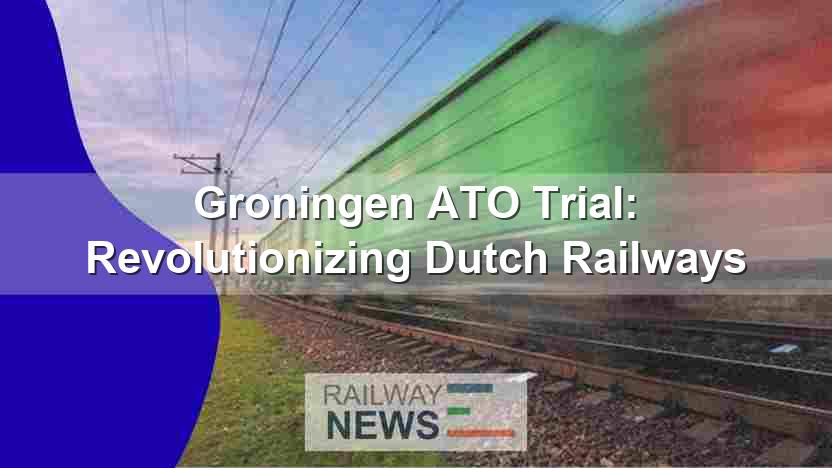
This article explores the advancements in Automatic Train Operation (ATO) technology, focusing on a recent successful trial run in Groningen, Netherlands. The implementation of ATO represents a significant step towards a more efficient, safer, and passenger-friendly railway system. This technology, while still under development and testing in many regions, promises to revolutionize the way trains operate, improving punctuality, passenger comfort, and overall operational efficiency. The Groningen trial, a collaborative effort between Stadler, ProRail (the Dutch railway infrastructure manager), Provincie Groningen (the provincial government), and Arriva Netherlands (a railway operator), provides valuable insights into the practical application of ATO in a real-world setting. This trial run, involving 50 VIP passengers, marks a pivotal moment for the Netherlands’ railway modernization efforts, highlighting the potential of ATO to transform the country’s railway network. The successful completion of this phase provides valuable data for further development and wider implementation of the system. The article will delve into the specifics of the trial, the technology itself, the involved parties, and the broader implications for the future of railway transportation.
The Groningen ATO Trial: A Collaborative Effort
The successful trial run in Groningen showcased Stadler’s ATO system in a passenger-carrying environment. This collaboration between Stadler, ProRail, Provincie Groningen, and Arriva Netherlands exemplifies the importance of public-private partnerships in driving technological innovation within the railway sector. Each partner played a crucial role: Stadler provided the ATO-equipped train and the underlying technology; ProRail ensured the necessary infrastructure support and safety compliance; Provincie Groningen offered logistical and administrative support; and Arriva Netherlands provided operational expertise and passenger interaction data. This multifaceted collaboration underscores the complexity of integrating new technologies into existing railway infrastructure and the need for a coordinated approach to ensure successful deployment. The selection of Groningen as a testing ground likely reflected its relatively less complex railway network compared to other major Dutch cities, enabling focused testing and evaluation. The trial served as a practical demonstration of the technology’s capabilities and its potential to improve passenger experience.
ATO Technology: Enhancing Safety and Efficiency
The Stadler ATO system used in the Groningen trial operates at Grade of Automation (GoA) level 2. This means the train automatically handles acceleration, braking, and station stopping, under the supervision of a driver who maintains overall control and can intervene if necessary. A crucial safety element is the integration of a robust train protection system, providing an additional layer of security. The ATO system utilizes trackside information to generate optimal journey profiles, ensuring smooth and efficient operation. The technology optimizes train speed, minimizing energy consumption during braking. This energy efficiency feature is especially pertinent in today’s climate-conscious environment, aligning perfectly with the railway industry’s broader sustainability goals. Additionally, by optimizing train spacing and speeds, ATO systems significantly reduce congestion, thereby improving overall network capacity and passenger flow.
Human Factors and Passenger Experience
The Groningen trial’s second phase is particularly focused on assessing the human factors associated with ATO. Understanding passenger reactions and acceptance of automated train operation is crucial for wider implementation. This includes evaluating passenger comfort levels during automated operation, investigating any potential anxieties surrounding the lack of direct driver control, and generally assessing the overall user experience. Feedback from the VIP passengers during the trial will play a significant role in refining the system and addressing any areas for improvement. The integration of passenger feedback loops is essential to ensure that the technology not only meets operational requirements but also fulfills passenger expectations and enhances their overall journey experience. Stadler’s approach reflects a user-centric design philosophy, crucial for the successful adoption of new technologies in the passenger transport sector.
Future Implications and Wider Adoption
The successful Groningen trial represents a significant step towards the wider adoption of ATO technology in the Netherlands and beyond. The demonstrated benefits – increased safety, improved efficiency, enhanced passenger experience, and energy savings – position ATO as a key element of future railway modernization strategies. The learnings from this trial will inform future implementations, helping to overcome potential challenges and refine the technology for optimal performance in diverse operational contexts. The collaboration forged during this project establishes a strong foundation for continued innovation and technological advancements within the Dutch railway system and serves as a valuable case study for other countries looking to implement similar advanced train control systems. The success of this initial test bodes well for the future integration of ATO on a larger scale, transforming the railway industry towards a more autonomous and sustainable future.
Conclusions
The successful trial run of Stadler’s Automatic Train Operation (ATO) system in Groningen marks a significant milestone in the advancement of railway technology in the Netherlands. The collaboration between Stadler, ProRail, Provincie Groningen, and Arriva Netherlands showcased the importance of public-private partnerships in driving innovation within the rail sector. The trial, operating at GoA Level 2, demonstrated the system’s ability to automatically control train acceleration, braking, and station stopping, all while maintaining a high level of safety through the integration of a detailed train protection system. The focus on human factors and passenger experience, a critical element of the second phase, highlights the user-centric approach crucial for successful technology integration. The energy efficiency gains, achieved through optimized speed control and reduced braking, align with the railway industry’s growing emphasis on sustainability. The lessons learned from this trial will be instrumental in informing broader implementation plans across the Netherlands and other regions, establishing a model for future ATO projects globally. The overall success of the trial strongly suggests a promising future for ATO technology in enhancing safety, efficiency, and passenger experience across the railway network, ultimately paving the way for a more modern and sustainable transportation system. The technological advancements demonstrated in Groningen clearly point towards a future where railway operations are more efficient, more sustainable, and more passenger-centric.

Railway infrastructure, rolling stock and transport technologies specialist focused on global rail industry developments, high-speed rail systems, signaling technologies and freight transportation. Covering railway investments, public transport modernization, rail operations and international mobility projects across Europe, Asia and North America.
RELATED POSTS

September 5, 2026 4:19 pm
CPK launched formal tender talks with four consortia to design...

September 6, 2026 4:12 am
Alstom delivered the first of 100 new G Class trams...

September 5, 2026 7:14 pm
HS2 Ltd signed renegotiated civils contracts with EKFB and Align...
September 5, 2026 6:17 pm
Universal Signalling won a deal to install its U-Cross system...
September 6, 2026 8:17 am
DB InfraGO reopened the Nuremberg-Regensburg line in Bavaria on 31...
September 7, 2026 11:16 pm
China Railway Tunnel Group completed the 11.3-km underwater Yangtze tunnel...