
Rail Baltica Electrification: Engineering & Sustainability
The procurement of engineering services for Rail Baltica’s electrification project involves a complex interplay of technological considerations, environmental responsibilities, and the careful management of a large-scale engineering endeavor, with a focus on ensuring efficiency, sustainability, and long-term success.
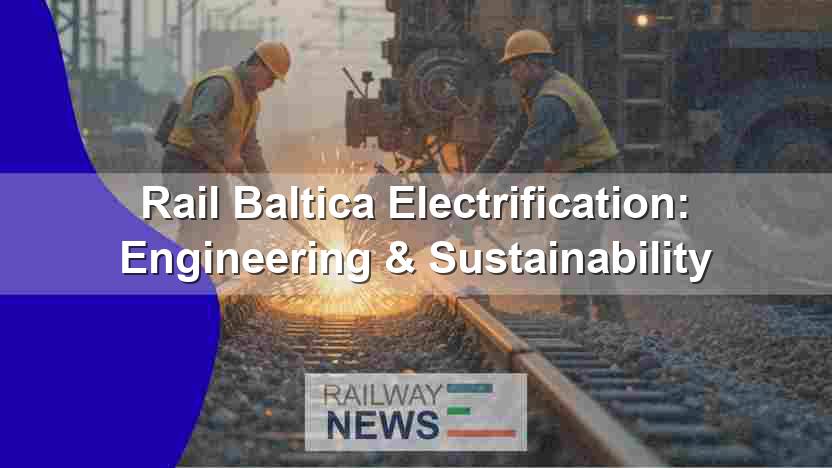
The Electrification of Rail Baltica: A Detailed Overview of Engineering and Sustainability
The ambitious Rail Baltica project, a joint venture (JV) between the Baltic States, represents a significant undertaking in European rail infrastructure development. This article explores a critical aspect of this project: the electrification of the rail corridor. The procurement of engineering services for this subsystem is not merely a logistical exercise; it’s the cornerstone upon which the efficiency, sustainability, and overall success of Rail Baltica hinges. This process involves a complex interplay of technological considerations, environmental responsibilities, and the careful management of a large-scale engineering endeavor. We will examine the scope of the electrification tender, the technical challenges involved, the environmental commitments driving design choices, and the long-term impact of this project on regional transportation. Understanding the complexities involved in this electrification process is essential to appreciate the scale and significance of Rail Baltica’s contribution to the European rail network.
Tender Specifications and Scope of Work
RB Rail, the joint venture managing the Rail Baltica project, has issued a tender for the procurement of detailed electrification engineering services. This tender encompasses the entire lifecycle of the energy subsystem, from initial design and technical studies to the supervision of construction and commissioning. The winning firm will be responsible for developing the technical architecture of the energy subsystem, which includes crucial components such as high-voltage feeding lines connecting traction substations to the national high-voltage grids, the traction substations themselves, and the overhead catenary system (OCS). A key aspect of this work is the design and implementation of the electrification control command system, a sophisticated network ensuring safe and efficient power distribution along the entire corridor.
Technical Challenges and Advanced Simulations
The engineering firm selected will face considerable technical challenges. These include conducting sophisticated software simulations to model energy subsystem performance under various operational scenarios. This will involve detailed modeling of power flows, voltage regulation, and fault tolerance to ensure the system’s reliability and resilience. The development of detailed technical specifications for subsequent deployment contracts is also critical, providing a clear framework for contractors responsible for the physical construction and installation of the various components. The firm’s expertise in integrating advanced technologies for optimizing energy efficiency and minimizing environmental impact will be paramount.
Environmental Sustainability and Renewable Energy Integration
A core objective of the Rail Baltica project is to build a sustainable infrastructure. This commitment extends to the electrification strategy, with a focus on integrating renewable energy sources into the power supply. The engineering firm will need to explore and propose innovative ways to minimize the environmental footprint of the project. This includes evaluating the feasibility of utilizing renewable energy sources to power traction substations and investigating strategies for reducing energy consumption through optimized system design and operational practices. The environmental impact assessment will be a crucial element of the overall project.
Oversight and Project Completion
Beyond design and specification, the successful bidder will play a crucial role in overseeing the execution of design and construction works. This includes rigorous quality control, adherence to environmental regulations, and ensuring the timely completion of the project. The chosen engineering firm will act as a critical link between the project management team and the various contractors involved in different stages of the electrification process. Their expertise will be vital in resolving technical challenges, managing risks, and ensuring the overall success of the Rail Baltica electrification initiative.
Conclusions
The electrification of Rail Baltica is a complex and crucial element of this ambitious infrastructure project. The tender process for the procurement of engineering services represents a significant step towards realizing this vision. The selected firm will not only be responsible for the technical design and implementation of the energy subsystem but also for ensuring its environmental sustainability. The successful bidder will be instrumental in shaping the future of rail transport in the Baltic States. The emphasis on advanced software simulation, renewable energy integration, and detailed project oversight highlights the commitment to both technical excellence and environmental responsibility. The long-term impact of Rail Baltica extends beyond the immediate regional benefits, contributing to the broader development of sustainable and efficient rail transport across Europe. The integration of modern technologies and environmentally conscious design principles solidifies Rail Baltica’s position as a pioneering example of sustainable infrastructure development. The successful completion of this electrification phase will significantly contribute to the overall success of the Rail Baltica project, facilitating efficient and environmentally friendly transport across the Baltic region for years to come. The emphasis on detailed planning, rigorous quality control, and proactive risk management will ultimately determine the success of this crucial element of the Rail Baltica initiative.

Railway infrastructure, rolling stock and transport technologies specialist focused on global rail industry developments, high-speed rail systems, signaling technologies and freight transportation. Covering railway investments, public transport modernization, rail operations and international mobility projects across Europe, Asia and North America.
RELATED POSTS

September 5, 2026 4:19 pm
CPK launched formal tender talks with four consortia to design...

September 6, 2026 4:12 am
Alstom delivered the first of 100 new G Class trams...

September 5, 2026 7:14 pm
HS2 Ltd signed renegotiated civils contracts with EKFB and Align...
September 5, 2026 6:17 pm
Universal Signalling won a deal to install its U-Cross system...
September 6, 2026 8:17 am
DB InfraGO reopened the Nuremberg-Regensburg line in Bavaria on 31...
September 7, 2026 11:16 pm
China Railway Tunnel Group completed the 11.3-km underwater Yangtze tunnel...