
Irish Rail’s €32M Upgrade: Modernizing Train Control
This article explores the €32 million contract awarded to Indra by Iarnród Éireann, Ireland’s national railway operator, for a state-of-the-art train control center in Dublin. This project represents a significant investment aimed at modernizing Ireland’s rail infrastructure, encompassing advanced technology like Mova Traffic and a 15-year maintenance contract with options for extension, aiming to enhance safety, operational efficiency, and passenger experience across the country’s extensive network of 2,400 kilometers
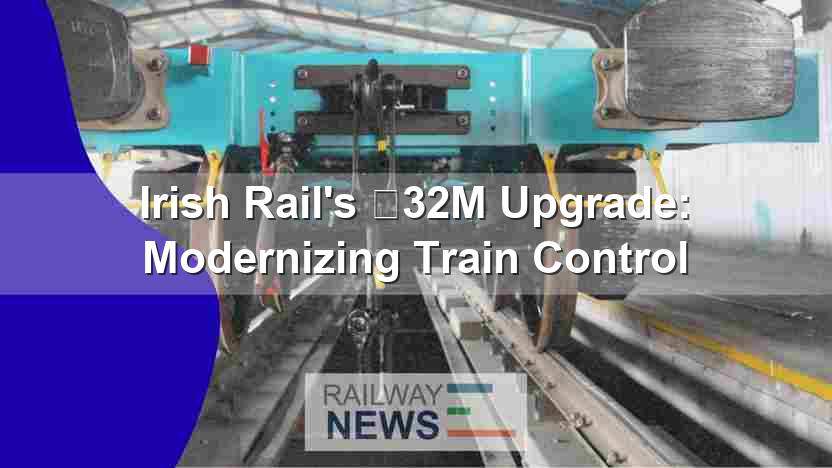
This article examines the significant investment by Iarnród Éireann (Irish Rail) in a new, state-of-the-art train control center in Dublin, Ireland. The €32 million contract awarded to Indra, a leading technology firm, marks a substantial step towards modernizing Ireland’s railway infrastructure. This modernization is crucial for managing the growing demands of a network spanning 2,400 kilometers and transporting over 50 million passengers annually. The project encompasses not only the design, supply, installation, and commissioning of a cutting-edge Rail Traffic Management System (TMS), but also a detailed 15-year maintenance contract with an option for a 5-year extension. The implications of this project extend beyond immediate operational improvements; it represents a strategic investment in enhanced safety, efficiency, and passenger experience for the Irish Rail network. This analysis will delve into the technological advancements, operational benefits, and long-term strategic significance of this undertaking.
Modernizing Train Control Systems: The Indra Contract
The heart of the project lies in the implementation of Indra’s Mova Traffic solution, a sophisticated integrated and automated control system. This technology represents a significant upgrade from existing systems, enabling centralized management of train operations across the entire network. The centralized nature of Mova Traffic allows for improved real-time monitoring, enhanced incident response capabilities, and streamlined resource allocation. This system’s capacity to integrate with existing and future signaling systems ensures scalability and adaptability for future network expansions and technological advancements within the Irish rail system.
Enhanced Safety and Operational Efficiency
The new control center, alongside its integrated TMS (Train Management System), promises a substantial improvement in safety protocols. Automated monitoring and centralized control allows for quicker identification and resolution of potential issues, reducing the risk of delays and incidents. Additionally, the enhanced efficiency resulting from centralized management directly impacts operational costs. Optimized train scheduling, improved resource allocation, and reduced response times to disruptions contribute to cost savings and increased operational efficiency for Irish Rail.
Improving Passenger Experience and Information
The upgrade extends beyond mere operational efficiency; it directly benefits the passenger experience. The improved control system facilitates more accurate and timely passenger information dissemination, reducing uncertainty and improving overall satisfaction. Streamlined incident management translates to faster resolution of delays and disruptions, minimizing inconvenience for passengers. The integration of advanced communication technologies within the Mova Traffic system paves the way for enhanced passenger service offerings in the future.
Long-Term Strategic Implications
The inclusion of training facilities within the new center signifies a commitment to long-term sustainability. Investing in the training and development of personnel ensures the ongoing effective operation and maintenance of the advanced TMS. The provision of a backup control center at a secondary location further reinforces the resilience and reliability of the system, minimizing the impact of potential disruptions. This holistic approach positions Irish Rail for sustained growth and improved service delivery for years to come.
Conclusions
The €32 million investment by Iarnród Éireann in the new train control center represents a significant leap forward in Irish rail infrastructure. The implementation of Indra’s Mova Traffic system, a cutting-edge Rail Traffic Management System (TMS), promises substantial improvements across multiple aspects of railway operation. From enhanced safety and operational efficiency to a better passenger experience, the benefits are far-reaching. The centralized management capabilities of the system streamline operations, enabling quicker responses to incidents and optimizing resource allocation. The emphasis on training and the inclusion of a backup control center highlight a commitment to long-term sustainability and operational resilience. The project’s success hinges not only on the technological advancements but also on the effective integration of the new system within the existing network and the detailed training of personnel. This significant investment underscores Irish Rail’s commitment to modernization and improvement, ensuring a more efficient, safer, and reliable rail service for passengers and the broader Irish economy. The project’s long-term impact on the network’s capacity to handle future growth and technological advancements will be significant, setting a new benchmark for railway infrastructure management in Ireland and potentially serving as a model for other national rail networks.

Railway infrastructure, rolling stock and transport technologies specialist focused on global rail industry developments, high-speed rail systems, signaling technologies and freight transportation. Covering railway investments, public transport modernization, rail operations and international mobility projects across Europe, Asia and North America.
RELATED POSTS

September 5, 2026 4:19 pm
CPK launched formal tender talks with four consortia to design...
September 5, 2026 7:14 pm
HS2 Ltd signed renegotiated civils contracts with EKFB and Align...

September 6, 2026 4:12 am
Alstom delivered the first of 100 new G Class trams...
September 6, 2026 8:17 am
DB InfraGO reopened the Nuremberg-Regensburg line in Bavaria on 31...
September 5, 2026 6:17 pm
Universal Signalling won a deal to install its U-Cross system...
September 6, 2026 12:20 pm
Indian Railways ordered a probe after a fire destroyed 2...