
Indian Railways Station Redevelopment: A PPP Approach
Indian Railways’ revitalization project of four key stations through a public-private partnership aims to transform these infrastructure hubs into modern, commercially viable centers by engaging private companies for redevelopment, enhancing passenger experience and contributing to overall network modernization.
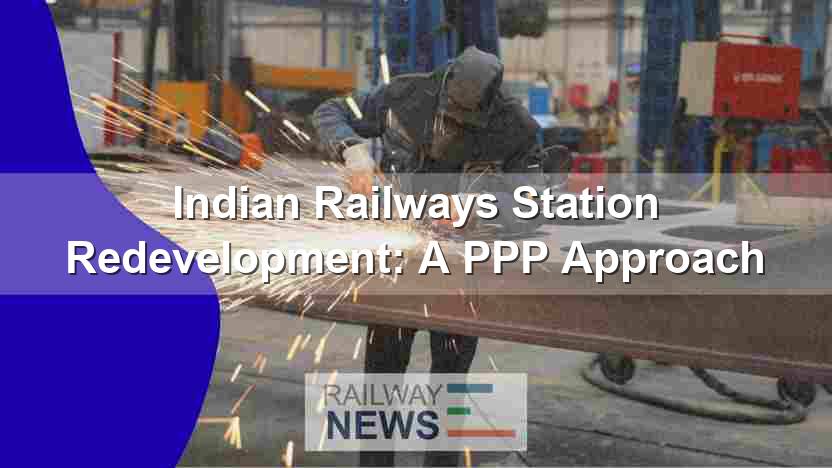
This article examines the significant initiative undertaken by Indian Railways (IR) to redevelop four key railway stations: Amritsar, Gwalior, Nagpur, and Sabarmati. This ambitious project, involving substantial private investment, aims to transform these stations into modern, commercially viable hubs, significantly enhancing passenger experience and contributing to the overall modernization of the IR network. The selection process, the financial implications, and the broader strategic context of this redevelopment within the larger framework of IR’s modernization and sustainability goals will be analyzed. The article explores the complexities of attracting private investment in public infrastructure projects, the challenges of managing large-scale construction projects within an operational railway environment, and the potential long-term impacts on both the railway system and the surrounding communities. The success of this project serves as a critical case study for future infrastructure development initiatives within India and potentially across other developing nations facing similar challenges in upgrading their transport networks.
Station Redevelopment: A Public-Private Partnership Approach
The Indian Railways’ decision to engage private sector companies in the redevelopment of these four stations represents a strategic shift towards leveraging private investment in public infrastructure. Nine companies – GR Infraprojects, Kalpataru Power Transmission, GMR Business and Consultancy, Cube Construction Engineering, Anchorage Infrastructure Investments Holdings, ISQ Asia Infrastructure Investments, Montecarlo, JKB Infrastructure, and Kalyan Toll Infrastructure – were shortlisted following a Request for Qualifications (RFQ) process conducted by the Indian Railway Stations Development Corporation (IRSDC). This public-private partnership (PPP) model aims to mitigate the financial burden on the government while introducing private sector efficiency and expertise in project management and execution. The project’s success hinges on the effective management of this partnership, ensuring alignment of interests between the public and private stakeholders.
Financial Investment and Projected Returns
The redevelopment is estimated to cost approximately Rs13 billion (approximately $173.2 million USD). This substantial investment underscores the government’s commitment to modernizing its railway infrastructure. The anticipated return on investment is expected to be significant, driven by increased commercial activity within and around the redeveloped stations. The transformation of these stations into commercial hubs, including retail spaces, hospitality facilities, and potentially other revenue-generating activities, is projected to generate substantial revenue streams for both IR and the private partners involved. A thorough financial model considering construction costs, operational expenses, and projected revenue streams will be crucial for the success of this venture.
Modernization and Sustainability Goals
This station redevelopment initiative aligns directly with the broader modernization plans of Indian Railways. The project is not merely about cosmetic improvements; it’s about enhancing operational efficiency, improving passenger amenities, and creating sustainable and environmentally friendly infrastructure. The broader IR goal of creating a “green railway” by 2030 directly influences the design and construction of these redeveloped stations. Sustainability measures such as energy-efficient building designs, renewable energy integration, and eco-friendly materials selection are expected to be incorporated into the project, showcasing a commitment to environmental responsibility.
Challenges and Future Implications
While this initiative offers significant potential, it also faces considerable challenges. Managing large-scale construction projects within the operational environment of busy railway stations requires meticulous planning and execution. Coordination between the IR, private contractors, and regulatory bodies will be paramount to ensure minimal disruption to railway operations. Effective risk management strategies are crucial, addressing potential cost overruns, delays, and other unforeseen complications inherent in such projects. Additionally, the long-term success of the initiative depends on the sustainability of the commercial ventures within the redeveloped stations. Successful integration of commercial activities and efficient passenger flow will be key to long-term viability and profitability. The successful completion of this project will not only improve the railway system, but also showcase a successful model for attracting private investment in major public infrastructure projects across India and other emerging economies. This initiative is likely to serve as a benchmark for future redevelopment projects and will likely influence the design and development of railway stations globally.

Railway infrastructure, rolling stock and transport technologies specialist focused on global rail industry developments, high-speed rail systems, signaling technologies and freight transportation. Covering railway investments, public transport modernization, rail operations and international mobility projects across Europe, Asia and North America.
RELATED POSTS

September 5, 2026 4:19 pm
CPK launched formal tender talks with four consortia to design...

September 5, 2026 7:14 pm
HS2 Ltd signed renegotiated civils contracts with EKFB and Align...

September 6, 2026 4:12 am
Alstom delivered the first of 100 new G Class trams...
September 5, 2026 6:17 pm
Universal Signalling won a deal to install its U-Cross system...
September 6, 2026 8:17 am
DB InfraGO reopened the Nuremberg-Regensburg line in Bavaria on 31...
September 7, 2026 11:16 pm
China Railway Tunnel Group completed the 11.3-km underwater Yangtze tunnel...