
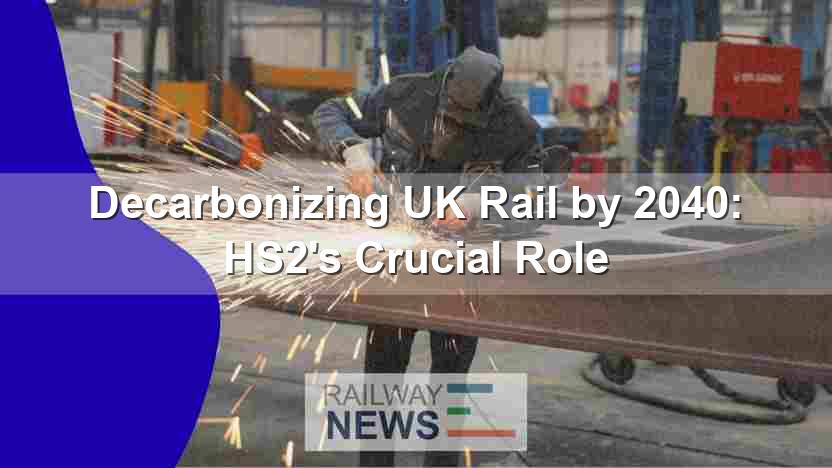
Decarbonizing UK Rail by 2040: HS2’s Crucial Role
The urgent need for railway decarbonization in the UK, particularly through the strategic implementation of High-Speed 2 (HS2), aims to reduce emissions from long-distance rail travel by incentivizing a shift away from more carbon-intensive modes of transport and contributing to a national network that is zero-carbon.
The Urgent Need for Railway Decarbonization in the UK: A Focus on High-Speed Rail
This article explores the critical need for decarbonizing the United Kingdom’s railway system by 2040, a target advocated by the High Speed Rail Group (HSRG). The UK’s commitment to net-zero emissions necessitates a fundamental shift in transportation, particularly focusing on long-distance travel where emissions are most significant. Currently, approximately half of all surface transport emissions originate from journeys exceeding 15 miles, with nearly a quarter stemming from journeys over 50 miles. The HSRG’s proposal centers on High-Speed 2 (HS2) as a crucial component of a national high-speed rail network, acting as a zero-carbon backbone for the entire transport system. This will not only reduce emissions from rail travel itself but also incentivize a shift away from more carbon-intensive modes of long-distance transport like aviation and private vehicles. The following sections will delve into the strategic importance of HS2, the challenges involved in decarbonizing the railway network, the potential impact on travel patterns, and the necessary policy interventions to achieve the 2040 decarbonization goal.
HS2: The Foundation of a Decarbonized Rail Network
The HSRG strongly champions HS2 (High Speed Rail 2) as the cornerstone of a decarbonized UK rail network. The argument rests on several pillars: Firstly, HS2’s inherent potential for zero-carbon operation through the use of electric traction powered by renewable energy sources. This dramatically reduces the carbon footprint associated with long-distance travel compared to air travel or private car use. Secondly, HS2’s strategic placement within a national network will act as a catalyst for modal shift. By providing a significantly faster and more convenient alternative for long-distance journeys, it is expected to draw passengers away from environmentally damaging modes of transport. This shift would be especially impactful for leisure travel, a currently significant contributor to long-distance carbon emissions. Finally, HS2 integration within a detailed high-speed network across the UK would improve connectivity and regional economic balance, thus contributing to a more sustainable and equitable transport system. The proposed expansion to connect HS2 with Scotland further amplifies these benefits.
Addressing Emission Measurement and Policy Gaps
A crucial aspect of achieving decarbonization goals is the accurate measurement and reporting of carbon emissions. The HSRG highlights the need to shift the focus from simple trip numbers to personal mileage when assessing rail emissions. This nuanced approach allows for a more accurate comparison between different modes of transportation, clearly demonstrating the environmental benefits of rail travel, especially over longer distances. This is crucial for policy development and public understanding. Additionally, the HSRG rightly emphasizes the need for a detailed national “Future of Mobility” strategy. This strategy should focus on interurban and national travel, promoting innovation in both infrastructure and technology to support sustainable long-distance travel. This cohesive national approach is pivotal for achieving long-term emissions reductions across all transport sectors.
The Role of Public Transport and Modal Shift
The successful decarbonization of the UK’s railways hinges on the creation of an attractive and efficient public transport system. HS2, as the proposed high-speed backbone, plays a pivotal role in this. However, its success is contingent on the seamless integration with existing rail infrastructure and the development of efficient feeder services. This will require significant investment and coordinated planning across different levels of government and transport operators. The overarching goal is to encourage a significant modal shift from private vehicles and air travel to rail transport for longer-distance journeys. This shift is crucial, given the high carbon intensity of private car and air travel, particularly for leisure journeys. The success of this modal shift depends not only on the availability of a detailed high-speed rail network but also on factors such as affordability, convenience, and overall travel experience.
Conclusions: A Path Towards a Sustainable Railway Future
The HSRG’s call for a fully decarbonized UK railway network by 2040 is a critical and timely imperative. Achieving this ambitious goal requires a multi-faceted approach centered around HS2 as the foundation of a national high-speed rail system. The transition necessitates a paradigm shift in how we measure and address carbon emissions, moving from a simple count of trips to a more accurate assessment of personal mileage. A detailed national “Future of Mobility” strategy is essential to guide innovation and investment in long-distance travel. The success of this endeavor hinges on the development of an attractive and efficient public transport system that seamlessly integrates HS2 with the broader rail network, stimulating a modal shift away from high-emission modes of transport, particularly for leisure travel. Failure to embrace this ambitious vision would result in a missed opportunity to drastically reduce the UK’s carbon footprint and to build a more sustainable and equitable transport system for future generations. The initiative requires a coordinated effort involving government, industry, and the public to create a railway network that is both environmentally responsible and economically viable. Only through this holistic approach can the UK truly achieve its decarbonization targets and pave the way for a sustainable transportation future.

Railway infrastructure, rolling stock and transport technologies specialist focused on global rail industry developments, high-speed rail systems, signaling technologies and freight transportation. Covering railway investments, public transport modernization, rail operations and international mobility projects across Europe, Asia and North America.
RELATED POSTS

September 5, 2026 4:19 pm
CPK launched formal tender talks with four consortia to design...

September 5, 2026 7:14 pm
HS2 Ltd signed renegotiated civils contracts with EKFB and Align...

September 6, 2026 4:12 am
Alstom delivered the first of 100 new G Class trams...
September 5, 2026 6:17 pm
Universal Signalling won a deal to install its U-Cross system...

September 6, 2026 8:17 am
DB InfraGO reopened the Nuremberg-Regensburg line in Bavaria on 31...
September 6, 2026 12:20 pm
Indian Railways ordered a probe after a fire destroyed 2...