
Vande Bharat Retender: IR’s Transparency Push, Aatma Nirbhar Bharat
The cancellation of a Vande Bharat Express train set tender by Indian Railways due to irregularities highlights critical issues in large-scale railway procurement, emphasizing the importance of transparency and adherence to regulations for maintaining fair competition and strategic goals.
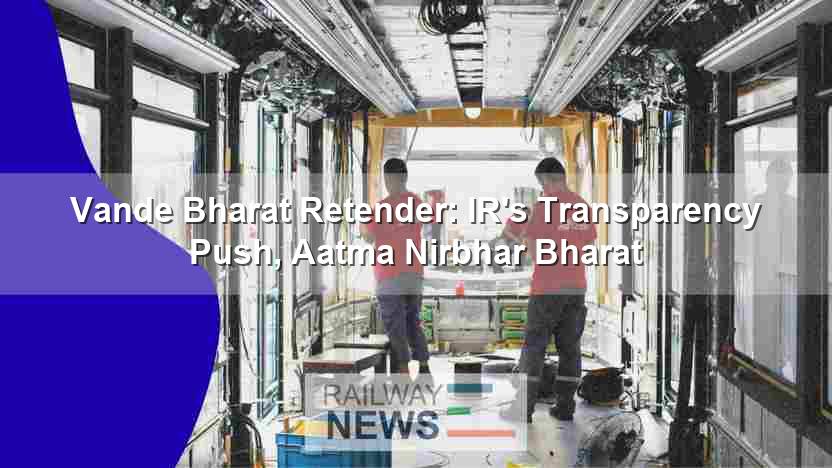
This article examines the recent cancellation by Indian Railways (IR) of a tender for the manufacturing of 44 Vande Bharat Express (VBE) train sets. The cancellation, stemming from irregularities in the bidding process, highlights critical aspects of large-scale railway procurement, emphasizing the importance of transparency, adherence to regulations, and the strategic goals of the ‘Aatma Nirbhar Bharat’ (Self-Reliant India) initiative. We will analyze the reasons behind the cancellation, the implications for IR’s modernization plans, and the measures implemented in the subsequent re-tendering process to ensure greater integrity and domestic participation. The case underscores the complex interplay of technical specifications, financial considerations, and national policy objectives within the context of India’s ambitious railway expansion projects. The detailed analysis will offer valuable insights into the challenges and best practices in large-scale public procurement within the railway sector.
Tender Irregularities and Cancellation
The initial tender for 44 VBE train sets was cancelled due to the disclosure of financial details within the technical bids submitted by some bidders. This breach of tendering protocol compromised the fairness and transparency of the evaluation process. The opening of technical bids precedes the opening of financial bids; this ensures a level playing field where technical merit is assessed independently of cost. The premature revelation of pricing information could have allowed for strategic bidding and potentially skewed the selection towards less competitive offers, undermining the objective of securing the most advantageous deal for IR. The decision to cancel the tender, therefore, was a necessary step to maintain the integrity of the procurement process and ensure equitable competition.
Implications for Railway Modernization
The delay caused by the tender cancellation has implications for IR’s ongoing modernization efforts. The VBE trains represent a significant upgrade to India’s passenger fleet, offering increased speed and comfort. The postponement impacts IR’s schedule for expanding its network of high-speed rail services and achieving its passenger transport targets. However, the cancellation also provides an opportunity to rectify flaws in the procurement procedure, ultimately ensuring the successful delivery of high-quality, domestically-produced trains in the long term.
Aatma Nirbhar Bharat and Domestic Manufacturing
The re-tendering process incorporates a critical element of the ‘Aatma Nirbhar Bharat’ initiative (Self-Reliant India) by mandating a minimum of 50% local component procurement. This stipulation aims to stimulate domestic manufacturing, generate employment, and reduce reliance on foreign suppliers. This move aligns with broader governmental efforts to boost the Indian manufacturing sector and develop indigenous technological capabilities within the railway industry. The inclusion of this requirement reflects a significant shift in IR’s procurement strategy, placing a greater emphasis on self-sufficiency and domestic industrial growth.
Multi-location Manufacturing and Capacity Building
The revised tender also specifies that the train sets should be manufactured across three Integral Coach Factories (ICFs): Chennai, Kapurthala, and Raebareli. This strategy aims to distribute manufacturing capabilities, promoting regional development and enhancing the overall production capacity of IR’s coach manufacturing units. By spreading the workload, IR aims to improve efficiency, reduce production bottlenecks, and foster competition among its various manufacturing facilities, ultimately leading to better quality control and cost optimization.
Conclusions
The cancellation of the initial tender for 44 Vande Bharat Express train sets, while causing a temporary setback, ultimately presented an opportunity for Indian Railways to refine its procurement procedures. The decision to re-tender, incorporating stipulations for increased domestic component sourcing and multi-location manufacturing, reflects a proactive approach towards achieving the goals of the ‘Aatma Nirbhar Bharat’ initiative. The emphasis on transparency and fair competition is paramount to ensuring the efficient allocation of resources and the delivery of high-quality rolling stock. By addressing the irregularities in the initial bidding process and incorporating these strategic modifications, IR demonstrates its commitment to both modernization and national economic development. The increased domestic participation will likely lead to technological advancements within the Indian railway industry and foster self-reliance in the manufacturing of advanced passenger trains. While the initial delay is regrettable, the long-term benefits of a more transparent, robust, and nationally focused procurement process will ultimately contribute to the success of India’s railway modernization endeavors. The strengthened regulatory framework and enhanced domestic capabilities arising from this experience will serve as a valuable model for future large-scale infrastructure projects within India.

Railway infrastructure, rolling stock and transport technologies specialist focused on global rail industry developments, high-speed rail systems, signaling technologies and freight transportation. Covering railway investments, public transport modernization, rail operations and international mobility projects across Europe, Asia and North America.
RELATED POSTS

September 5, 2026 4:19 pm
CPK launched formal tender talks with four consortia to design...

September 6, 2026 4:12 am
Alstom delivered the first of 100 new G Class trams...

September 5, 2026 7:14 pm
HS2 Ltd signed renegotiated civils contracts with EKFB and Align...

September 6, 2026 8:17 am
DB InfraGO reopened the Nuremberg-Regensburg line in Bavaria on 31...
September 6, 2026 12:20 pm
Indian Railways ordered a probe after a fire destroyed 2...
September 5, 2026 6:17 pm
Universal Signalling won a deal to install its U-Cross system...