
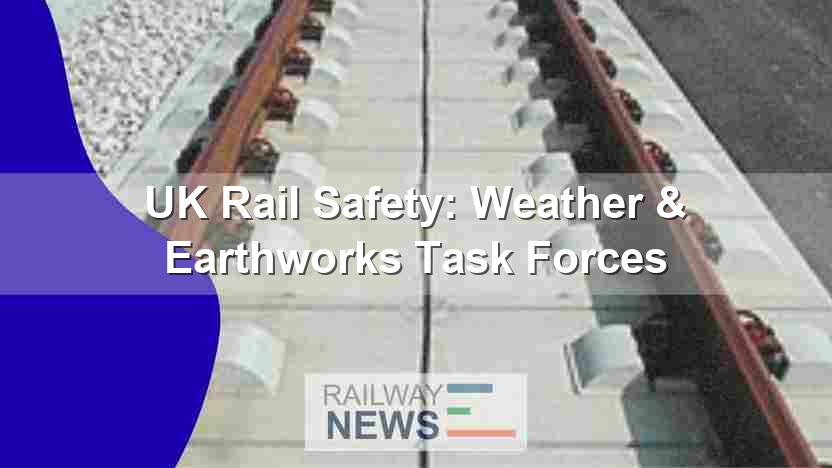
UK Rail Safety: Weather & Earthworks Task Forces
The formation of two independent task forces within Network Rail to investigate severe weather resilience and earthworks management vulnerabilities following the Stonehaven derailment highlights the urgent need for comprehensive safety enhancements in the UK rail network, focusing on modernizing infrastructure and integrating advanced technologies to mitigate future risks.
Introduction
The tragic Stonehaven derailment in Scotland, resulting in three fatalities, highlighted critical vulnerabilities within the UK’s railway infrastructure concerning severe weather resilience and earthworks management. This incident prompted Network Rail (NR), the organization responsible for managing and maintaining the UK’s railway infrastructure, to establish two independent task forces to detailedly investigate these issues. This article will delve into the formation and mandates of these task forces, examining their objectives, methodologies, and potential impact on enhancing the safety and reliability of the UK rail network. We will explore the challenges posed by aging infrastructure, the increasing frequency of extreme weather events, and the necessity of integrating advanced technologies and improved risk management strategies. The analysis will focus on the crucial role of these task forces in shaping future railway safety practices and ensuring the long-term sustainability of the national rail network. The article will examine the complexities of managing a vast and aging railway network and the critical need for modernization and adaptation to climate change.
The Weather Action Task Force
Led by Dame Julia Slingo, a renowned meteorologist and former chief scientist at the UK Met Office, this task force focuses on enhancing Network Rail’s understanding and response to severe weather events. Its remit includes a thorough review of the impact of heavy rainfall on rail infrastructure, encompassing assessments of existing forecasting and monitoring technologies. The task force will critically evaluate the effectiveness of current weather data utilization and propose improvements, including the integration of hyperlocal weather data into engineering decision-making processes. This granular approach aims to improve predictive capabilities and allow for more proactive mitigation strategies, minimizing service disruptions and enhancing safety.
The Earthworks Management Task Force
Chaired by Lord Robert Mair, former president of the Institution of Civil Engineers (ICE), this task force addresses the critical issue of earthworks management within Network Rail’s extensive portfolio. This involves evaluating the effectiveness of current drainage and earthworks asset management approaches, scrutinizing the adequacy of Network Rail’s control frameworks, and assessing the deployment of cutting-edge technologies for earthworks maintenance. The task force will also investigate the need for potential team or regional enhancements to bolster expertise in earthworks and drainage management, recognizing the inherent challenges of maintaining a vast network of aging infrastructure, much of which dates back to the 19th century.
Addressing the Legacy of Aging Infrastructure
A significant portion of Network Rail’s 19,000km network was constructed during the 19th century, predating modern engineering practices. This legacy presents substantial challenges, with numerous embankments and cuttings posing significant risks, particularly in the face of increasingly severe weather. The task forces’ investigations will encompass assessments of the structural integrity and resilience of these assets, identifying areas requiring urgent attention and prioritizing investments for modernization and reinforcement. This involves exploring innovative technologies and materials to enhance the long-term stability and resilience of the earthworks infrastructure.
Technological Integration and Risk Management
Both task forces emphasize the vital role of technology in enhancing railway safety and resilience. This includes the exploration and implementation of advanced monitoring systems, predictive modeling techniques, and data-driven decision-making processes. Improved weather forecasting, coupled with real-time monitoring of infrastructure conditions, allows for proactive intervention, reducing the likelihood of weather-related incidents. Additionally, the task forces will investigate the integration of advanced risk management frameworks, including robust hazard identification, risk assessment, and mitigation strategies. This holistic approach aims to transform how Network Rail manages its assets, moving towards a more proactive and data-driven approach.
Conclusions
The Stonehaven tragedy served as a stark reminder of the critical need for continuous improvement in railway safety and resilience. The establishment of the two independent task forces represents a significant step towards addressing the challenges posed by severe weather and aging infrastructure within the UK’s rail network. Dame Julia Slingo’s Weather Action Task Force focuses on enhancing weather forecasting and integrating hyperlocal data into engineering decisions, while Lord Robert Mair’s Earthworks Management Task Force evaluates the effectiveness of existing earthworks management practices and explores the potential of advanced technologies. The combined efforts of these task forces aim to transform how Network Rail manages its assets, moving towards a more proactive and data-driven approach. The legacy of 19th-century infrastructure necessitates a significant investment in modernization and reinforcement, coupled with advanced monitoring and predictive modeling techniques. By embracing technological advancements and implementing robust risk management frameworks, Network Rail can significantly improve the safety, resilience, and overall reliability of the UK’s rail network. The recommendations from both task forces are crucial for shaping future railway safety practices, ensuring the long-term sustainability of the national rail network, and preventing future tragedies. The emphasis on proactive risk management, technological innovation, and a detailed understanding of weather patterns are essential for mitigating the risks inherent in operating a vast and complex railway network in a changing climate. The long-term success of these efforts depends not only on the recommendations themselves but also on the swift and effective implementation of those recommendations by Network Rail and the wider rail industry.

Railway infrastructure, rolling stock and transport technologies specialist focused on global rail industry developments, high-speed rail systems, signaling technologies and freight transportation. Covering railway investments, public transport modernization, rail operations and international mobility projects across Europe, Asia and North America.
RELATED POSTS

September 5, 2026 4:19 pm
CPK launched formal tender talks with four consortia to design...

September 6, 2026 4:12 am
Alstom delivered the first of 100 new G Class trams...

September 5, 2026 7:14 pm
HS2 Ltd signed renegotiated civils contracts with EKFB and Align...
September 5, 2026 6:17 pm
Universal Signalling won a deal to install its U-Cross system...
September 6, 2026 8:17 am
DB InfraGO reopened the Nuremberg-Regensburg line in Bavaria on 31...
September 7, 2026 11:16 pm
China Railway Tunnel Group completed the 11.3-km underwater Yangtze tunnel...