
East Midlands Rail: Local Power, Better Service
The multi-year agreement between the UK Department for Transport (DfT) and Transport for East Midlands (TfEM) enhances local councils’ influence in rail governance by providing them with substantial power to improve service delivery and enhance accountability, focusing on community needs and responsiveness.
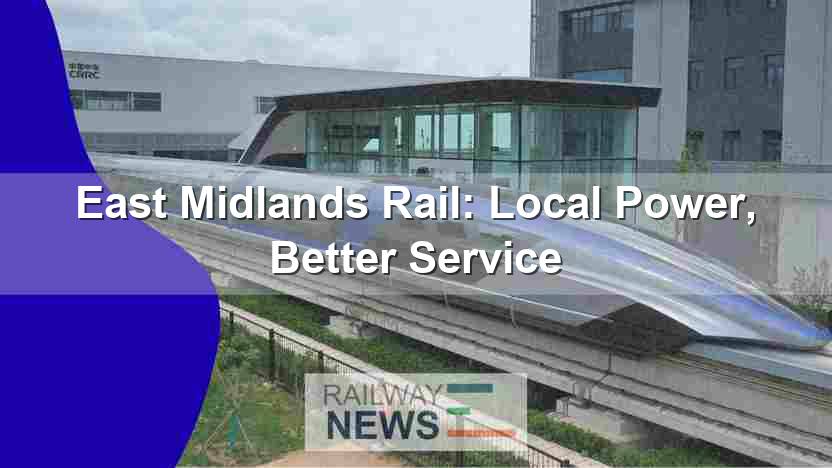
This article examines the multi-year agreement signed between the UK Department for Transport (DfT) and Transport for East Midlands (TfEM) to enhance East Midlands rail services. The agreement significantly boosts the influence of local councils in the governance and operational improvements of the East Midlands Railway (EMR) franchise. This collaboration represents a shift towards a more localized and passenger-centric approach to railway management, emphasizing responsiveness to community needs and enhanced accountability. The analysis explores the specifics of the agreement, its implications for service delivery, and its potential to serve as a model for future railway franchising collaborations throughout the UK. We will explore the creation of new roles within TfEM, the improved data-driven performance monitoring, and the overall strategic goals of this partnership.
Enhanced Local Authority Involvement in Rail Governance
The core of the DfT-TfEM agreement is the increased power granted to local councils in managing the East Midlands Railway franchise. This decentralization aims to make rail service planning and execution more responsive to the unique needs and priorities of the communities served. By providing local authorities with a more substantial voice in decision-making processes, the agreement seeks to ensure that investments and service improvements directly address local concerns, such as improving connectivity to employment centers, educational institutions, and healthcare facilities. The direct engagement of local leaders allows for a more nuanced understanding of community transportation requirements, leading to more effective and beneficial service enhancements.
Strengthening Accountability and Performance Monitoring
A key aspect of the agreement is the establishment of two new positions within TfEM: a stakeholder engagement lead and a performance data manager. The stakeholder engagement lead will act as a vital liaison, representing the interests of local businesses and communities and ensuring that their needs are effectively incorporated into service planning and improvement initiatives. The performance data manager will be crucial in collecting, analyzing, and presenting performance data, providing a robust evidence base for decision-making and accountability. This data-driven approach enables the identification of areas requiring improvement, facilitates better resource allocation, and supports evidence-based justification for future investments. Transparent performance monitoring fosters a culture of accountability and promotes continuous service enhancement.
Data-Driven Decision Making and Investment Prioritization
The agreement emphasizes the importance of using detailed data to drive decision-making and investment prioritization in the East Midlands rail network. By leveraging real-time performance data and passenger feedback, the partnership aims to identify areas requiring immediate attention, optimize resource allocation, and ensure that investments are targeted to maximize their impact. This data-driven approach enhances the efficiency and effectiveness of service improvements, ensuring that limited resources are utilized judiciously and to the greatest benefit of passengers and the broader community. A sophisticated data management system enables more informed decisions leading to improved service reliability and increased passenger satisfaction.
The Role of East Midlands Railway (EMR) and the Franchise Agreement
The agreement’s implementation is predicated on the existing EMR franchise held by Abellio, which operates until August 2027, with a possible two-year extension. The DfT-TfEM agreement runs concurrently with the EMR franchise, with a 12-month termination notice period for either party. This arrangement ensures alignment between local governance aspirations and the operational realities of the franchise. The collaborative nature of the agreement allows for flexibility and adaptation throughout the franchise period, permitting adjustments based on evolving community needs and performance data. The 12-month termination clause provides a degree of accountability and enables responsive adjustments should the collaboration not meet expected outcomes.
Conclusions
The collaboration between the DfT and TfEM signifies a notable shift towards a more localized and passenger-centric model for railway management in the UK. By empowering local councils and creating mechanisms for enhanced stakeholder engagement and data-driven decision-making, the agreement aims to create a more responsive and accountable railway system. The establishment of new roles within TfEM, focusing on stakeholder engagement and performance data management, underscores the commitment to ensuring that the voices of local communities are heard and that service improvements are demonstrably effective. The agreement’s success hinges on the effective utilization of performance data to inform investment decisions, optimize resource allocation, and drive continuous service improvement. The concurrent nature of this agreement with the existing EMR franchise allows for a dynamic and adaptive approach, enabling modifications and refinements as needed. This initiative may serve as a model for future rail governance collaborations, promoting a more localized, accountable, and passenger-focused approach to railway management nationwide. The long-term implications of this partnership are significant, potentially influencing railway management practices across the UK and underscoring the benefits of a collaborative, data-driven approach to service improvement. The success of this model will depend largely on the ongoing commitment of all stakeholders to open communication, data-driven decision-making, and a focus on delivering tangible benefits to passengers and communities. This collaboration represents a promising step towards creating a truly passenger-focused railway network.

Railway infrastructure, rolling stock and transport technologies specialist focused on global rail industry developments, high-speed rail systems, signaling technologies and freight transportation. Covering railway investments, public transport modernization, rail operations and international mobility projects across Europe, Asia and North America.
RELATED POSTS

September 5, 2026 4:19 pm
CPK launched formal tender talks with four consortia to design...
September 5, 2026 7:14 pm
HS2 Ltd signed renegotiated civils contracts with EKFB and Align...

September 6, 2026 4:12 am
Alstom delivered the first of 100 new G Class trams...
September 5, 2026 6:17 pm
Universal Signalling won a deal to install its U-Cross system...
September 6, 2026 8:17 am
DB InfraGO reopened the Nuremberg-Regensburg line in Bavaria on 31...
September 7, 2026 11:16 pm
China Railway Tunnel Group completed the 11.3-km underwater Yangtze tunnel...