
UK Rail’s Digital Revolution: £1.2M Investment
The £1.2 million investment in feasibility studies for the rollout of digital rail signaling across three key UK rail routes marks a pivotal step towards modernizing infrastructure, enhancing safety and efficiency, and serving as a model for future national rail networks undergoing similar transformations.
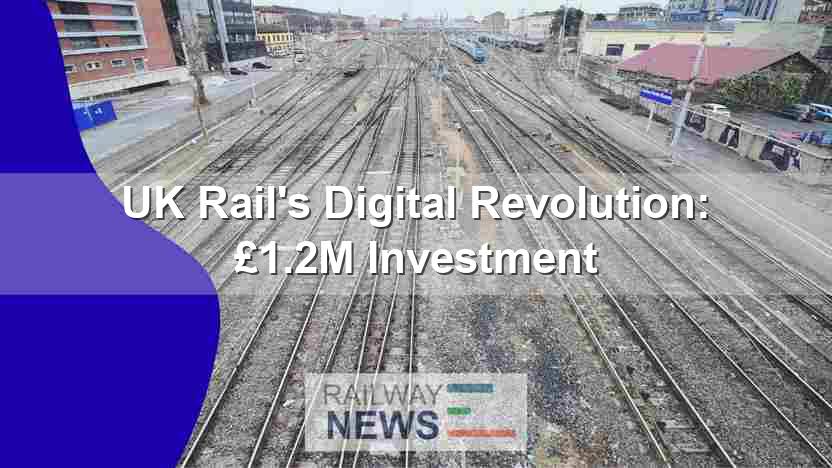
The modernization of the United Kingdom’s (UK) railway infrastructure is a crucial undertaking, aiming to enhance efficiency, safety, and overall performance. This article explores a significant step towards this goal: the government’s substantial investment in expediting the rollout of digital rail signalling. The recent allocation of £1.2 million in funding for feasibility studies on three key rail routes – the West Coast Main Line (WCML), the Midland Main Line (MML), and the East Anglia line – marks a pivotal moment in this ambitious transformation. This investment isn’t just about upgrading technology; it’s about creating a more resilient, reliable, and ultimately safer railway system for the future. The following sections will explore the significance of this funding, the technological advancements involved, the logistical challenges inherent in such a large-scale project, and the long-term economic and societal benefits. We will also analyze the potential for this initiative to serve as a model for other national rail networks undergoing similar modernization efforts.
Feasibility Studies and Technological Advancements
The £1.2 million investment is primarily focused on conducting detailed feasibility studies. These studies will be crucial in determining the optimal approach for implementing digital signalling systems on these three lines. This isn’t simply a matter of swapping out old equipment; it involves a complex process of system integration, software development, and rigorous testing. Digital signalling offers significant advantages over traditional systems. It replaces electromechanical signaling components with computer-based systems, enabling more precise control of train movements, enhanced communication between signaling centers and train drivers (via Train Management Systems (TMS)), and real-time monitoring of the entire rail network. This superior level of control promises significant reductions in delays caused by signal failures, human error, and other operational challenges. The feasibility studies will also examine various technological solutions, considering factors such as interoperability between different signalling systems, integration with existing infrastructure, and cybersecurity resilience.
Logistical Challenges and Implementation Strategies
Implementing digital signalling on a national scale presents numerous logistical hurdles. The UK’s railway network is extensive and complex, with a diverse range of existing infrastructure and operational practices. The process requires careful planning and coordination to minimize disruption to passenger and freight services during the transition. The feasibility studies will address these challenges, outlining phased rollout plans, mitigation strategies for potential disruptions, and detailed cost-benefit analyses. These studies will also investigate the optimal strategies for training personnel, ensuring that the workforce is equipped to operate and maintain the new digital systems. Successful implementation will require close collaboration between Network Rail, train operating companies, signalling equipment suppliers, and other stakeholders.
Economic and Societal Impacts
The shift to digital signalling is not merely a technological upgrade; it is a strategic investment with far-reaching economic and societal consequences. The project is expected to create numerous high-skilled jobs in engineering, software development, and related fields. Moreover, the enhanced efficiency and reliability of the railway system will benefit businesses, commuters, and the economy as a whole, reducing delays and improving the overall productivity of the network. The improved safety features associated with digital signalling will also lead to fewer accidents and incidents, enhancing the safety and security of rail travel. Finally, this modernization effort will contribute to the UK’s sustainability goals, as more efficient rail operations can contribute to a reduction in carbon emissions compared to road transport.
Conclusion
The £1.2 million investment in digital rail signalling feasibility studies represents a crucial step in the UK’s ambitious modernization plan for its railways. The successful completion of these studies, along with the previously announced £350 million investment for the East Coast Main Line (ECML), will pave the way for a substantial transformation of the nation’s rail network. The transition to digital signalling offers a significant opportunity to address existing operational challenges, enhancing safety, efficiency, and capacity. The detailed feasibility studies will be instrumental in guiding the implementation process, ensuring a smooth and effective transition that minimizes disruption. This project transcends mere technological advancement; it signifies a commitment to building a more resilient, efficient, and sustainable railway system for future generations. The lessons learned from the implementation on the WCML, MML, and East Anglia lines, followed by the ECML, will not only modernize the UK’s rail network but also establish valuable best practices that can be shared and adopted by other countries embarking on similar modernization efforts. The focus on creating high-skilled jobs and fostering economic growth alongside improved safety and reduced environmental impact underscores the multifaceted benefits of this national endeavor.

Railway infrastructure, rolling stock and transport technologies specialist focused on global rail industry developments, high-speed rail systems, signaling technologies and freight transportation. Covering railway investments, public transport modernization, rail operations and international mobility projects across Europe, Asia and North America.
RELATED POSTS

September 5, 2026 4:19 pm
CPK launched formal tender talks with four consortia to design...

September 5, 2026 7:14 pm
HS2 Ltd signed renegotiated civils contracts with EKFB and Align...

September 6, 2026 4:12 am
Alstom delivered the first of 100 new G Class trams...
September 5, 2026 6:17 pm
Universal Signalling won a deal to install its U-Cross system...
September 6, 2026 8:17 am
DB InfraGO reopened the Nuremberg-Regensburg line in Bavaria on 31...
September 6, 2026 12:20 pm
Indian Railways ordered a probe after a fire destroyed 2...