
Ahmedabad-Mumbai High-Speed Rail: Challenges & Triumphs
The Ahmedabad-Mumbai High-Speed Rail Corridor (AHSR) project represents a significant advancement in India’s infrastructure development, overcoming substantial financial investment, technological requirements, land acquisition challenges, and environmental impact mitigation while maintaining intricate coordination among various stakeholders.
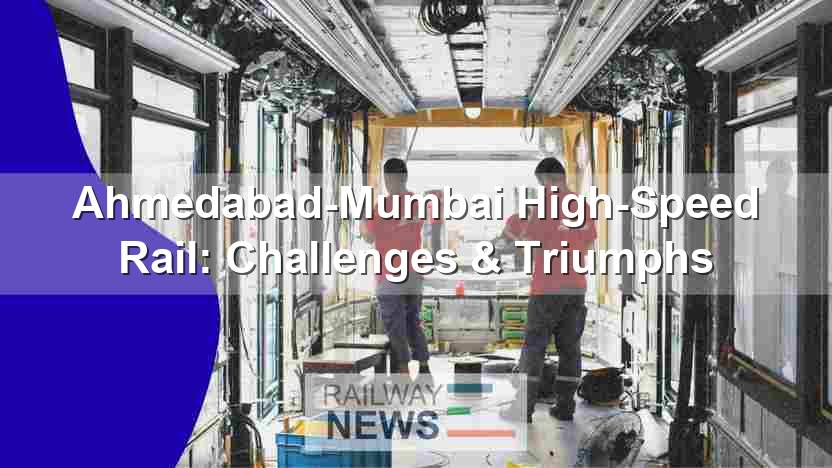
The Ahmedabad-Mumbai High-Speed Rail Corridor: A Detailed Overview
The development of high-speed rail (HSR) networks represents a significant advancement in global transportation infrastructure. This article explores the complexities surrounding the construction of the Ahmedabad-Mumbai High-Speed Rail Corridor (AHSR), a landmark project in India. The project, spanning 508 kilometers and designed for speeds of 350 km/h, highlights the considerable challenges inherent in implementing such ambitious undertakings. These challenges encompass not only the substantial financial investment and advanced technological requirements, but also the intricate process of land acquisition, environmental impact mitigation, and the coordination of various stakeholders. This analysis will examine the key milestones achieved, the remaining hurdles, and the broader implications of this megaproject for India’s infrastructure development and its economic future. We will explore the environmental clearances obtained, the progress in land acquisition, and the financial aspects of the project. Finally, we will consider the broader implications of the project’s success or failure on India’s ambitions in high-speed rail.
Environmental Clearances and Land Acquisition
A major hurdle in the AHSR project’s development involved securing the necessary environmental approvals. The project required clearance from various regulatory bodies, including those overseeing wildlife, forestry, and coastal regulation zones (CRZ). The acquisition of these clearances, encompassing both Gujarat and Maharashtra states, represents a significant accomplishment, paving the way for continued construction. However, land acquisition remains a complex issue. While significant progress has been made, achieving complete land acquisition presents an ongoing challenge, with varying levels of success across the project’s different segments. The disparity in land acquisition rates between Gujarat (approximately 87% acquired) and Maharashtra (approximately 22% acquired) illustrates the difficulties in navigating land ownership complexities and potential disputes. The timely resolution of these land-related issues is vital for maintaining the project’s timeline.
Project Funding and Procurement
The AHSR project is a substantial financial undertaking, estimated at $17 billion. Significant progress has been made in securing funding and initiating procurement processes. The awarding of tenders valued at $4 billion for various aspects of construction in Gujarat demonstrates the momentum in the project’s execution. These contracts encompass critical elements such as viaduct construction, covering a substantial portion of the route. However, securing the remaining funding and effectively managing the overall budget remain crucial for the project’s successful completion. The project’s financial sustainability depends on effective cost management, transparent procurement practices, and prudent risk assessment.
Technological Aspects and Operational Considerations
The AHSR project employs cutting-edge technology to achieve its target operational speed of 350 km/h. The design and construction of the track, signaling systems, and rolling stock require sophisticated engineering and robust quality control measures. The integration of these technologies needs to be seamlessly coordinated to ensure the safe and efficient operation of the high-speed rail line. Successful commissioning and operation of the line hinges on the effective deployment and maintenance of these advanced systems. Regular maintenance programs and skilled workforce training are crucial aspects that will influence the long-term operational efficiency and safety of the AHSR.
Conclusions and Future Implications
The Ahmedabad-Mumbai High-Speed Rail Corridor represents a bold endeavor in India’s infrastructure development. The project’s progress, marked by the acquisition of environmental clearances and substantial land acquisition in Gujarat, coupled with significant procurement efforts, signals a commitment to achieving its ambitious goals. However, challenges remain, particularly concerning the completion of land acquisition in Maharashtra, and the overall financial management and risk mitigation strategies are essential to project success. The timely resolution of these outstanding issues is critical for maintaining the project’s timeline and budget. The successful completion of the AHSR project would not only significantly reduce travel time between Mumbai and Ahmedabad but also serve as a valuable benchmark for future high-speed rail projects in India. It will showcase India’s capabilities in large-scale infrastructure development, advanced technology deployment, and international collaboration. However, the project’s ultimate success rests on the careful management of the remaining hurdles and a sustained commitment to ensuring efficient execution and operational excellence. The lessons learned from this project will be invaluable in shaping future high-speed rail initiatives across the nation, contributing significantly to India’s economic growth and modernization.

Railway infrastructure, rolling stock and transport technologies specialist focused on global rail industry developments, high-speed rail systems, signaling technologies and freight transportation. Covering railway investments, public transport modernization, rail operations and international mobility projects across Europe, Asia and North America.
RELATED POSTS

September 5, 2026 4:19 pm
CPK launched formal tender talks with four consortia to design...

September 5, 2026 7:14 pm
HS2 Ltd signed renegotiated civils contracts with EKFB and Align...

September 6, 2026 4:12 am
Alstom delivered the first of 100 new G Class trams...
September 5, 2026 6:17 pm
Universal Signalling won a deal to install its U-Cross system...
September 6, 2026 8:17 am
DB InfraGO reopened the Nuremberg-Regensburg line in Bavaria on 31...
September 6, 2026 12:20 pm
Indian Railways ordered a probe after a fire destroyed 2...