
GBRf & GRS: Rail Freight’s Green Revolution
The strategic partnership between GB Railfreight (GBRf) and GRS Rail Services significantly contributes to sustainable construction logistics in the UK by optimizing rail freight for aggregates, reducing carbon emissions, easing road congestion, and extending a successful five-year contract that focuses on shifting freight transportation from road to rail.
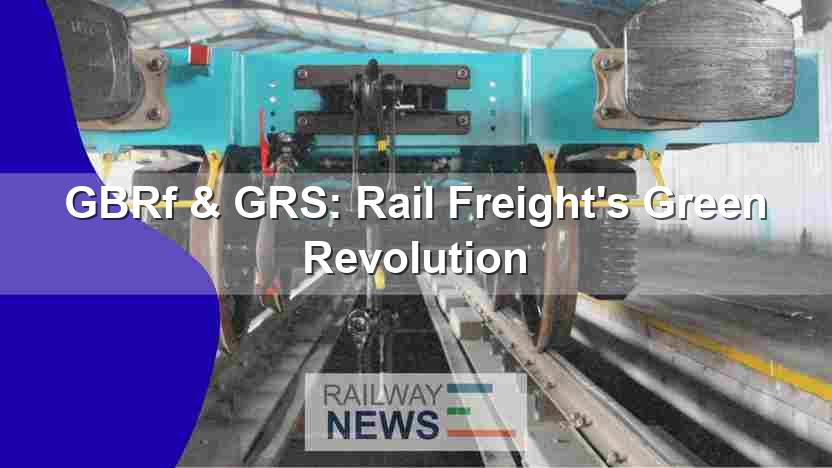
This article examines the strategic partnership between GB Railfreight (GBRf) and GRS Rail Services, highlighting the significant contribution of rail freight to sustainable construction logistics in the UK. The five-year contract extension announced in February 2021 signifies a long-term commitment to optimizing the movement of aggregates, a crucial component in infrastructure projects. This extension builds upon a successful five-year collaboration focused on shifting freight transportation from road to rail, thereby reducing carbon emissions and easing road congestion. We will delve into the operational details of this partnership, analyzing its environmental impact, economic benefits, and strategic importance within the evolving landscape of the UK’s construction and transportation sectors. We will also explore the future implications of this collaboration for sustainable logistics and the potential for wider adoption of rail freight solutions in similar industries.
A Successful Public-Private Partnership in Rail Freight
The partnership between GBRf, GRS Rail Services (a joint venture between GRS and Tarmac), Network Rail, and Tarmac itself, exemplifies a successful model of public-private collaboration in the rail freight industry. The initial agreement, established in 2016, focused on transporting aggregates from Tarmac’s Mountsorrel Quarry in Leicestershire to the GRS-operated Wellingborough Aggregates Depot. This depot’s development was a collaborative effort, strategically situated to support major infrastructure projects such as the A14 upgrade. The success of this initial venture is evident in the five-year contract extension, showcasing the value and effectiveness of rail freight in meeting the demands of the construction industry.
Expanding Rail Freight Network and Operational Efficiency
The extended contract significantly expands the operational scope of the partnership. Services now extend from the Peak District to terminals in Wellingborough, Northampton, Luton, and Peterborough, further demonstrating the adaptability and scalability of the rail freight solution. The inclusion of new supply points, such as Swinden Quarry in North Yorkshire and Tunstead Quarry in Derbyshire, highlights the partnership’s ability to integrate diverse sourcing points into its network. This expansion demonstrates the capacity of rail freight to adapt to logistical challenges and accommodate multiple sources and destinations, enhancing operational efficiency and minimizing transportation costs.
Environmental and Economic Benefits of Rail Freight
The environmental advantages of this partnership are substantial. By transporting over 1.8 million tonnes (Mt) of aggregates by rail, the partnership has effectively removed nearly 100,000 lorry loads from UK roads. This significant reduction in road haulage translates to a considerable decrease in carbon emissions and particulate matter pollution. The economic benefits are equally significant. Efficient rail freight reduces transportation costs for both Tarmac and GRS, while simultaneously contributing to reduced congestion and improved infrastructure resilience by decreasing the strain on roads.
Future Outlook and Sustainability in the Construction Industry
The continued success of this collaboration underscores the potential for wider adoption of rail freight in the construction and other industries. The partnership’s ability to adapt to changing demands and integrate new supply points showcases the flexibility and efficiency of rail transport. The significant reduction in carbon emissions and traffic congestion sets a positive example for sustainable logistics, offering a viable alternative to road-based transportation. The extended five-year contract strongly suggests a commitment to continued growth and innovation in sustainable transportation solutions within the UK construction sector. Further investment and collaboration in rail infrastructure could unlock even greater potential for rail freight to play a vital role in achieving environmental and economic sustainability.
Conclusions
The extended five-year contract between GB Railfreight (GBRf) and GRS Rail Services represents a significant milestone in the advancement of sustainable logistics within the UK construction industry. This partnership, built upon a foundation of successful collaboration between GBRf, GRS, Tarmac, and Network Rail, has demonstrably proven the effectiveness of rail freight in moving large volumes of aggregates efficiently and sustainably. The expansion of operational scope, encompassing new quarries and delivery points, underlines the adaptability and scalability of this model. The quantifiable reduction in carbon emissions and road congestion highlights the significant environmental benefits, while cost efficiencies achieved through rail transport demonstrate clear economic advantages. Looking forward, this successful public-private partnership serves as a powerful case study, illustrating the potential for significant environmental improvements and economic gains by leveraging the inherent advantages of rail freight. The commitment to continued collaboration signifies a positive trajectory for sustainable logistics, not only within the construction industry, but potentially across other sectors seeking to reduce their environmental footprint and optimize their supply chains. The success of this venture strongly suggests that investment in rail infrastructure and further development of public-private partnerships focusing on rail freight will be crucial to achieving long-term sustainability goals in the UK and beyond.

Railway infrastructure, rolling stock and transport technologies specialist focused on global rail industry developments, high-speed rail systems, signaling technologies and freight transportation. Covering railway investments, public transport modernization, rail operations and international mobility projects across Europe, Asia and North America.
RELATED POSTS

September 5, 2026 4:19 pm
CPK launched formal tender talks with four consortia to design...

September 5, 2026 7:14 pm
HS2 Ltd signed renegotiated civils contracts with EKFB and Align...

September 6, 2026 4:12 am
Alstom delivered the first of 100 new G Class trams...
September 5, 2026 6:17 pm
Universal Signalling won a deal to install its U-Cross system...
September 6, 2026 8:17 am
DB InfraGO reopened the Nuremberg-Regensburg line in Bavaria on 31...
September 6, 2026 12:20 pm
Indian Railways ordered a probe after a fire destroyed 2...