
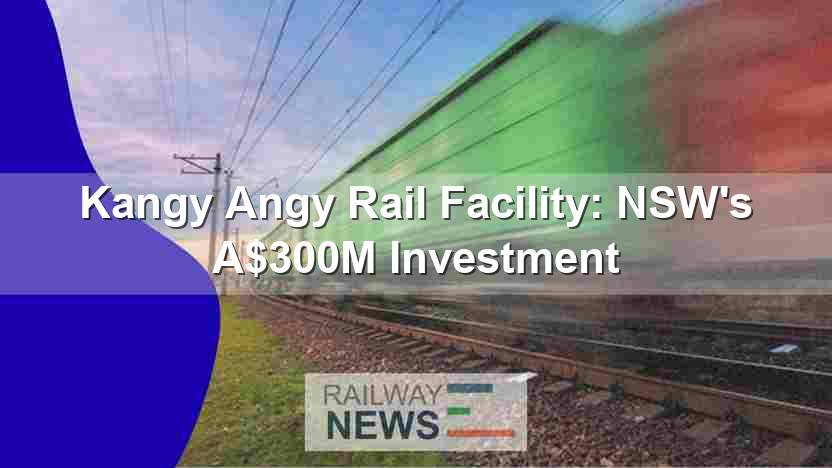
Kangy Angy Rail Facility: NSW’s A$300M Investment
The Kangy Angy rail maintenance facility in New South Wales, Australia, represents a substantial investment that supports the modernization of the state’s passenger rail services by ensuring robust and comprehensive maintenance for the new Intercity Fleet, creating sustainable job opportunities and economic benefits.
Introduction
This article explores the significant implications of the newly opened Kangy Angy rail maintenance facility in New South Wales (NSW), Australia. The A$300 million facility represents a substantial investment in the state’s rail infrastructure, specifically designed to support the maintenance of the new Intercity Fleet. This development not only addresses the critical need for robust maintenance operations to ensure the reliability and longevity of the new fleet but also underscores broader themes within the rail industry, including the strategic importance of skilled labor, sustainable job creation, and the economic benefits of large-scale infrastructure projects. The facility’s capacity for 24/7 operation, its size (approximately 500,000m²), and extensive infrastructure (including six kilometers of electric rail lines and a new rail bridge) highlight its scale and potential impact on the NSW rail network. Additionally, the article will examine the facility’s role in supporting the ongoing modernization and improvement of the state’s passenger rail services, focusing on the key features of the new Intercity Fleet and the overall economic impact of the project.
The Kangy Angy Rail Maintenance Facility: A Strategic Investment
The construction of the Kangy Angy facility signifies a proactive approach to rail maintenance, moving beyond reactive repairs to a preventative and detailed service model. The 24-hour operation ensures continuous maintenance, minimizing downtime and maximizing the operational efficiency of the new Intercity Fleet. The facility’s scale, encompassing extensive trackage, workshops, and support infrastructure, allows for multiple trains to be serviced simultaneously, further enhancing operational effectiveness. The engagement of UGL Rail under a 15-year contract demonstrates a commitment to long-term maintenance planning and the creation of sustainable employment opportunities. The inclusion of five apprenticeships in the initial staffing plan highlights the facility’s role in developing future rail maintenance professionals.
Economic and Social Impacts of the Facility
The A$300 million investment in the Kangy Angy facility generated significant economic activity during its construction phase, involving over 1,600 individuals. The ongoing operational phase will continue to support employment for more than 90 staff, providing a sustained economic boost to the local community. The facility is projected to contribute to the growth of local businesses through contracts for supplies and services. This aspect underlines the positive ripple effects of large-scale infrastructure projects that extend beyond the immediate employment generated by the facility itself. The commitment to apprenticeships demonstrates a dedication to fostering a skilled workforce for the future, promoting sustainable development within the rail sector.
Modernization of the NSW Rail Network: The New Intercity Fleet
The Kangy Angy facility is integral to the successful deployment of the new Intercity Fleet. This modern fleet incorporates significant improvements in passenger comfort and accessibility, including enhanced wheelchair accessibility, accessible toilets, increased legroom, charging points, and dedicated spaces for luggage and bicycles. These features enhance the overall passenger experience, contributing to increased ridership and improved public satisfaction with the rail network. The rigorous testing phase prior to service commencement underscores the commitment to ensuring the reliability and safety of the new fleet and the detailed maintenance provided by the Kangy Angy facility ensures this high level of service remains consistent throughout the fleet’s operational life.
Sustainability and Future Outlook
While not explicitly stated in the initial article, the Kangy Angy facility’s contribution to the broader goals of environmental sustainability within the rail industry is implicit. The new Intercity Fleet is likely to incorporate technologies that reduce its environmental footprint, and the facility’s efficient operations will contribute to minimizing energy waste and optimizing resource use. The long-term contract with UGL Rail provides a framework for continuous improvement and the adoption of environmentally responsible practices throughout the facility’s operational life. The strategic planning incorporated in the facility’s design, including provisions for future expansion, suggests a long-term vision for the ongoing modernization and improvement of NSW’s rail infrastructure.
Conclusions
The opening of the Kangy Angy rail maintenance facility marks a significant milestone in the modernization of New South Wales’ rail network. The A$300 million investment represents a commitment to ensuring the efficient and reliable operation of the new Intercity Fleet, a crucial component of the state’s public transportation system. The facility’s 24/7 operation, extensive infrastructure, and projected long-term employment opportunities highlight its importance as a cornerstone of sustainable economic development. The focus on providing a modern, accessible, and comfortable passenger experience through the new fleet underscores the commitment to enhancing public transportation services. The project’s economic impact extends beyond direct employment, fostering growth in local businesses and creating lasting benefits for the community. The facility also lays the groundwork for future advancements in rail technology and sustainability, shaping the future of rail transportation in NSW. Looking forward, the continued operational success of the Kangy Angy facility, combined with the implementation of the new Intercity Fleet, promises to significantly improve the efficiency, reliability, and passenger experience of NSW’s rail system. The proactive investment in infrastructure and skilled labor sets a strong precedent for future rail development initiatives, ensuring the continued growth and modernization of the state’s transportation network. The positive economic, social, and environmental impacts of the project serve as a model for future large-scale infrastructure projects, emphasizing the importance of strategic planning, sustainable practices, and community engagement in creating truly impactful and long-lasting developments.

Railway infrastructure, rolling stock and transport technologies specialist focused on global rail industry developments, high-speed rail systems, signaling technologies and freight transportation. Covering railway investments, public transport modernization, rail operations and international mobility projects across Europe, Asia and North America.
RELATED POSTS

September 5, 2026 4:19 pm
CPK launched formal tender talks with four consortia to design...

September 5, 2026 7:14 pm
HS2 Ltd signed renegotiated civils contracts with EKFB and Align...

September 6, 2026 4:12 am
Alstom delivered the first of 100 new G Class trams...
September 6, 2026 8:17 am
DB InfraGO reopened the Nuremberg-Regensburg line in Bavaria on 31...
September 5, 2026 6:17 pm
Universal Signalling won a deal to install its U-Cross system...
September 6, 2026 12:20 pm
Indian Railways ordered a probe after a fire destroyed 2...