
Melbourne Metro Tunnel: Fast-Track Rail Success
The Melbourne Metro Tunnel Project successfully completed the eastern entrance five months ahead of schedule, demonstrating efficient planning, resource management, and a collaborative approach that set a benchmark for accelerated rail infrastructure development in Australia.
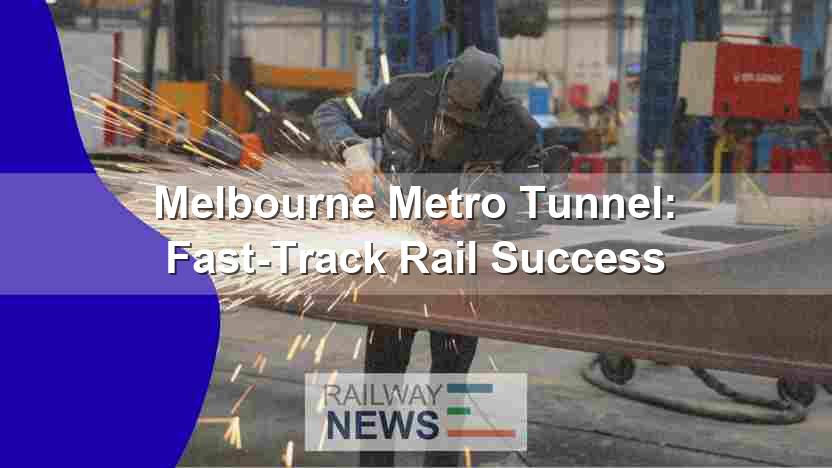
This article examines the successful early completion of the eastern entrance to Melbourne’s Metro Tunnel, highlighting the project’s logistical complexities, innovative solutions, and implications for future rail infrastructure development in Australia. The project, a crucial component of Melbourne’s expanding public transport network, demonstrates the potential for accelerated delivery through meticulous planning, efficient resource management, and a collaborative approach between various stakeholders. We will analyze the key phases of construction, the challenges overcome, and the anticipated benefits of this significant infrastructure upgrade, setting a benchmark for similar projects nationally and internationally. The article will further explore the broader context of this project within the framework of Melbourne’s evolving transportation strategy and its potential impact on future urban development and commuter experience. Finally, we will briefly compare and contrast this successful fast-track project with other rail infrastructure developments globally, exploring lessons learned and potential best practices for future endeavors.
Eastern Entrance Construction and Challenges
The eastern entrance at South Yarra, completed five months ahead of schedule, involved significant earthworks, including the excavation of over 31,000 cubic meters (m³) of rock and soil. This phase required the demolition of the existing William Street Bridge and its replacement with a longer, single-span structure to accommodate the expanded rail corridor. A crucial aspect of this phase was the relocation of the four existing rail tracks serving the Frankston, Dandenong, Cranbourne, and Pakenham lines. This complex maneuver, executed with minimal disruption to existing services, showcased the project’s sophisticated planning and execution capabilities. The construction of the base slab, internal walls, and roof slab for the new entrance further demonstrated the project’s efficient and effective construction management.
Integration with Existing Rail Network and Future Connectivity
The seamless integration of the new Metro Tunnel entrance with the existing rail network is a critical success factor. The project’s completion will allow for the direct connection of Cranbourne and Pakenham lines to Melbourne Airport Rail upon its completion. This enhanced connectivity will significantly improve transport efficiency, reducing commute times and providing a more detailed public transportation network for Melbourne’s growing population. The construction of an underground substation at the South Yarra Siding Reserve and rail systems equipment rooms at Chambers Street underscores the project’s detailed approach to infrastructure development, ensuring the smooth and reliable operation of the new tunnel.
Tunnel Boring and Underground Station Development
The use of Tunnel Boring Machines (TBMs) to construct the twin 9km tunnels has proven highly efficient, with three-quarters of the tunneling already completed. This technology allows for rapid progress while minimizing disruption to surface activities. The project’s ambitious scope includes the development of five new underground stations, strategically located to enhance accessibility and connectivity across the city. Additionally, connections to City Loop services at Town Hall and State Library stations will provide seamless transfer options for commuters, maximizing the overall efficiency of the Melbourne public transport system.
Project Timeline and Future Implications
The Melbourne Metro Tunnel Project is anticipated to be completed in 2025, a year ahead of schedule, underscoring the project team’s commitment to efficient delivery. The project’s early completion not only demonstrates efficient project management but also underscores the potential for similar projects to be delivered ahead of schedule and within budget. This success could influence future infrastructure planning and construction methodologies in Australia and beyond, encouraging the adoption of innovative techniques and streamlined project management strategies. The expectation of handling over half a million passengers weekly during peak hours highlights the significant contribution this project will make to Melbourne’s transportation capacity and the improvement in commuter experience.
Conclusions
The Melbourne Metro Tunnel Project’s early completion of the South Yarra eastern entrance is a testament to effective project management and innovative engineering solutions. The project’s success lies in its meticulous planning, efficient execution, and the seamless integration of advanced technologies, such as TBMs (Tunnel Boring Machines), with existing infrastructure. The relocation of existing rail lines, the construction of a new bridge, and the extensive earthworks were executed with minimal disruption to existing services, showcasing a high level of coordination and logistical expertise. The project’s anticipated benefits – reduced commute times, enhanced connectivity, and increased passenger capacity – demonstrate the significant positive impact on Melbourne’s transport network and the city’s overall infrastructure. The early completion also signals potential cost savings and provides a valuable case study for future rail infrastructure development projects, promoting efficient delivery and maximizing the return on investment. By employing best practices and leveraging technological advancements, the project serves as a benchmark for similar endeavors across Australia and internationally, influencing future transportation strategies and improving urban mobility. The early completion offers crucial insights into optimized project scheduling and resource allocation, informing future large-scale infrastructure projects and fostering collaboration between government, industry, and the community.

Railway infrastructure, rolling stock and transport technologies specialist focused on global rail industry developments, high-speed rail systems, signaling technologies and freight transportation. Covering railway investments, public transport modernization, rail operations and international mobility projects across Europe, Asia and North America.
RELATED POSTS

October 1, 2026 7:09 am
United States regulators confirmed a September 30 deadline for the...
October 1, 2026 9:10 am
Transpennine Route Upgrade launched a £270,000 fund on 28 September,...
October 1, 2026 10:14 am
HS2 installed a 55-metre steel span in Birmingham, completing phase...
October 1, 2026 11:13 am
Norfolk Southern expanded its 3B Corridor in Alabama in 2025,...
October 1, 2026 1:12 pm
CSX expanded Queensgate Yard in Cincinnati by installing 42 power...