
Sydney Metro Track Realignment: Engineering Marvel
The Sydney Metro City and Southwest project’s significant track realignment, necessitated by accommodating new metro tunnels while minimizing disruption to existing rail services, showcases intricate engineering challenges, innovative solutions, and the strategic importance of coordinating large workforces in a densely populated urban setting.
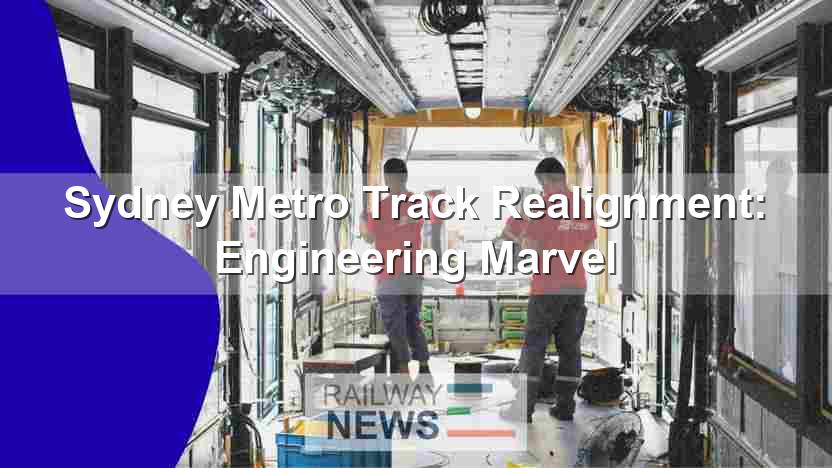
This article explores the significant track realignment project undertaken as part of the Sydney Metro City and Southwest project in New South Wales, Australia. The project involved the relocation of a major section of the existing Sydney Trains T1 North Shore Line to accommodate the new Sydney Metro tunnels. This complex undertaking required meticulous planning, precision engineering, and the coordinated efforts of a large workforce. The scale of the operation, the tight timeframe, and the impact on existing rail services highlight the challenges and innovative solutions employed in modern railway infrastructure development. We will examine the engineering challenges, logistical considerations, and the broader strategic implications of this project within the context of Sydney’s expanding public transport network. This case study provides valuable insights into the complexities of integrating new metro systems with existing rail infrastructure in a dense urban environment.
The Sydney Metro’s Impact on Existing Rail Infrastructure
The expansion of Sydney’s Metro network necessitates significant modifications to the existing railway infrastructure. The Sydney Metro City & Southwest project, in particular, required the relocation of a section of the northbound Sydney Trains T1 North Shore Line between Artarmon and Chatswood. This realignment was crucial because the existing tracks directly obstructed the path of the new twin metro tunnels. The project involved moving approximately 900 meters of track 20 meters westward, a substantial undertaking given the line’s age and high traffic volume.
Engineering Challenges and Solutions
Relocating a busy suburban railway line within a constrained urban environment presented numerous engineering challenges. The project team had to carefully plan the temporary shutdowns of rail services to minimize disruption to commuters. The actual track relocation involved a complex process of cutting, slewing (rotating and moving the track sections), and precisely rejoining the existing track segments. The precision required in this process is critical to ensure the safety and operational efficiency of the railway line. Additionally, the installation of nearly 2.5 kilometers of new overhead wiring required specialized expertise and coordination to ensure seamless integration with the relocated tracks.
Logistical Management and Workforce Coordination
The successful completion of the track realignment within a 48-hour timeframe highlights the exceptional logistical planning and execution involved. The project involved a team of 250 local workers who expertly coordinated their efforts to ensure efficient and safe completion of the project. The logistics encompassed not only the physical relocation of the track but also the coordination of specialized equipment, materials delivery, and waste disposal. The project served as a testament to the skilled workforce and effective project management strategies employed in large-scale infrastructure development.
Strategic Significance and Future Implications
The Sydney Metro project is a crucial component of Sydney’s broader strategy to enhance its public transport network. The completion of this phase will improve connectivity between the north-west, central business district (CBD), and Bankstown areas. The project’s utilization of Australian-made rail steel (approximately 62km for 31km of track in the twin tunnels) underlines a commitment to local industry and economic stimulation. The long-term implications include reduced road congestion, improved commute times, and enhanced accessibility for Sydney residents. The integration of the new metro line with existing rail networks establishes a more efficient and integrated public transport system that benefits both current and future generations.
Conclusion
The relocation of the northbound Sydney Trains track exemplifies the complex engineering challenges and logistical feats involved in expanding modern railway systems. The successful completion of this project, achieved within a remarkably short timeframe of 48 hours with minimal disruption to rail services, stands as a testament to meticulous planning, skilled workforce, and innovative engineering solutions. The strategic significance of this project extends beyond the immediate impact of improved connectivity; it underscores Australia’s commitment to developing robust and sustainable public transport infrastructure. The integration of the Sydney Metro with the existing rail network not only enhances public transport accessibility and efficiency but also contributes significantly to sustainable urban development and economic growth. This case study serves as a valuable model for future large-scale railway projects, emphasizing the importance of effective project management, precision engineering, and collaborative partnerships in the successful delivery of complex infrastructure developments. The completion of the Sydney Metro City & Southwest project, with its integrated network of 31 stations and 66km of track, represents a significant advancement in Sydney’s transport infrastructure, setting a new benchmark for future projects and improving the lives of commuters for years to come. The experience gained from this ambitious endeavor offers valuable lessons for future urban rail expansion projects globally.

Railway infrastructure, rolling stock and transport technologies specialist focused on global rail industry developments, high-speed rail systems, signaling technologies and freight transportation. Covering railway investments, public transport modernization, rail operations and international mobility projects across Europe, Asia and North America.
RELATED POSTS

October 8, 2026 1:15 pm
Alstom secured a €1bn contract to build 13 automated trains,...

October 1, 2026 7:09 am
United States regulators confirmed a September 30 deadline for the...

October 8, 2026 12:18 pm
Siemens Mobility signed an agreement with VinSpeed to supply 350...

October 4, 2026 5:14 pm
Alstom secured a CA$4.7 billion order from VIA Rail Canada...

October 5, 2026 6:12 pm
AECOM and Jacobs secured a contract in September 2026 to...

October 4, 2026 11:08 pm
Sound Transit confirmed the September 30 opening of Seattle Pinehurst...