
Victoria’s Rail Revolution: ETO System Upgrade
The introduction of an Electronic Train Order (ETO) system across Victoria’s regional rail network represents a substantial upgrade that enhances safety, operational efficiency, and capacity by replacing manual train order systems with real-time electronic tracking and communication. This modernization effort promises increased passenger services and freight operations while reducing human error risks on the Victorian rail network.
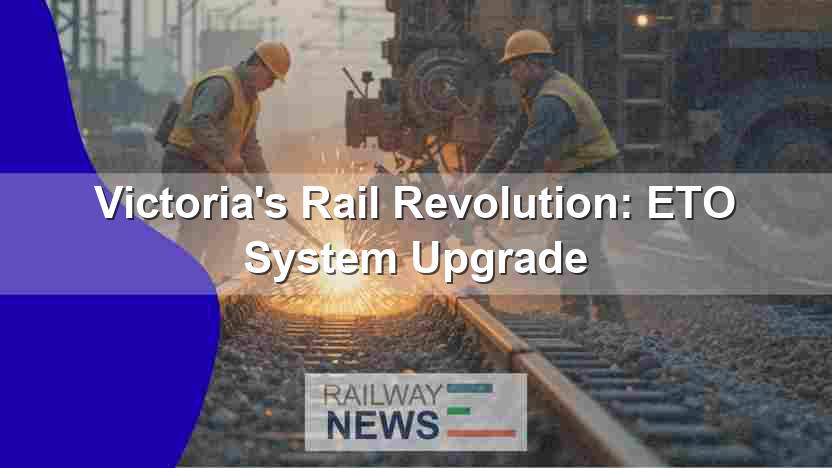
This article examines the significant upgrade to Victoria’s regional rail network in Australia, focusing on the implementation of a new Electronic Train Order (ETO) system. The project, a collaborative effort between V/Line (the rail operator) and Wabtec (the technology provider), represents a substantial investment in improving safety, capacity, and overall efficiency of the network. The introduction of ETO technology marks a significant shift from manual train control systems, paving the way for increased operational flexibility and enhanced passenger services. This transition will not only impact passenger services but will also have a demonstrable effect on freight operations, leading to potential improvements in logistics and economic activity within the region. This analysis explores the technical aspects of the ETO system, the broader economic implications of the project, and the long-term benefits for the Victorian regional rail network. It explores the challenges and opportunities presented by this modernization effort, highlighting the complexities involved in integrating new technologies into existing infrastructure. The positive impacts of the increased train frequency, improved safety, and streamlined operational processes for both passenger and freight transport are discussed in detail. The potential for future scalability and application of this technology to other sections of the network is also considered.
Implementing the Electronic Train Order System
The core of the upgrade lies in the implementation of a new Electronic Train Order (ETO) system across sections of the Victorian regional rail network, specifically focusing on lines between Bendigo, Swan Hill, and Echuca. This system replaces the previous manual train order system, significantly enhancing safety and operational efficiency. The ETO system utilizes onboard telecommunications equipment to precisely track train location in real-time. This data is then transmitted electronically to the central control system, eliminating the need for manual communication between train drivers and controllers. This real-time tracking and electronic communication facilitate improved coordination and control, enabling higher train frequencies on these sections of track. The improved communication and tracking significantly reduce the potential for human error, a major factor in railway accidents. Additionally, the integration of automated train control capabilities minimizes the risk of collisions and other safety-critical incidents.
Economic Benefits and Job Creation
Beyond the direct improvements to rail operations, the project generates substantial economic benefits. The Australian and Victorian governments’ combined investment exceeding A$4 billion (approximately US$3.12 billion) in Victoria’s regional rail network highlights the project’s strategic importance. This investment not only enhances the infrastructure but also stimulates job creation, with the project expected to generate approximately 3,000 jobs. The improved rail services also boost economic activity in the regions served by these lines, enhancing transport links for businesses and facilitating the movement of goods. The introduction of additional freight services, such as the weekly return service between Melbourne and Piangil and Melbourne and Deniliquin, directly supports regional industries and logistics. The overall improvement in efficiency and reliability of the rail network attracts investment and contributes to overall regional economic growth.
Enhanced Passenger Services and Freight Operations
The ETO system’s implementation directly impacts passenger services by enabling the operation of more trains on the same track sections. This translates into increased frequency, reduced waiting times, and improved reliability for passengers traveling between Bendigo, Swan Hill, and Echuca. The ability to add services to Eaglehawk and Epsom demonstrates the adaptability of the system and its contribution to improving connectivity in regional areas. Additionally, the system’s enhancement of freight operations is significant. The increased efficiency in rail operations allows for the introduction of additional freight services, improving the transport of goods and reducing reliance on road transport. The improved efficiency minimizes delays, optimizing transportation times and costs for businesses relying on rail transport. This improved logistics is directly correlated to improvements in overall regional economic productivity and competitiveness.
Future Implications and Scalability
The successful implementation of the ETO system on the Bendigo and Echuca lines serves as a model for potential future upgrades to other sections of Victoria’s regional rail network. The demonstrated benefits in terms of safety, efficiency, and economic growth provide a strong argument for the wider adoption of this technology. The scalability of the ETO system is crucial. The experience gained from this project will inform future deployments, allowing for adaptation to varied track layouts and operational requirements. This modular approach enhances the flexibility and cost-effectiveness of extending the ETO system’s reach across the wider Victorian rail network. Moreover, the data collected from the system’s operation will provide valuable insights that can further optimize train scheduling, resource allocation, and maintenance planning. Continuous improvement and refinement through data-driven decision-making will ensure the long-term efficiency and effectiveness of the system.
Conclusion
The upgrade of Victoria’s regional rail network, spearheaded by the introduction of the Electronic Train Order (ETO) system, represents a significant advancement in rail technology and infrastructure. The collaborative effort between V/Line and Wabtec has resulted in a system that not only enhances safety and operational efficiency but also delivers substantial economic benefits. The improved train frequency and reliability lead to enhanced passenger services and increased opportunities for regional economic growth. The project’s success demonstrates the potential for substantial improvements in both passenger and freight operations across regional rail networks worldwide. The increased efficiency in freight transport enhances regional economic competitiveness by optimizing the movement of goods. The project’s success is directly tied to significant government investment, highlighting the importance of public-private partnerships in achieving major infrastructure upgrades. The scalability of the ETO system provides a clear path for future improvements to Victoria’s rail network, offering a model for other regions seeking to modernize their rail infrastructure. Additionally, the continuous monitoring and data analysis enabled by this technology presents opportunities for further optimization and enhancements to the railway system in the future. The project is a compelling example of how strategic investment in rail infrastructure can lead to significant improvements in safety, efficiency, and economic growth in regional areas. The success of this project serves as a benchmark for similar projects globally, demonstrating the transformative potential of technology in enhancing rail transport systems.

Railway infrastructure, rolling stock and transport technologies specialist focused on global rail industry developments, high-speed rail systems, signaling technologies and freight transportation. Covering railway investments, public transport modernization, rail operations and international mobility projects across Europe, Asia and North America.
RELATED POSTS

October 8, 2026 1:15 pm
Alstom secured a €1bn contract to build 13 automated trains,...

October 1, 2026 7:09 am
United States regulators confirmed a September 30 deadline for the...

October 4, 2026 5:14 pm
Alstom secured a CA$4.7 billion order from VIA Rail Canada...

October 8, 2026 12:18 pm
Siemens Mobility signed an agreement with VinSpeed to supply 350...

October 5, 2026 6:12 pm
AECOM and Jacobs secured a contract in September 2026 to...

October 4, 2026 11:08 pm
Sound Transit confirmed the September 30 opening of Seattle Pinehurst...