
Toronto’s Eglinton Crosstown West Extension: A $603M Tunnel Project
The Eglinton Crosstown West Extension Advance Tunnel Project in Toronto represents a significant investment in public transportation infrastructure through a P3 model, involving substantial financial resources and complex project management.
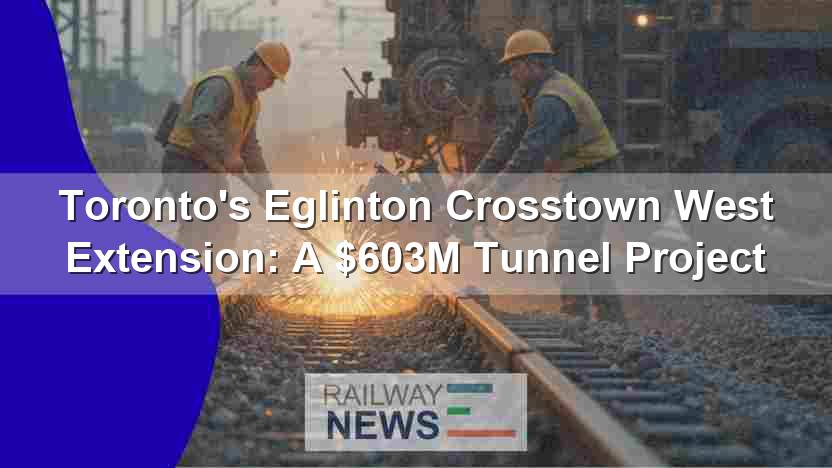
This article explores the significant undertaking of the Eglinton Crosstown West Extension (ECWE) Advance Tunnel project in Toronto, Canada. The project, awarded to the West End Connectors team, represents a substantial investment in public transportation infrastructure, utilizing a public-private partnership (P3) model to deliver nearly 6km of crucial tunneling work. This analysis will examine the project’s scope, the consortium involved, the financial structure, the risks associated with such a large-scale undertaking, and the broader implications for Toronto’s transit network and its commuters. We will explore the intricacies of the P3 model in the context of this project and analyze the roles and responsibilities of each participant in ensuring successful and timely completion. The importance of this project in alleviating traffic congestion, improving mobility, and promoting sustainable transportation options will also be discussed. The successful completion of this project marks a significant step forward in modernizing Toronto’s public transit infrastructure.
The West End Connectors Consortium and Project Scope
The West End Connectors team, a consortium comprised of Aecon Infrastructure Management (40% stake), Dragados Canada (40% stake), and Ghella Canada (20% stake), secured a substantial $603 million (CAD 729.2 million) fixed-price contract from Infrastructure Ontario (IO) and Metrolinx. This contract encompasses the design, construction, and financing of approximately 6 kilometers of tunnels for the 9.2-kilometer ECWE LRT (Light Rail Transit) extension. The project’s scope is extensive, including the design and construction of launch and extraction shafts, tunnel boring machine (TBM) deployment, installation of segmental precast concrete tunnel liners, construction of headwalls for emergency exit buildings and stations, and all associated works. The involvement of TYPSA and EXP Services in the design phase and ACS Infrastructure Canada, Scotiabank Capital, Aecon Concessions, and Ghella Investments and Partnerships in the financial aspects highlights the multi-faceted nature of this undertaking.
The Public-Private Partnership (P3) Model
The project’s delivery utilizes a P3 model, a common approach for large-scale infrastructure projects. This model strategically transfers certain risks – associated with design, construction, and financing – to the private sector consortium. This approach aims to leverage the expertise and financial capacity of private entities while allowing the public sector to maintain oversight and control. The distribution of risk through the P3 model provides a framework for better cost management, efficient project execution, and ensures that the private consortium is incentivized to deliver the project on time and within budget. The selection of the West End Connectors team indicates a successful evaluation of their capabilities and financial strength to manage these risks effectively.
Project Timeline and Significance
Construction commenced in 2021, with anticipated completion in the second quarter of 2025. Major tunnel boring activities are scheduled to begin in 2022. This timeline underscores the ambitious nature of the project and the meticulous planning required for such a complex undertaking. The project’s significance extends beyond its immediate impact on Toronto’s transportation system. The successful completion of the ECWE will improve community mobility, reduce traffic congestion, and offer a more sustainable transportation alternative, thereby contributing to the city’s broader environmental goals. This demonstrates a commitment to modernizing and expanding Toronto’s public transportation system to meet the needs of a growing city.
Challenges and Future Considerations
While the project presents significant opportunities, it also faces challenges inherent in large-scale underground construction. These include managing geological conditions, coordinating multiple contractors, ensuring safety protocols are met, and adhering to the stringent timelines. The success of this project hinges on meticulous planning, effective risk management, and robust collaboration among all stakeholders. Ongoing monitoring and adjustments will be crucial throughout the construction phase to address any unforeseen complications. Post-completion, ongoing maintenance and operational efficiency will be vital to guarantee the long-term success and sustainability of the ECWE. The potential for future expansions and interconnections should also be considered to maximize the project’s benefits for Toronto’s evolving transportation needs.
Conclusions
The Eglinton Crosstown West Extension Advance Tunnel project signifies a pivotal moment in Toronto’s transit infrastructure development. The $603 million contract awarded to the West End Connectors team, a consortium of experienced players in the construction and finance sectors, reflects a significant investment in modernizing the city’s transportation network. The project’s utilization of the P3 model effectively shares risk and responsibility, leveraging the expertise of the private sector while maintaining public sector oversight. The project’s scope is extensive, encompassing the design and construction of approximately 6km of tunnels, along with associated works, including launch shafts, extraction shafts, and the installation of segmental precast concrete tunnel liners. The ambitious timeline, with completion slated for the second quarter of 2025, underscores the scale and complexity of the project.
Beyond the technical aspects, the project’s significance is rooted in its potential to alleviate traffic congestion, enhance community mobility, and provide a more sustainable transportation option for Toronto residents. By reducing reliance on private vehicles, the ECWE will contribute to a greener, more environmentally conscious city. The success of this project will not only improve the quality of life for Torontonians but also serve as a model for future large-scale infrastructure projects, demonstrating the effective application of the P3 model and highlighting the importance of strategic investments in public transit. Continued focus on effective risk management, robust collaboration among stakeholders, and meticulous attention to detail will be crucial throughout the project lifecycle, guaranteeing its successful completion and long-term sustainability. The impact extends beyond the immediate completion, paving the way for future expansions and ensuring a more robust and efficient transportation system for years to come.

Railway infrastructure, rolling stock and transport technologies specialist focused on global rail industry developments, high-speed rail systems, signaling technologies and freight transportation. Covering railway investments, public transport modernization, rail operations and international mobility projects across Europe, Asia and North America.
RELATED POSTS

September 5, 2026 4:19 pm
CPK launched formal tender talks with four consortia to design...

September 5, 2026 7:14 pm
HS2 Ltd signed renegotiated civils contracts with EKFB and Align...

September 6, 2026 4:12 am
Alstom delivered the first of 100 new G Class trams...

September 6, 2026 8:17 am
DB InfraGO reopened the Nuremberg-Regensburg line in Bavaria on 31...
September 5, 2026 6:17 pm
Universal Signalling won a deal to install its U-Cross system...
September 6, 2026 12:20 pm
Indian Railways ordered a probe after a fire destroyed 2...