
Green Rail: Siemens & LOHC Hydrogen Solution
The global railway industry faces pressure to decarbonize, necessitating sustainable energy sources. Hydrogen’s challenges in storage and transportation are addressed by Liquid Organic Hydrogen Carrier (LOHC) technology, offering a promising solution for large-scale deployment in the rail sector with potential benefits including improved safety and operational efficiency.
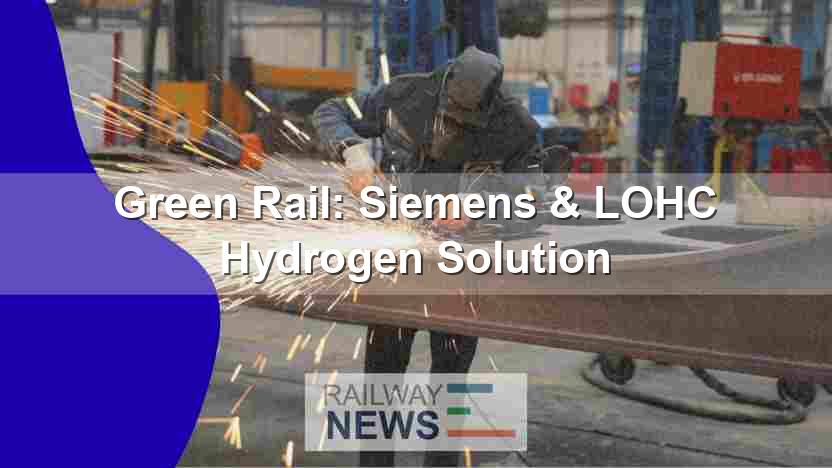
The global railway industry faces increasing pressure to decarbonize its operations and meet ambitious climate targets. This necessitates a transition towards sustainable energy sources, with hydrogen emerging as a strong contender. However, the inherent challenges associated with hydrogen storage and transportation, namely its low energy density and the need for high-pressure or cryogenic storage, hinder widespread adoption. This article explores a promising technology that addresses these challenges: Liquid Organic Hydrogen Carrier (LOHC) technology. We will delve into the collaborative research efforts of Siemens Mobility and the Helmholtz Institute Erlangen-Nuremberg for Renewable Energy (HI ERN) to integrate LOHC into the rail sector, analyzing its potential benefits and addressing any associated limitations. We will examine the practical application of LOHC, its impact on existing infrastructure, and its potential to drive the transition towards a truly sustainable railway system. This exploration will analyze the technological feasibility, economic viability, and scalability of LOHC technology for large-scale deployment in the rail industry, considering both operational aspects and the broader implications for the energy sector.
LOHC Technology: A Solution for Hydrogen Storage and Transportation
Liquid Organic Hydrogen Carriers (LOHCs) offer a novel approach to hydrogen storage and transportation. Unlike traditional methods requiring high-pressure tanks or cryogenic temperatures, LOHC systems utilize a liquid organic carrier molecule that reversibly absorbs and releases hydrogen. This process significantly improves safety and reduces infrastructure requirements. The hydrogen is chemically bound to the carrier, resulting in a liquid state at ambient conditions, eliminating the need for specialized, high-pressure tanks or cryogenic cooling. This makes transportation significantly simpler and safer, leveraging existing fuel infrastructure. The release of hydrogen occurs through a catalytic process at the point of use, providing a flexible and efficient system for on-board energy generation in applications such as railway locomotives.
Siemens Mobility and HI ERN Collaboration: A Joint Venture for Green Rail
Siemens Mobility, a leading player in the railway industry, has partnered with the Helmholtz Institute Erlangen-Nuremberg for Renewable Energy (HI ERN) – a renowned research institution – to explore the feasibility and practical implementation of LOHC technology in the rail sector. This collaboration leverages Siemens’ expertise in railway system design and integration with HI ERN’s deep knowledge of LOHC chemistry and engineering. By providing a Vectron mainline locomotive for testing, Siemens actively demonstrates its commitment to exploring sustainable solutions. This collaborative approach underscores the importance of industry-academia partnerships in accelerating the development and deployment of innovative green technologies.
Addressing Challenges and Exploring Scalability
While LOHC technology presents many advantages, challenges remain. The efficiency of the hydrogen absorption and release processes, the long-term stability and durability of the carrier molecules, and the overall cost-effectiveness compared to conventional hydrogen storage methods require further investigation. The scalability of the LOHC infrastructure for large-scale railway operations needs careful consideration. Integration with existing railway fuel infrastructure and the potential need for new refueling facilities must be thoroughly assessed. Economic analysis comparing the life-cycle costs of LOHC-based systems with traditional solutions is crucial for widespread adoption.
The Future of Hydrogen-Powered Rail: LOHC’s Potential Impact
LOHC technology offers a significant step towards a sustainable future for the railway industry. Its ability to overcome the limitations of traditional hydrogen storage methods presents a compelling alternative for powering hydrogen-fueled trains. The collaboration between Siemens Mobility and HI ERN is a crucial step towards demonstrating the practical viability of this technology. Successful implementation would significantly reduce greenhouse gas emissions from railway operations, contributing to global efforts to combat climate change. Further research focusing on optimization of the LOHC system, cost reduction, and integration into existing railway infrastructure is essential to unlock the full potential of this technology and pave the way for a greener and more sustainable transportation system.
Conclusions
This article has examined the potential of Liquid Organic Hydrogen Carrier (LOHC) technology to revolutionize the railway industry’s transition towards sustainable operations. The collaborative research effort between Siemens Mobility and the Helmholtz Institute Erlangen-Nuremberg (HI ERN) is a significant step in bringing this promising technology to fruition. The advantages of LOHC, including safer and more efficient hydrogen storage and transportation at ambient conditions, were explored. While challenges remain regarding efficiency, scalability, and cost-effectiveness, the potential benefits are considerable. The successful deployment of LOHC systems in rail applications would significantly reduce reliance on fossil fuels, decrease greenhouse gas emissions, and contribute to a more environmentally friendly transportation network. The long-term success of LOHC hinges on addressing these challenges through ongoing research and development, focusing on optimizing the chemical processes, enhancing the durability of the carrier molecules, and conducting detailed life-cycle cost analyses. The collaboration between industry leaders like Siemens Mobility and research institutions like HI ERN is critical in fostering innovation and accelerating the adoption of this transformative technology, ultimately shaping a greener and more sustainable future for the railway industry. The future of rail transportation is likely to involve a multitude of approaches to decarbonization, and LOHC represents a powerful tool in this arsenal, promising a significant reduction in the environmental impact of rail operations worldwide.

Railway infrastructure, rolling stock and transport technologies specialist focused on global rail industry developments, high-speed rail systems, signaling technologies and freight transportation. Covering railway investments, public transport modernization, rail operations and international mobility projects across Europe, Asia and North America.
RELATED POSTS

September 5, 2026 4:19 pm
CPK launched formal tender talks with four consortia to design...

September 5, 2026 7:14 pm
HS2 Ltd signed renegotiated civils contracts with EKFB and Align...

September 6, 2026 4:12 am
Alstom delivered the first of 100 new G Class trams...
September 6, 2026 8:17 am
DB InfraGO reopened the Nuremberg-Regensburg line in Bavaria on 31...
September 5, 2026 6:17 pm
Universal Signalling won a deal to install its U-Cross system...
September 6, 2026 12:20 pm
Indian Railways ordered a probe after a fire destroyed 2...