
Vande Sadharan Express: India’s Affordable High-Speed Rail
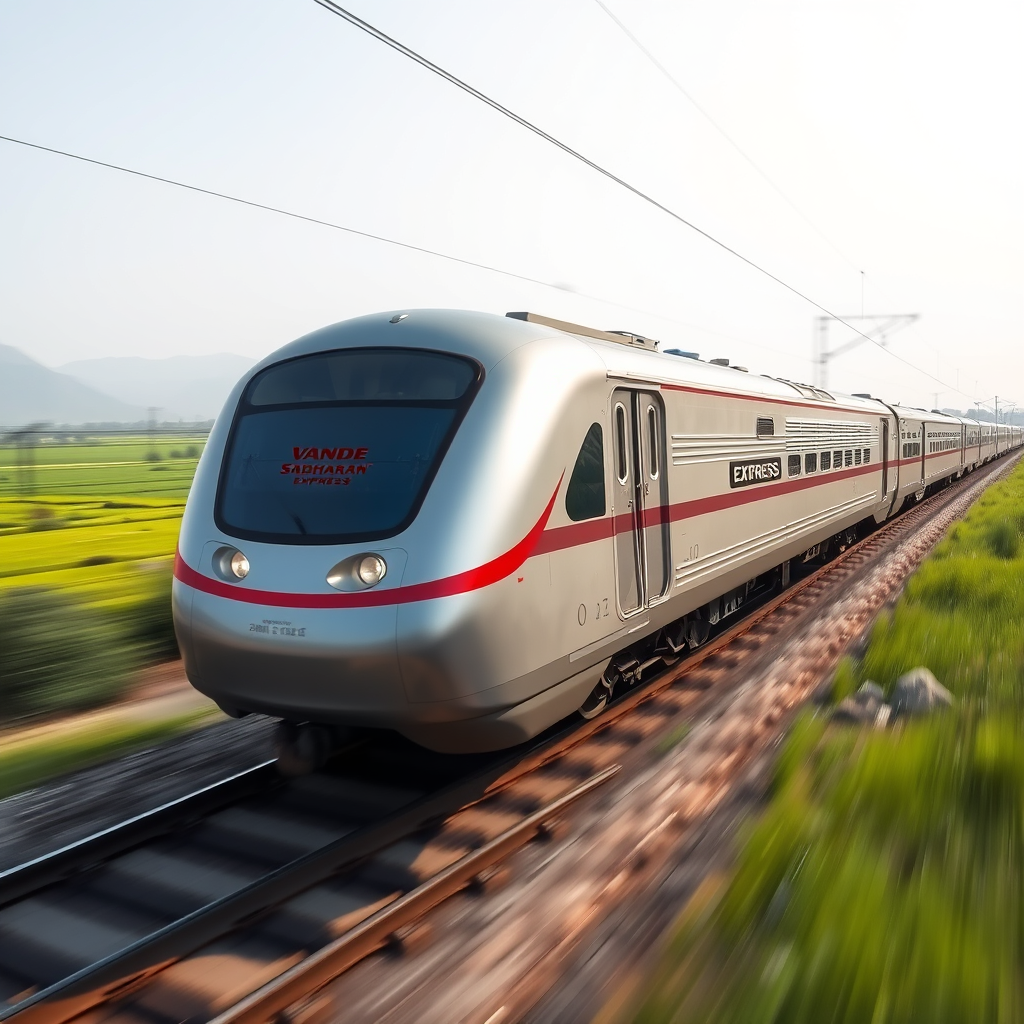
The Vande Sadharan Express, introduced by Indian Railways as an affordable, non-AC sleeper train, represents a significant shift in the country’s railway strategy, aiming to cater to a large segment of the population seeking budget-friendly high-speed rail travel.
Introduction
This article explores the Indian Railways’ (IR) recent introduction of the Vande Sadharan Express, a non-air-conditioned (non-AC) sleeper train designed to provide affordable, high-speed rail travel. The launch of this train marks a significant strategic move by IR, aiming to cater to a large segment of the population who cannot afford the more expensive, air-conditioned Vande Bharat Express. This decision prompts a discussion on the balance between affordability, speed, passenger comfort, and the broader implications for India’s railway infrastructure and its commitment to sustainable transport. We will examine the technological specifications, economic considerations, and potential societal impacts of this new rolling stock, analyzing its role in shaping the future of Indian Railways and its impact on the nation’s railway passenger landscape.
The Vande Sadharan Express: A Cost-Effective Approach to High-Speed Rail
The Vande Sadharan Express, a 22-coach non-AC sleeper train capable of reaching speeds up to 130 km/h, represents a significant departure from the luxurious Vande Bharat Express. Its design prioritizes affordability over luxury, featuring 18 unreserved and four reserved non-AC coaches, aiming to transport over 1800 passengers. This cost reduction, approximately Rs 600 million (USD 7 million) compared to the Rs 1.2 billion (USD 14 million) cost of a Vande Bharat Express train, is achieved through the omission of air conditioning and potentially through the use of less expensive materials and simpler technological systems. This approach directly targets the significant portion of the Indian population who rely on budget-friendly transport options.
Technological Considerations and Operational Implications
While the Vande Sadharan sacrifices air conditioning for affordability, its 130 km/h top speed demonstrates a commitment to faster travel times. This speed necessitates a robust track infrastructure capable of supporting such velocities. Additionally, the operational challenges of managing a high-density, non-AC train during peak seasons, particularly in hot and humid climates, need careful consideration. Efficient ventilation and crowd management strategies will be crucial for passenger comfort and safety. The decision to initially deploy the train on the Mumbai-Nashik corridor suggests a planned testing phase to assess operational efficiency and gather crucial passenger feedback before wider implementation.
Socio-Economic Impacts and Market Segmentation
The Vande Sadharan’s primary objective is to provide affordable travel for low-income groups, including migrant workers. This initiative directly addresses a critical societal need by offering a faster and potentially more comfortable alternative to existing overcrowded and slower non-AC trains. The train’s success will depend on passenger acceptance, which in turn will influence future production and deployment decisions. IR’s strategy of introducing the train on a trial basis demonstrates a data-driven approach, prioritizing passenger feedback for informed decision-making. This market segmentation strategy recognizes the diverse needs and economic realities of the Indian railway passenger base.
Conclusion
The introduction of the Vande Sadharan Express represents a bold step by Indian Railways, aiming to balance the need for affordable, high-speed rail travel with budgetary constraints. By sacrificing air conditioning to reduce costs, IR seeks to cater to a substantial portion of the population who previously lacked access to efficient and relatively quick long-distance travel. The train’s success hinges on several key factors including passenger acceptance, effective operational management in diverse climatic conditions, and the capacity of the existing rail infrastructure to handle the increased speeds and passenger volume. The decision to implement a trial run on the Mumbai-Nashik corridor highlights a proactive approach to data-driven decision-making, enabling IR to gather critical feedback before large-scale deployment. The long-term implications will be significant, influencing not only the future of IR’s rolling stock but also broader access to affordable and efficient transportation for a substantial portion of the Indian population. The government’s concurrent plan to expand non-AC general category trains further reinforces its commitment to inclusive and affordable railway transportation. Ultimately, the Vande Sadharan Express serves as a case study in balancing infrastructural advancement with social equity, demonstrating a commitment to providing accessible, high-speed rail services to all segments of Indian society. The success or failure of this initiative will offer valuable insights into developing cost-effective, high-speed rail solutions in other developing nations facing similar infrastructural and socioeconomic challenges.

Railway infrastructure, rolling stock and transport technologies specialist focused on global rail industry developments, high-speed rail systems, signaling technologies and freight transportation. Covering railway investments, public transport modernization, rail operations and international mobility projects across Europe, Asia and North America.
RELATED POSTS

September 5, 2026 4:19 pm
CPK launched formal tender talks with four consortia to design...

September 5, 2026 7:14 pm
HS2 Ltd signed renegotiated civils contracts with EKFB and Align...

September 6, 2026 4:12 am
Alstom delivered the first of 100 new G Class trams...
September 5, 2026 6:17 pm
Universal Signalling won a deal to install its U-Cross system...
September 6, 2026 8:17 am
DB InfraGO reopened the Nuremberg-Regensburg line in Bavaria on 31...
September 7, 2026 11:16 pm
China Railway Tunnel Group completed the 11.3-km underwater Yangtze tunnel...