
Greater Anglia’s Class 720: Revolutionizing East Anglia’s Rail
The introduction of 133 new Class 720 Aventra electric multiple units (EMUs) on Greater Anglia’s commuter routes significantly expands service capacity, enhancing comfort and operational efficiency across East Anglia.
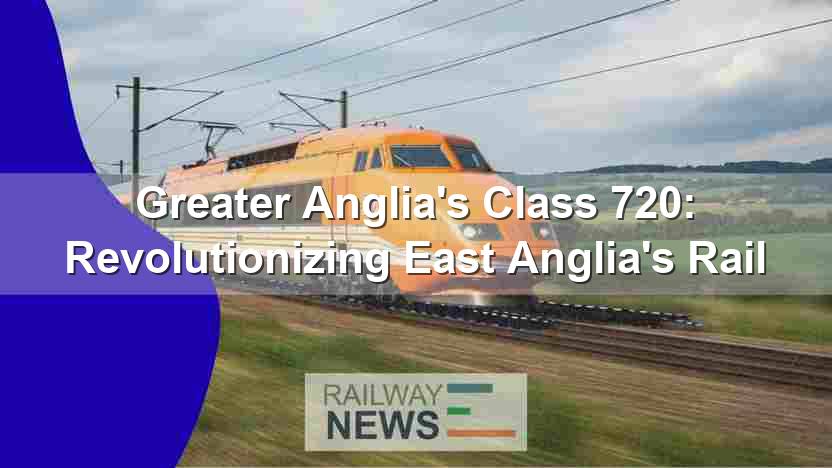
Introduction
This article examines the significant expansion of Greater Anglia’s (GA) commuter rail services with the introduction of 133 new Class 720 Aventra electric multiple units (EMUs) built by Alstom (formerly Bombardier Transportation). The deployment of these modern trains marks a substantial upgrade to GA’s rolling stock, impacting passenger capacity, comfort, and operational efficiency across its network in East Anglia. This analysis will delve into the specific routes affected, the technological advancements incorporated into the new trains, the strategic implications for GA’s overall modernization plan, and the broader context within the UK’s railway modernization efforts. The focus will be on the tangible improvements these trains offer commuters and the future prospects for GA’s ambitious fleet renewal program.
Expansion of Commuter Services in Cambridgeshire and Hertfordshire
The initial deployment of the Class 720 Aventra EMUs on the London Liverpool Street to Cambridge route, and the Hertford East branch line, signifies a considerable expansion of commuter rail options in Cambridgeshire and Hertfordshire. These routes previously relied on older rolling stock, which often struggled to meet the increasing passenger demand. The introduction of these longer, more modern trains immediately increased capacity, providing more comfortable and reliable journeys for commuters travelling into London. This expansion is crucial for the economic development of these regions, as reliable and efficient public transportation is key to attracting investment and supporting growth.
Technological Advancements in the Class 720 Aventra EMUs
The Class 720 Aventra trains represent a significant leap forward in passenger rail technology. Key features include increased seating capacity, improved accessibility features for passengers with disabilities, dedicated cycle spaces promoting sustainable transport, and enhanced passenger information systems. The inclusion of USB charging points and Wi-Fi connectivity aligns with passenger expectations for modern transportation. Additionally, the incorporation of underfloor heating and expanded foot room at window seats showcases GA’s commitment to passenger comfort. The regenerative braking system further contributes to environmental sustainability by recovering energy during braking, reducing energy consumption and operational costs. These features combined improve the overall passenger experience and contribute to the efficient operation of the railway network.
Greater Anglia’s Network-Wide Modernization
The introduction of the Class 720 trains is not an isolated event but part of GA’s broader strategy to completely replace its older rolling stock with modern, high-capacity EMUs. This ambitious modernization program encompasses numerous routes across the network, including the Norwich–London intercity route, the Stansted Airport–London line and many branch lines throughout the region. The program demonstrates a significant investment in improving rail travel in East Anglia and enhancing the competitiveness of the region. The detailed replacement of aging trains not only upgrades passenger comfort and experience but also enhances the reliability and operational efficiency of the entire network.
Conclusion
The introduction of the Alstom Class 720 Aventra EMUs by Greater Anglia marks a pivotal moment in the modernization of its rail network. The deployment of these 133 five-carriage trains, with the capability of operating in ten-carriage configurations, dramatically increases capacity on key commuter routes in Cambridgeshire and Hertfordshire, and across other lines throughout the East Anglia region. The trains’ technological advancements, including improved accessibility, enhanced passenger comfort features (such as underfloor heating, USB charging, and Wi-Fi), and environmentally friendly regenerative braking, represent a significant improvement to the overall passenger experience. This initiative is a key component of GA’s larger strategic plan to fully modernize its fleet. The long-term benefits extend beyond passenger convenience, impacting regional economic growth by providing reliable and efficient public transport. The successful implementation of this program provides a valuable case study in large-scale railway modernization, demonstrating the potential to improve both the quality and efficiency of rail services while simultaneously driving regional development. The completion of this program will undoubtedly position GA as a leader in modern rail operations, setting a benchmark for other rail operators in the UK and beyond.

Railway infrastructure, rolling stock and transport technologies specialist focused on global rail industry developments, high-speed rail systems, signaling technologies and freight transportation. Covering railway investments, public transport modernization, rail operations and international mobility projects across Europe, Asia and North America.
RELATED POSTS

October 8, 2026 1:15 pm
Alstom secured a €1bn contract to build 13 automated trains,...

October 1, 2026 7:09 am
United States regulators confirmed a September 30 deadline for the...

October 8, 2026 12:18 pm
Siemens Mobility signed an agreement with VinSpeed to supply 350...

October 4, 2026 5:14 pm
Alstom secured a CA$4.7 billion order from VIA Rail Canada...

October 5, 2026 6:12 pm
AECOM and Jacobs secured a contract in September 2026 to...

October 4, 2026 11:08 pm
Sound Transit confirmed the September 30 opening of Seattle Pinehurst...