
Meridiam & Setrag: Transforming Gabon’s Railway
Meridiam’s strategic investment in Setrag through a $82.83 million capital commitment represents a substantial boost for the railway operator, enhancing its financial position and operational capabilities by facilitating infrastructure upgrades and expansion projects aimed at boosting freight capacity from 12 to 19 million tonnes, contributing to Gabonese economic growth.
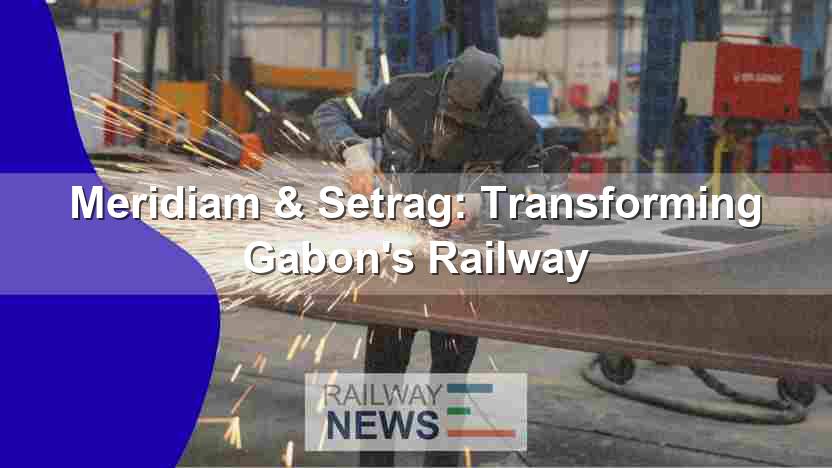
This article examines the strategic investment by Meridiam, a French asset manager, in Setrag (Société d’Exploitation du Transgabonais), the operator of the Transgabonese Railway in Gabon. This significant investment highlights the growing importance of infrastructure development in supporting economic growth in developing nations and underscores the complexities of public-private partnerships (PPPs) in the railway sector. We will delve into the financial aspects of the deal, analyze its implications for Setrag’s operational capacity and future development plans, and discuss the broader context of this investment within the Gabonese economy and the global railway industry. The analysis will consider the role of government involvement, the challenges inherent in upgrading aging railway infrastructure, and the potential for sustainable growth within the framework of this newly structured partnership. The article will conclude by assessing the long-term viability and potential impact of Meridiam’s investment on the Transgabonese Railway and the Gabonese economy.
Meridiam’s Investment in Setrag: A Strategic Partnership
Meridiam’s acquisition of a 40% stake in Setrag through a $35.5 million (€30 million) capital increase, coupled with a further $47.33 million (€40 million) commitment to financing, represents a substantial investment in the Transgabonese Railway. This signifies Meridiam’s confidence in the railway’s potential for growth and profitability. The Gabonese state’s concurrent purchase of 9% of Setrag’s capital from Comilog (Compagnie Minière de l’Ogooué), further solidifies the government’s commitment to the project, signifying a strengthened public-private partnership (PPP).
Strengthening Setrag’s Financial Position and Operational Capacity
The influx of capital from Meridiam significantly enhances Setrag’s financial standing, enabling the company to address critical infrastructure upgrades and expansion projects. Setrag’s current operations include the transport of approximately nine million tonnes of goods and 330,000 passengers annually, with a significant portion (90%) dedicated to mining freight. This investment allows Setrag to pursue the Plan de Remise à Niveau (PRN) – an upgrade plan – aimed at enhancing safety, modernizing infrastructure, and increasing capacity. The target is to boost freight capacity from 12 million tonnes to 19 million tonnes. This capacity increase is expected to significantly contribute to Gabon’s economic growth, particularly within the mining sector.
The Role of Public-Private Partnerships (PPPs) in Railway Development
The Meridiam-Setrag partnership exemplifies the increasing role of PPPs in railway infrastructure development. PPPs can leverage private sector expertise and capital to address funding gaps and implement efficient operational strategies. However, these partnerships require careful management to balance the interests of both public and private stakeholders. Effective regulatory frameworks and transparent contractual agreements are crucial for the success of such initiatives. The Gabonese government’s continued involvement, as reflected in their acquisition of additional shares, indicates a commitment to collaborative governance and long-term sustainability.
Challenges and Future Outlook for the Transgabonese Railway
Despite the positive aspects of the investment, challenges remain. The Transgabonese Railway, like many aging rail networks, requires substantial investment in maintenance and modernization to ensure its long-term viability. This includes upgrading signaling systems, track infrastructure, and rolling stock. Sustainable practices, such as the adoption of hybrid locomotives, will also play a crucial role in minimizing the environmental impact of railway operations. Additionally, the successful implementation of the PRN (Plan de Remise à Niveau) will be essential in reaching the projected increase in transport capacity.
Conclusion
Meridiam’s substantial investment in Setrag marks a significant turning point for the Transgabonese Railway. The infusion of capital, coupled with the strengthened public-private partnership between Meridiam and the Gabonese government, provides a pathway for modernization and expansion. The ambitious goals of the PRN (Plan de Remise à Niveau), aimed at increasing transport capacity to meet the demands of Gabon’s growing economy, are achievable with the necessary financial backing and strategic planning. However, success hinges on effective project management, careful oversight of the PPP, and a commitment to sustainable operational practices. The long-term viability of the Transgabonese Railway, and its contribution to Gabon’s economic growth, is closely tied to the successful implementation of the ongoing modernization and expansion projects. This case study offers valuable insights into the complexities and potential benefits of public-private partnerships in railway development within the context of a developing nation. The effective management of this partnership serves as a model for future infrastructure projects in similar contexts worldwide. The successful completion of the PRN will not only revitalize the railway but also contribute significantly to the sustainable development of Gabon’s economy, highlighting the importance of strategic investment in critical infrastructure for national economic growth.

Railway infrastructure, rolling stock and transport technologies specialist focused on global rail industry developments, high-speed rail systems, signaling technologies and freight transportation. Covering railway investments, public transport modernization, rail operations and international mobility projects across Europe, Asia and North America.
RELATED POSTS

September 5, 2026 4:19 pm
CPK launched formal tender talks with four consortia to design...

September 5, 2026 7:14 pm
HS2 Ltd signed renegotiated civils contracts with EKFB and Align...

September 6, 2026 4:12 am
Alstom delivered the first of 100 new G Class trams...

September 6, 2026 8:17 am
DB InfraGO reopened the Nuremberg-Regensburg line in Bavaria on 31...

September 5, 2026 6:17 pm
Universal Signalling won a deal to install its U-Cross system...
September 6, 2026 12:20 pm
Indian Railways ordered a probe after a fire destroyed 2...