
Madrid-Seville High-Speed Rail: A Tech Upgrade
The Madrid-Seville High-Speed Rail line undergoes a comprehensive modernization project, replacing core signaling systems, track circuits, and integrating European Rail Traffic Management System (ERTMS) Level 2, emphasizing technological innovation to enhance safety, efficiency, and future interoperability.
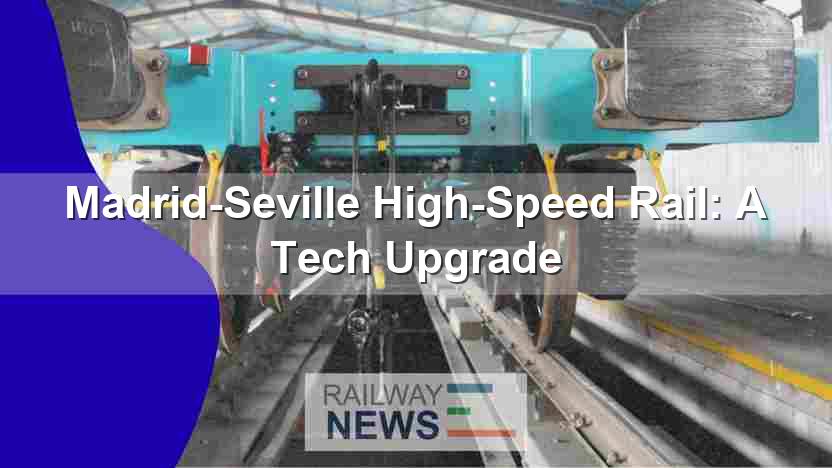
This article explores the significant modernization project undertaken on the Madrid-Seville High-Speed Rail (HSR) line, focusing on the technological advancements and strategic implications of the upgrades implemented by Thales Group. The 30-year-old line, a crucial artery of Spain’s high-speed rail network, is receiving a detailed overhaul, encompassing the replacement of core signaling systems, track circuits, and the integration of European Rail Traffic Management System (ERTMS) Level 2. This modernization not only enhances safety and efficiency but also aligns the infrastructure with European interoperability standards, preparing the line for increased capacity and future technological advancements. The project, valued at approximately $110.97 million (€98 million), highlights the substantial investment needed to maintain and improve aging high-speed rail infrastructure and emphasizes the crucial role of technological innovation in ensuring the long-term viability and competitiveness of modern rail transportation.
Signal System Replacement and ERTMS Integration
The core of the modernization effort lies in the replacement of the existing electronic interlockings with state-of-the-art equivalents. This involves a complex transition, seamlessly integrating the legacy Line-Züge-Bahn (LZB) train protection system with the new ERTMS Level 2 (European Rail Traffic Management System) solution. This dual-system operation ensures continuous, safe service throughout the upgrade process, maintaining uninterrupted operations for passengers. The successful integration of these disparate systems demands precise planning and execution, mitigating potential disruptions and ensuring compatibility between old and new technologies. The meticulous phasing of the upgrade allows for a smooth transition without compromising operational reliability. This strategic approach minimizes service interruptions and ensures passenger safety throughout the modernization period. The project also involves modernizing the copper networks responsible for detecting fallen objects, a key safety improvement.
Track Circuit Replacement with Thales TTC Technology
The project also encompasses the replacement of 1,306 existing track circuits (FTG-type) with Thales TTC (Track Circuit) technology. This upgrade offers significant advantages in terms of space efficiency and maintainability. The Thales TTC system allows for the installation of 16 units per frame, drastically reducing the space required in technical rooms. This reclaimed space can be utilized for the placement of the new ERTMS interlockings and other associated equipment. Additionally, the Thales TTC system has been rigorously tested across various track gauges (UIC standard: 1,435mm, Iberian: 1,668 mm, and metric) and voltage levels (25 KVca high-speed overhead, 3 KVcc conventional, and 1.5 KVcc metric), demonstrating its versatility and adaptability to diverse rail infrastructure configurations. This adaptability highlights the system’s robustness and suitability for widespread deployment.
Economic and Strategic Implications
The €98 million investment, partially funded by EU reserves, underscores the economic significance of modernizing rail infrastructure. It demonstrates a commitment to improving efficiency, reliability, and passenger capacity. This project boosts Spain’s competitiveness in the European high-speed rail market by improving interoperability with other networks across the continent. The alignment with European standards facilitates seamless cross-border rail travel and freight transport, optimizing the overall efficiency of the European rail system. This modernization also creates opportunities for local businesses involved in the project’s implementation, fostering economic growth and job creation within the region. The long-term benefits significantly outweigh the initial investment, ensuring a sustainable and efficient rail network for years to come.
Conclusion
The modernization of the Madrid-Seville High-Speed line marks a significant step forward in enhancing Spain’s rail infrastructure. The project, spearheaded by Thales, showcases a successful integration of advanced signaling technologies (ERTMS Level 2) with existing systems (LZB), ensuring a smooth transition and minimizing disruptions. The replacement of obsolete track circuits with the space-saving Thales TTC system represents a key improvement in maintainability and efficiency. The project’s economic impact extends beyond immediate cost savings, fostering economic growth, creating jobs, and bolstering Spain’s competitiveness in the European high-speed rail market. The strategic alignment with European interoperability standards further enhances the long-term viability and attractiveness of the line, paving the way for increased capacity and improved cross-border connectivity. The successful completion of this ambitious project provides a valuable case study for other high-speed rail networks worldwide, demonstrating the feasibility and benefits of integrating cutting-edge technologies to optimize existing infrastructure for improved safety, efficiency, and interoperability. This modernization project positions the Madrid-Seville high-speed rail line as a model for future upgrades and underscores the vital role of technological advancements in shaping a resilient and sustainable rail future. The successful blend of legacy and next-generation technologies demonstrates a responsible, forward-thinking approach to infrastructure management, setting a precedent for efficient modernization initiatives in other high-speed rail networks globally.

Railway infrastructure, rolling stock and transport technologies specialist focused on global rail industry developments, high-speed rail systems, signaling technologies and freight transportation. Covering railway investments, public transport modernization, rail operations and international mobility projects across Europe, Asia and North America.
RELATED POSTS

October 1, 2026 7:09 am
United States regulators confirmed a September 30 deadline for the...

October 8, 2026 1:15 pm
Alstom secured a €1bn contract to build 13 automated trains,...

October 4, 2026 5:14 pm
Alstom secured a CA$4.7 billion order from VIA Rail Canada...

October 8, 2026 12:18 pm
Siemens Mobility signed an agreement with VinSpeed to supply 350...

October 4, 2026 11:08 pm
Sound Transit confirmed the September 30 opening of Seattle Pinehurst...

October 5, 2026 6:12 pm
AECOM and Jacobs secured a contract in September 2026 to...