
California High-Speed Rail: A Major Milestone
The approval of the Final Environmental Impact Report/Environmental Impact Statement for California’s high-speed rail project marks a significant milestone in completing the environmental review process for Phase I, with plans to connect San Francisco and Los Angeles/Anaheim via approximately 300 miles of route. This approval is crucial for unlocking the full potential of the project, highlighting the interplay between environmental regulations, funding acquisition, and logistical challenges in constructing a high-speed rail network.
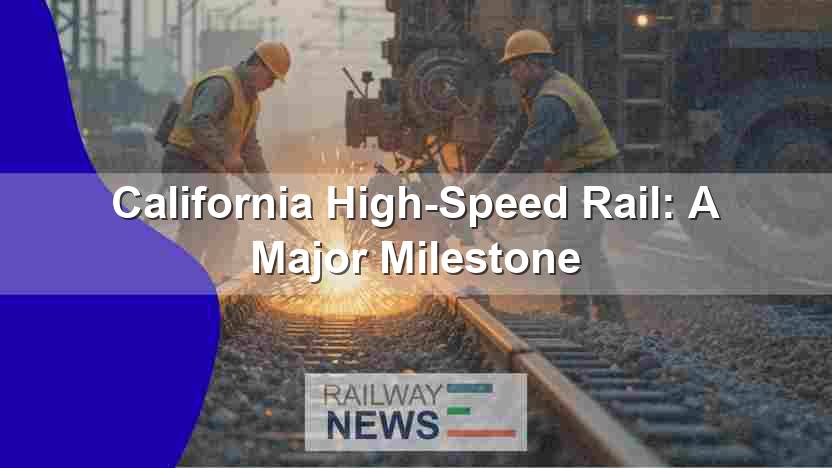
This article explores the significant progress made on California’s ambitious high-speed rail project. The California High-Speed Rail Authority (CHSRA) recently approved the Final Environmental Impact Report/Environmental Impact Statement (EIR/EIS) for a crucial 14-mile segment connecting Hollywood Burbank Airport to Los Angeles Union Station. This approval marks a pivotal step toward completing the environmental review process for Phase I, encompassing approximately 300 miles of the planned 500-mile route between San Francisco and Los Angeles/Anaheim. The project, envisioned as a transformative transportation solution for California, promises to significantly reduce travel times and alleviate traffic congestion along this heavily populated corridor. This approval is not simply an environmental milestone but a crucial step in unlocking the project’s full potential, highlighting the complex interplay between environmental regulations, funding acquisition, and the logistical challenges inherent in constructing a high-speed rail network. The following sections explore various facets of this project, including environmental compliance, construction plans, and the overall vision for a detailed high-speed rail system within the state.
Environmental Approvals and Regulatory Compliance
The approval of the EIR/EIS for the Burbank-Los Angeles section is a major achievement, clearing a significant hurdle in the California Environmental Quality Act (CEQA) process. This rigorous environmental review ensures the project’s adherence to environmental regulations, addressing potential impacts on air quality, noise levels, habitat disruption, and other ecological considerations. The CHSRA’s commitment to completing the environmental review process for the entire Phase I by 2023 underscores the agency’s dedication to transparency and environmental responsibility. This methodical approach aims to mitigate any potential negative environmental consequences and secure public support for the project. The sequential review process, with assessments planned for the San Jose to Merced and San Francisco to San Jose segments in 2022, demonstrates a commitment to a phased and detailed environmental impact assessment.
Project Scope and Infrastructure Development
The high-speed rail system, spanning an eventual 800 miles with 24 planned stations, represents a monumental undertaking. The currently approved section, running from a new Hollywood Burbank Airport Station to the existing Los Angeles Union Station, will significantly improve connectivity between the San Fernando Valley and downtown Los Angeles. The project’s speed target of approximately 200 miles per hour will dramatically decrease travel times between major Californian cities, fostering economic growth and regional integration. The fact that approximately 119 miles are already under construction indicates significant progress and the commitment towards completing this ambitious infrastructure project. The current focus is on securing funding for the next phases of construction.
Funding and Financial Sustainability
Securing adequate funding is paramount to the success of this endeavor. The reinstatement of $929 million in federal funding in 2021 was a significant boost, highlighting the federal government’s support for the project. However, continued funding is essential to complete the entire network. Exploring innovative financing models, alongside securing public and private investment, will be crucial in ensuring the financial sustainability of the project. A robust financial strategy is necessary to navigate the significant capital expenditure required for the construction and ongoing operation of a high-speed rail network.
Technological and Operational Considerations
The successful implementation of this project requires advanced technological integration. Intelligent Transportation Systems (ITS) will play a vital role in ensuring efficient operations and optimizing the performance of the rail network. These systems encompass a wide range of technologies, including centralized train control systems and advanced signaling systems, enhancing safety, efficiency, and passenger comfort. The integration of these technologies is crucial for maintaining the reliability and maximizing the capacity of the high-speed rail system. The system’s success depends on robust planning, seamless integration of diverse technologies, and effective management of the operational complexities involved in running a high-speed rail network.
Conclusions
The approval of the EIR/EIS for the Burbank-Los Angeles section of California’s high-speed rail project signifies a critical juncture in the project’s development. This milestone, coupled with the progress on other sections and the continued support from federal and state governments, demonstrates the project’s viability and potential transformative impact on California’s transportation infrastructure. The successful completion of the environmental review process, the ongoing construction efforts, and the strategic focus on securing funding all contribute to a positive outlook for the project. However, considerable challenges remain. Securing consistent funding, navigating the complexities of large-scale infrastructure projects, and implementing the latest ITS technologies are all essential for the project’s long-term success. The ultimate success of the California high-speed rail system depends not only on engineering prowess and effective project management but also on sustained political support and public engagement. Successfully navigating these challenges will pave the way for a future where high-speed rail becomes an integral part of California’s transportation landscape, significantly impacting commuting times, regional connectivity, and overall economic development. The CHSRA’s commitment to transparency and its phased approach to environmental review and construction are promising signs indicating a thoughtful and well-managed approach to delivering this landmark project.

Railway infrastructure, rolling stock and transport technologies specialist focused on global rail industry developments, high-speed rail systems, signaling technologies and freight transportation. Covering railway investments, public transport modernization, rail operations and international mobility projects across Europe, Asia and North America.
RELATED POSTS

September 5, 2026 4:19 pm
CPK launched formal tender talks with four consortia to design...

September 6, 2026 4:12 am
Alstom delivered the first of 100 new G Class trams...

September 5, 2026 7:14 pm
HS2 Ltd signed renegotiated civils contracts with EKFB and Align...

September 6, 2026 8:17 am
DB InfraGO reopened the Nuremberg-Regensburg line in Bavaria on 31...

September 5, 2026 6:17 pm
Universal Signalling won a deal to install its U-Cross system...
September 6, 2026 12:20 pm
Indian Railways ordered a probe after a fire destroyed 2...