
AECOM & SLC Rail: Revolutionizing UK Rail Delivery
AECOM’s acquisition of a 30% stake in SLC Rail signifies a strategic partnership aimed at revolutionizing rail project delivery in the UK by leveraging AECOM’s engineering, program management, and station design expertise with SLC Rail’s project initiation and development capabilities. This collaboration enhances project efficiency, innovation, and client satisfaction through integrated service delivery, reducing complexities and fostering better communication throughout the lifecycle of rail infrastructure projects.
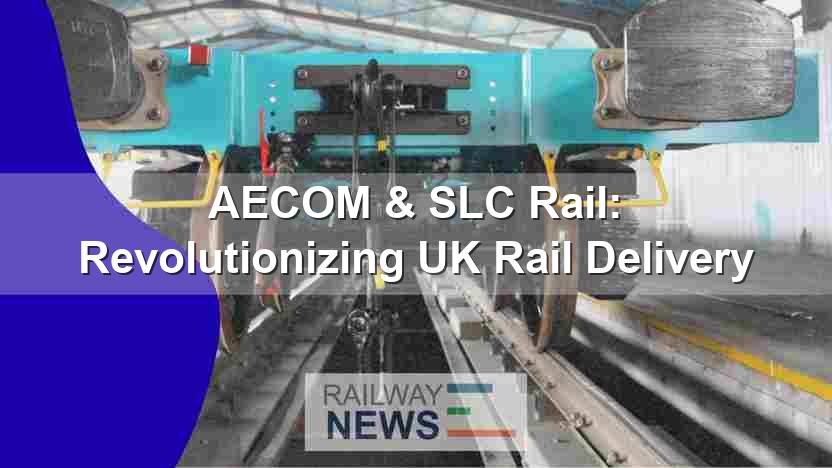
The UK rail industry is undergoing a period of significant transformation, driven by the need for increased capacity, improved efficiency, and enhanced sustainability. This article explores the strategic partnership between AECOM, a global infrastructure consultancy, and SLC Rail, a UK-based SME (Small and Medium-sized Enterprise), focusing on how their collaboration aims to revolutionize rail project delivery in the United Kingdom. The acquisition of a 30% stake in SLC Rail by AECOM signifies a significant move towards a more integrated and efficient approach to rail infrastructure development. This partnership leverages the complementary strengths of both organizations to deliver projects faster, more cost-effectively, and with a greater emphasis on innovation. The analysis will delve into the specific benefits of this collaboration, examining how the combined expertise in engineering, program management, and project initiation contributes to the overall improvement of the UK’s rail network. Further, the discussion will consider the implications of this partnership for the broader rail industry and its potential to serve as a model for future collaborations aimed at accelerating infrastructure development.
Strategic Partnership for Accelerated Rail Delivery
AECOM’s acquisition of a 30% stake in SLC Rail represents a strategic move to enhance its capabilities in the UK rail sector. This partnership combines AECOM’s extensive experience in engineering, program management, and station design with SLC Rail’s expertise in project initiation and development. By integrating these complementary skill sets, the joint venture aims to streamline the project lifecycle, leading to faster delivery times and reduced costs. The combined entity can offer a more detailed and integrated service to clients, reducing the complexities often associated with large-scale rail projects. This approach fosters better collaboration and communication throughout the project phases, minimizing delays and ensuring efficient resource allocation.
Enhanced Project Delivery through Integrated Expertise
The synergy between AECOM and SLC Rail lies in their ability to address the multifaceted challenges inherent in rail infrastructure projects. AECOM’s strength in detailed engineering design and program management complements SLC Rail’s proficiency in project scoping, feasibility studies, and stakeholder engagement. This integrated approach ensures projects are well-defined from the outset, minimizing potential risks and delays. Additionally, the partnership’s focus on innovation promotes the adoption of cutting-edge technologies and best practices, resulting in cost-effective and sustainable solutions. The success of this strategy is demonstrably shown in the ongoing delivery of projects such as the Northumberland Line upgrade and the West Midlands Rail Programme.
Innovation and Technological Advancement in Rail Projects
The partnership between AECOM and SLC Rail isn’t merely focused on cost reduction and speed; it places a strong emphasis on innovation. By combining expertise and resources, the joint venture can explore and implement advanced technologies to improve efficiency and sustainability throughout the project lifecycle. This includes utilizing Building Information Modeling (BIM) for improved design coordination, employing digital twin technology for predictive maintenance, and leveraging data analytics for optimized operations. This commitment to technological advancement contributes to the delivery of more resilient and sustainable rail infrastructure.
Regional Regeneration and Economic Growth
The enhanced capabilities resulting from the AECOM-SLC Rail partnership are expected to contribute significantly to regional regeneration and economic growth. Improved rail connectivity opens up opportunities for businesses, stimulates economic activity, and improves the quality of life for communities across the UK. The successful delivery of projects such as the Northumberland Line demonstrates the positive impact of efficient and well-managed rail infrastructure on regional development. The partnership’s commitment to delivering vital rail schemes efficiently and at pace directly contributes to national infrastructure objectives and enhances overall economic prosperity.
Conclusions
The strategic partnership between AECOM and SLC Rail represents a significant development in the UK rail industry. By combining AECOM’s substantial expertise in engineering, program management, and station design with SLC Rail’s strengths in project initiation and development, the partnership is poised to deliver rail projects more efficiently, cost-effectively, and innovatively. The integration of complementary skills sets allows for streamlined project lifecycles, minimizing delays and ensuring efficient resource allocation. The emphasis on innovation, through the adoption of cutting-edge technologies and best practices, contributes to the delivery of more resilient and sustainable rail infrastructure. The success of current projects, such as the Northumberland Line upgrade and the West Midlands Rail Programme, provides evidence of the effectiveness of this collaborative approach. Moreover, the partnership’s commitment to regional regeneration and economic growth underscores its broader contribution to national infrastructure objectives and overall economic prosperity. This strategic alliance serves as a compelling model for future collaborations in the rail sector, demonstrating the power of integrating diverse expertise to achieve ambitious infrastructure goals while promoting efficiency, innovation, and sustainability. The potential for this model to be replicated in other sectors and other geographical locations should not be overlooked; it signifies a shift towards a more collaborative and integrated approach to large-scale infrastructure development, ultimately benefiting both industry and society.

Railway infrastructure, rolling stock and transport technologies specialist focused on global rail industry developments, high-speed rail systems, signaling technologies and freight transportation. Covering railway investments, public transport modernization, rail operations and international mobility projects across Europe, Asia and North America.
RELATED POSTS

September 5, 2026 4:19 pm
CPK launched formal tender talks with four consortia to design...

September 5, 2026 7:14 pm
HS2 Ltd signed renegotiated civils contracts with EKFB and Align...

September 6, 2026 4:12 am
Alstom delivered the first of 100 new G Class trams...
September 6, 2026 8:17 am
DB InfraGO reopened the Nuremberg-Regensburg line in Bavaria on 31...
September 5, 2026 6:17 pm
Universal Signalling won a deal to install its U-Cross system...
September 6, 2026 12:20 pm
Indian Railways ordered a probe after a fire destroyed 2...