
Alstom, Ukraine Crisis: Sanctions, Ethics & Rail Industry Impact
Alstom, a prominent player in the global rail manufacturing sector, swiftly halts all future business investments and deliveries in Russia due to sanctions imposed on Russia following its invasion of Ukraine, aligning with broader corporate responsibility and ethical compliance amidst geopolitical instability.
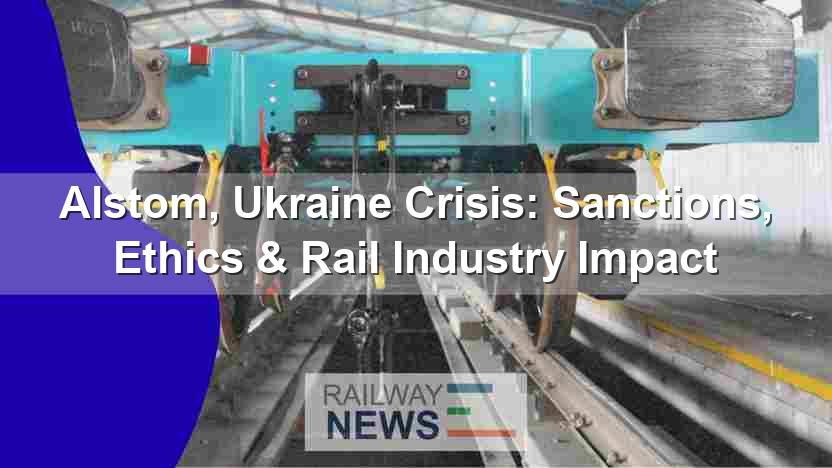
The ongoing conflict in Ukraine has sent ripples throughout the global economy, significantly impacting various sectors, including the railway industry. This article will examine the strategic decisions made by Alstom, a prominent player in the global rail manufacturing and technology sector, in response to the conflict’s multifaceted consequences. We will explore Alstom’s immediate actions regarding its Russian investments and partnerships, the implications for its Ukrainian collaborations, and the broader ramifications for the company’s international strategy. This analysis will focus on the interplay between geopolitical instability, economic sanctions, and corporate social responsibility within the context of a globally integrated rail industry. The complex web of international business relationships and the ethical considerations that arise during times of conflict will also be carefully examined, shedding light on the challenges faced by multinational corporations navigating such turbulent geopolitical landscapes. The analysis will conclude with a discussion of potential future implications for the rail industry and the evolving role of corporate responsibility in a world increasingly marked by geopolitical uncertainty.
Alstom’s Response to the Ukraine Crisis: Halting Russian Operations
In the wake of the Russian invasion of Ukraine, Alstom swiftly announced a complete suspension of all future business investments and deliveries in Russia. This decision aligns with the international sanctions imposed on Russia in response to its aggression. Alstom holds a 20% stake in Transmashholding (TMH), a major Russian manufacturer of locomotives and railway equipment primarily serving the domestic market. While Alstom maintains that its operational links with TMH are not substantial, the company announced a reevaluation of the book value of its TMH holding within its FY 2021/22 closing accounts. This action demonstrates Alstom’s commitment to complying with all applicable laws and sanctions, reflecting a corporate prioritization of ethical conduct and legal compliance in a volatile geopolitical climate.
Impact on Ukrainian Partnerships
The conflict has also significantly impacted Alstom’s collaborations in Ukraine. The company suspended partnership talks with Ukrzaliznytsia (UZ), the Ukrainian national railway operator. Additionally, Alstom halted the supply of locomotives and related services to UZ. This decision highlights the immediate human and operational challenges posed by the conflict, emphasizing the prioritization of employee safety and the operational complexities of maintaining business operations within an active war zone. Alstom publicly expressed its solidarity with UZ, demonstrating a commitment to corporate social responsibility even amidst significant operational disruption. The suspension of projects in Ukraine represents a considerable operational and financial challenge for Alstom, underscoring the widespread impact of the conflict on global business operations.
Navigating Sanctions and Geopolitical Risks
Alstom’s actions illustrate the complexities faced by multinational corporations operating in a globalized world marked by geopolitical instability. Balancing commercial interests with adherence to international sanctions and ethical considerations presents a significant strategic challenge. The decision to halt operations in Russia, despite the financial implications of divestment or reduced revenue streams, reflects a strategic choice prioritizing ethical considerations and compliance with international norms over short-term financial gains. This decision sets a precedent for other multinational corporations operating in high-risk geopolitical environments, demonstrating a potential shift toward prioritizing corporate social responsibility and long-term sustainability even in the face of significant short-term financial impacts.
Strategic Implications and Future Outlook
Alstom’s response to the Ukraine crisis showcases the adaptability and responsiveness required of multinational corporations in navigating a complex and rapidly changing geopolitical environment. The company’s prioritization of employee safety and compliance with international sanctions highlights a commitment to responsible corporate citizenship. However, the halt to operations in both Russia and Ukraine signifies significant financial implications for the company, highlighting the substantial impact of geopolitical instability on global business. The strategic implications extend beyond immediate financial losses; the disruption of supply chains, the potential for reputational damage, and the challenges of maintaining long-term partnerships all underscore the need for enhanced geopolitical risk management within the rail sector. The long-term effects on Alstom’s global strategy and its impact on the broader rail industry remain to be seen, but the events of 2022 highlight the evolving and increasingly important role of ethical considerations and proactive risk mitigation in the development and implementation of successful international business strategies.
Conclusion
Alstom’s decisions regarding its Russian and Ukrainian operations provide a compelling case study in the challenges faced by multinational corporations in navigating geopolitical instability. The immediate suspension of Russian investments and deliveries, coupled with the halting of Ukrainian projects, reveals a complex interplay between commercial interests, ethical considerations, and compliance with international sanctions. The reevaluation of the TMH holding demonstrates a commitment to financial transparency and legal compliance, while the expression of solidarity with UZ highlights a focus on corporate social responsibility. The incident underscores the inherent risks associated with operating in volatile geopolitical regions and the need for robust risk management strategies that incorporate geopolitical factors. The long-term consequences for Alstom and the wider rail industry are yet to fully unfold, but the case highlights a significant shift toward prioritizing ethical considerations and responsible corporate citizenship within the framework of international business operations. The company’s actions serve as a valuable lesson for other multinational corporations operating in high-risk environments, demonstrating the need for proactive risk assessment, flexible strategies, and a commitment to ethical conduct even in the face of significant financial challenges. The future will undoubtedly reveal further implications of this crisis on Alstom’s business operations and strategic decision-making, with potential ramifications for the broader landscape of international railway investment and partnership. Ultimately, Alstom’s actions, while costly in the short-term, may contribute to a more ethically driven and resilient global rail industry in the long-term.

Railway infrastructure, rolling stock and transport technologies specialist focused on global rail industry developments, high-speed rail systems, signaling technologies and freight transportation. Covering railway investments, public transport modernization, rail operations and international mobility projects across Europe, Asia and North America.
RELATED POSTS

September 5, 2026 4:19 pm
CPK launched formal tender talks with four consortia to design...

September 6, 2026 4:12 am
Alstom delivered the first of 100 new G Class trams...
September 5, 2026 7:14 pm
HS2 Ltd signed renegotiated civils contracts with EKFB and Align...
September 6, 2026 8:17 am
DB InfraGO reopened the Nuremberg-Regensburg line in Bavaria on 31...
September 5, 2026 6:17 pm
Universal Signalling won a deal to install its U-Cross system...
September 6, 2026 12:20 pm
Indian Railways ordered a probe after a fire destroyed 2...