
Finland-Russia Rail Halted: Geopolitics & Allegro’s End
The suspension of Allegro services between Helsinki and St. Petersburg by VR Group due to geopolitical sanctions highlights the vulnerability of international rail operations in response to escalating conflicts and economic sanctions.
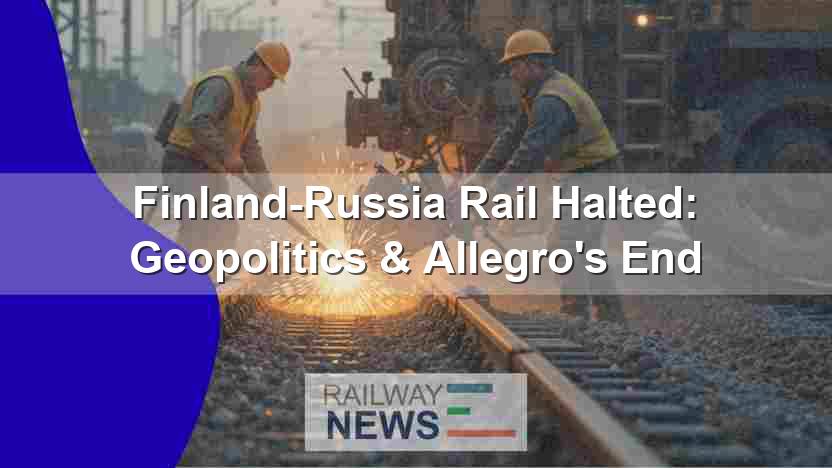
This article examines the suspension of rail services between Finland and Russia by VR Group (VR), the Finnish national railway operator, in response to Russia’s invasion of Ukraine. The decision to halt the Allegro passenger train service between Helsinki and St. Petersburg, along with the cessation of freight wagon traffic by VR Transpoint, highlights the significant geopolitical impact on international rail operations. We will analyze the reasons behind VR’s actions, considering the evolving sanctions imposed on Russia, the safety and security concerns for passengers and employees, and the broader implications for cross-border rail transport. The analysis also explores the wider context of international rail relations, considering previous disruptions like the COVID-19 related suspension of routes, and the ongoing implications for the future of rail connectivity between Europe and Russia. This case study provides valuable insight into the complex interplay of geopolitical events and the practical realities of managing international rail operations under conditions of significant political instability.
The Suspension of Allegro Services
The immediate catalyst for VR Group’s decision was the Russian invasion of Ukraine and the subsequent imposition of international sanctions on Russia. The Allegro service, a high-speed passenger rail link between Helsinki and St. Petersburg, was deemed unsustainable under these circumstances. VR Group’s passenger services senior vice-president, Topi Simola, explained that while initially maintaining operations to ensure safe passage for Finnish citizens returning from Russia, the escalating sanctions made continued operation impossible. This highlights the practical challenges of operating international rail services within a rapidly changing geopolitical landscape. The decision underscores the vulnerability of cross-border rail services to international conflicts and sanctions.
Impact on Freight Operations
Beyond passenger services, VR Transpoint, VR Group’s freight division, also suspended freight wagon traffic from Russia due to the sanctions targeting Russian Railways (RZD). The decision showcases the interconnectedness of passenger and freight rail operations and the ripple effect of sanctions across the transport sector. While return traffic from Finland to Russia continued initially, this demonstrates a logistical and pragmatic approach prioritizing the return of Finnish assets and equipment. However, the longer-term sustainability of any remaining freight operations remains questionable as long as sanctions against RZD persist.
Geopolitical Context and Historical Precedents
The suspension of Allegro services isn’t an isolated incident. Russia previously halted its passenger rail routes to the European Union (EU) in 2020 due to COVID-19 restrictions, impacting routes like the Leo Tolstoy train. This demonstrates the susceptibility of international rail operations to both geopolitical events and public health crises. Comparing these events reveals the different impacts of varied disruptions on international rail services. While the COVID-19 restrictions led to temporary halts, the current situation presents a more complex scenario with significant geopolitical uncertainty and lasting economic consequences that extend beyond simple operational suspensions.
Wider Implications and Future Outlook
The VR Group’s actions have wider implications for the future of cross-border rail transport between Europe and Russia. The indefinite suspension of Allegro and the halt of freight traffic signify a significant disruption to established transport links. The situation necessitates a deeper examination of the resilience of international rail networks to geopolitical instability and the role of sanctions in shaping cross-border rail operations. The uncertainty surrounding the duration of the conflict and the persistence of sanctions makes predicting the future of these routes exceptionally difficult. The acquisition of Arriva Sverige by VR Group, while unrelated to the immediate crisis, demonstrates a diversification strategy that may be increasingly important in a world where geopolitical stability is no longer a given for international transport businesses.
Conclusions
The suspension of rail services between Finland and Russia by VR Group serves as a stark example of how geopolitical events can dramatically impact international transportation networks. The decision to halt the Allegro passenger train service and freight operations reflects the practical consequences of sanctions imposed on Russia following its invasion of Ukraine. The analysis reveals the significant interconnectedness of passenger and freight operations, demonstrating how disruptions in one area can cascade throughout the entire system. The comparison with previous disruptions, such as the COVID-19-related suspension of routes, highlights the vulnerability of international rail networks to both geopolitical and public health crises, underscoring the need for greater operational flexibility and strategic planning. Looking forward, the indefinite suspension of these services highlights the potentially long-lasting impacts of this geopolitical event on cross-border rail connections, forcing a re-evaluation of operational strategies and risk management within the rail industry. The future of rail transport between Finland and Russia remains uncertain, contingent on the resolution of the conflict and the lifting of sanctions. This case study offers valuable insights into the complexities of managing international rail operations in a volatile world, emphasizing the need for robust risk assessment and adaptive strategies to ensure the resilience of cross-border rail networks.

Railway infrastructure, rolling stock and transport technologies specialist focused on global rail industry developments, high-speed rail systems, signaling technologies and freight transportation. Covering railway investments, public transport modernization, rail operations and international mobility projects across Europe, Asia and North America.
RELATED POSTS

September 5, 2026 4:19 pm
CPK launched formal tender talks with four consortia to design...

September 5, 2026 7:14 pm
HS2 Ltd signed renegotiated civils contracts with EKFB and Align...

September 6, 2026 4:12 am
Alstom delivered the first of 100 new G Class trams...
September 6, 2026 8:17 am
DB InfraGO reopened the Nuremberg-Regensburg line in Bavaria on 31...
September 5, 2026 6:17 pm
Universal Signalling won a deal to install its U-Cross system...
September 6, 2026 12:20 pm
Indian Railways ordered a probe after a fire destroyed 2...