
Uinta Basin Railway: Transforming Utah’s Economy
The Uinta Basin Railway Project is a significant rail line initiative aimed at improving transportation access in northeastern Utah, addressing a previous lack of adequate infrastructure that hindered economic growth through efficient freight services for diverse industries.
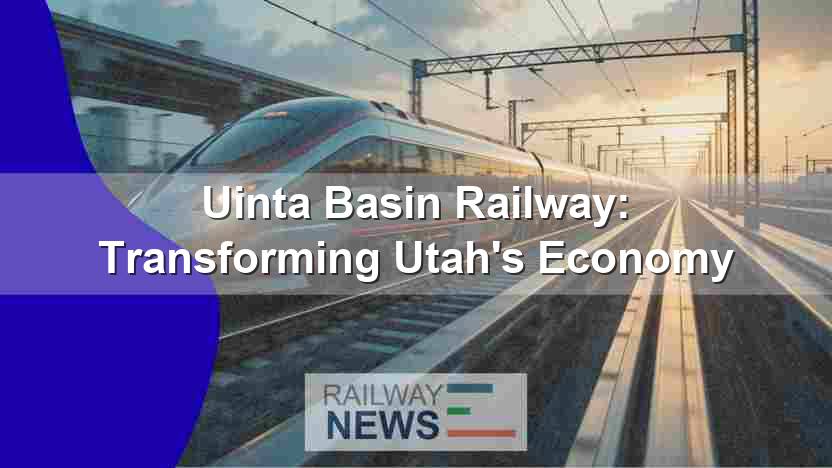
This article explores the intricacies of the Uinta Basin Railway (UBR) project, a significant undertaking in northeastern Utah. The project, spearheaded by Rio Grande Pacific Corporation (RGPC), aims to establish a crucial common-carrier freight rail line servicing the Uinta Basin’s diverse industries. The selection of AECOM for final design, a Skanska-W.W. Clyde Joint Venture (JV) for construction (excluding tunnels), and Obayashi Corporation for tunnel design and construction represents a culmination of a rigorous selection process involving numerous prominent firms. This article will explore the project’s background, the rationale behind the contractor selections, the technical challenges involved, and the broader economic implications for the region. The project’s approval by the US Surface Transportation Board (STB) underscores its significance in meeting the transportation needs of a region rich in agricultural, mineral, energy, and manufacturing resources. This detailed analysis will highlight the strategic planning and execution involved in bringing this vital infrastructure project to fruition.
Project Background and Stakeholders
The Uinta Basin Railway, a 136.7km line, addresses a critical transportation gap in northeastern Utah. Initiated by the Seven County Infrastructure Coalition in 2018, with the Ute Indian Tribe of the Uintah and Ouray Reservation as an equity partner, the project aims to provide efficient rail access for the region’s burgeoning industries. The previous lack of adequate rail infrastructure significantly hampered economic growth, relying heavily on overburdened road networks. The UBR promises to alleviate this bottleneck, enabling cost-effective transportation of goods. The involvement of the Ute Indian Tribe demonstrates a commitment to sustainable development and community partnership.
Contractor Selection: A Strategic Approach
The selection of AECOM for final design, the Skanska-W.W. Clyde JV for track construction, and Obayashi Corporation for tunneling highlights RGPC’s commitment to procuring expertise aligned with the project’s specific needs. AECOM’s extensive experience in railway design assures adherence to stringent safety and efficiency standards. Similarly, the Skanska-W.W. Clyde JV, renowned for its expertise in large-scale infrastructure projects, guarantees robust and timely construction of the mainline track. Obayashi, a global leader in tunneling, brings critical expertise to the complex task of tunnel construction, ensuring adherence to exacting safety and geological considerations. This strategic selection process, involving a competitive bid from numerous prominent firms, ensures optimal project delivery.
Technical Challenges and Solutions
Constructing a railway in a geographically challenging region like the Uinta Basin presents unique technical challenges. The terrain necessitates careful consideration of gradients, curves, and potential geological instability. The inclusion of tunnels further complicates the project, requiring advanced engineering solutions and specialized construction techniques. AECOM’s design phase will incorporate mitigating strategies for these challenges, while the Skanska-W.W. Clyde JV and Obayashi Corporation will execute the construction phase based on these plans, ensuring adherence to strict safety protocols and environmental considerations. The project’s success hinges upon the successful management of these complexities.
Economic and Social Impact
The Uinta Basin Railway will have a transformative impact on the regional economy. By providing efficient rail access, the project will reduce transportation costs for various industries, enhancing their competitiveness. This will stimulate economic growth, create jobs, and foster further development within the region. Additionally, the project’s positive environmental impact, by diverting freight from roads to rail, cannot be overlooked. This improved infrastructure will not only boost economic activity but also contribute to a more sustainable transportation system.
Conclusions
The Uinta Basin Railway project represents a significant investment in infrastructure development, promising substantial economic and social benefits for northeastern Utah. The meticulous selection of AECOM, the Skanska-W.W. Clyde JV, and Obayashi Corporation ensures that the project will be executed by industry leaders with a proven track record. The project’s success will hinge on careful management of the inherent technical challenges, effective collaboration among stakeholders, and adherence to strict safety and environmental protocols. The project’s approval by the STB, coupled with the involvement of the Ute Indian Tribe, underscores the importance of this infrastructure investment to the region’s long-term economic prosperity and social well-being. The UBR stands as a prime example of strategic planning and collaboration resulting in a much-needed transportation solution with far-reaching positive consequences for the community and the regional economy. Its completion will mark a significant step towards a more efficient, cost-effective, and environmentally friendly transportation network in the Uinta Basin, paving the way for sustained and sustainable economic growth.

Railway infrastructure, rolling stock and transport technologies specialist focused on global rail industry developments, high-speed rail systems, signaling technologies and freight transportation. Covering railway investments, public transport modernization, rail operations and international mobility projects across Europe, Asia and North America.
RELATED POSTS

September 5, 2026 4:19 pm
CPK launched formal tender talks with four consortia to design...

September 5, 2026 7:14 pm
HS2 Ltd signed renegotiated civils contracts with EKFB and Align...

September 6, 2026 4:12 am
Alstom delivered the first of 100 new G Class trams...
September 6, 2026 8:17 am
DB InfraGO reopened the Nuremberg-Regensburg line in Bavaria on 31...
September 5, 2026 6:17 pm
Universal Signalling won a deal to install its U-Cross system...
September 6, 2026 12:20 pm
Indian Railways ordered a probe after a fire destroyed 2...