
Queensland Rail Revolution: $3.5B Investment, 5000+ Jobs
Queensland’s Rail Revolution involves a $3.5 billion investment in infrastructure projects across multiple lines, aiming to modernize the state’s transportation network, create over 5,000 jobs, and enhance connectivity and efficiency for Queenslanders, with technological advancements like ETCS fitment and ATO contributing significantly to safety and efficiency improvements.
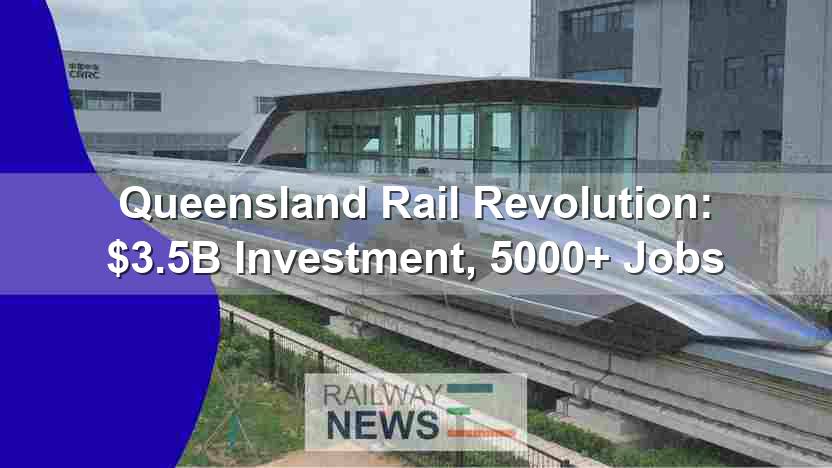
Queensland’s Rail Revolution: A $3.5 Billion Investment in Infrastructure and Job Creation
The Queensland Government’s commitment to a substantial overhaul of its rail network marks a significant turning point in the state’s transportation infrastructure. This ambitious undertaking, dubbed the “rail revolution,” involves a staggering $3.5 billion investment across multiple projects designed to modernize existing lines, expand capacity, and improve passenger services. The plan, spanning the fiscal years 2022-23 to 2025-26, promises not only enhanced connectivity and efficiency for Queenslanders but also a considerable boost to the state’s economy through the creation of over 5,000 jobs. This article will delve into the key projects encompassed within this initiative, analyzing their individual contributions to the overall goal and highlighting the multifaceted impacts on the region’s economic and social landscape. The scale and scope of this investment warrant a detailed examination of its strategic implications for Queensland’s future transportation needs and its economic development strategy. We will explore the technological advancements being implemented, the economic benefits, and the long-term vision driving this transformative initiative.
Major Project Funding and Technological Advancements
The $3.5 billion allocation is distributed across several strategically important projects. A significant portion, approximately $924 million (out of a total project cost of $1.22 billion), is dedicated to Gold Coast Light Rail Stage 3 (GCLR3), extending the line from Broadbeach South to Burleigh Heads. This project, co-funded by the Australian Government and the City of Gold Coast, highlights a commitment to expanding light rail networks in high-growth areas. Additionally, substantial funding is allocated to the Logan and Gold Coast Faster Rail upgrade ($876 million towards a $2.6 billion project) and the Beerburrum to Nambour Rail Upgrade Stage 1 ($489 million towards a $550.8 million project), both crucial for improving regional connectivity and reducing travel times. The modernization efforts also include investments in new generation rollingstock ($265 million and $261 million for separate projects totaling $526 million), incorporating European Train Control System (ETCS) fitment and Automatic Train Operations (ATO) to enhance safety and efficiency. The incorporation of ETCS signifies a move towards a more advanced and interoperable rail signaling system, while ATO will automate train operations, improving punctuality and optimizing resource allocation.
Investment in Rolling Stock and Manufacturing
The Queensland Government’s commitment extends beyond infrastructure upgrades to include substantial investments in rolling stock and the local manufacturing sector. A notable $212 million is allocated to the Queensland Train Manufacturing Programme ($600 million total project cost), a key component of the broader $7.1 billion initiative to boost the state’s manufacturing capabilities. This investment not only provides modern, high-capacity trains for the network but also secures thousands of jobs within the manufacturing sector and its associated supply chains. The focus on domestic manufacturing signifies a strategic decision to stimulate economic growth within Queensland, ensuring local skill development and fostering a resilient rail industry.
Station Upgrades and Future Planning
The investment package also encompasses crucial upgrades to existing infrastructure, including $92.5 million for the relocation of Loganlea train station and a $30 million investment in park-and-ride facilities at the same location. These improvements aim to enhance passenger accessibility, reduce congestion, and support increased ridership. Looking towards the future, the allocation of $4.8 million towards the planning of a rail extension from Beerwah to Maroochydore demonstrates a commitment to long-term infrastructure development, anticipating future population growth and transport demands. These smaller, but equally vital projects, complement the larger initiatives to create a more holistic and integrated rail system.
Economic and Social Impacts and Conclusion
The Queensland Government’s $3.5 billion rail investment represents a bold and forward-thinking approach to modernizing the state’s transportation infrastructure. The project’s scope is impressive, encompassing everything from significant track upgrades and rolling stock modernization to the development of new light rail lines and crucial improvements to existing stations. The anticipated creation of over 5,000 jobs highlights a direct economic impact, stimulating various sectors ranging from construction and manufacturing to engineering and maintenance. Moreover, the modernization efforts, such as the implementation of ETCS and ATO, will enhance safety and operational efficiency, leading to improved passenger experience and reduced journey times. The commitment to domestic manufacturing through the Queensland Train Manufacturing Programme is a strategic move to stimulate economic growth within the state, fostering skilled employment and ensuring a robust local rail industry. The long-term vision is clear: to create a more efficient, reliable, and sustainable rail network that caters to the growing needs of Queensland’s population while simultaneously boosting the state’s economy and fostering a skilled workforce. The success of this “rail revolution” will be measured not only by the completion of these individual projects but by their collective contribution to a more integrated, modern, and efficient transportation system for Queensland, ensuring economic growth and improved quality of life for its citizens.

Railway infrastructure, rolling stock and transport technologies specialist focused on global rail industry developments, high-speed rail systems, signaling technologies and freight transportation. Covering railway investments, public transport modernization, rail operations and international mobility projects across Europe, Asia and North America.
RELATED POSTS

September 5, 2026 4:19 pm
CPK launched formal tender talks with four consortia to design...

September 6, 2026 4:12 am
Alstom delivered the first of 100 new G Class trams...

September 5, 2026 7:14 pm
HS2 Ltd signed renegotiated civils contracts with EKFB and Align...
September 6, 2026 8:17 am
DB InfraGO reopened the Nuremberg-Regensburg line in Bavaria on 31...
September 6, 2026 12:20 pm
Indian Railways ordered a probe after a fire destroyed 2...
September 5, 2026 6:17 pm
Universal Signalling won a deal to install its U-Cross system...