
CAF’s Global Rail Success: UAE Deal & H2 Trains
CAF’s substantial contracts in the UAE and Saudi Arabia represent significant milestones that showcase the company’s strategic success in modernizing rail infrastructure globally, emphasizing technological advancements like hydrogen-powered trains and expanding its global reach to meet diverse market demands for efficient and sustainable transportation solutions.
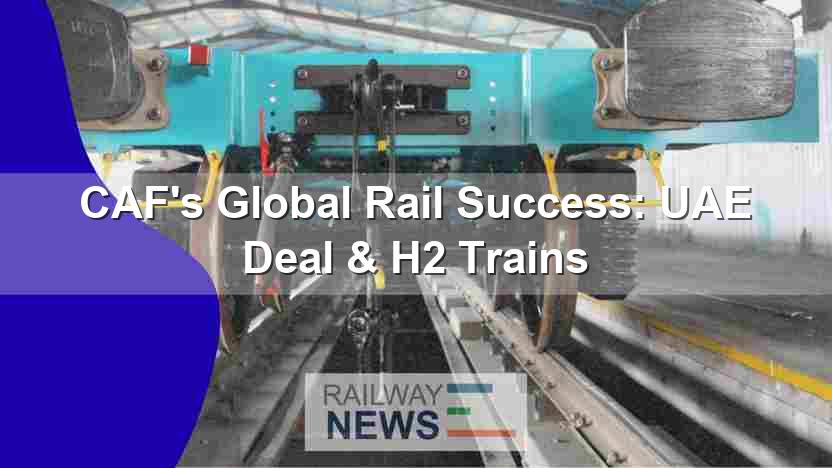
The global railway industry is experiencing a period of significant growth and modernization, driven by increasing passenger demand, the need for efficient freight transportation, and a global push towards sustainable infrastructure development. This article explores the recent strategic successes of Construcciones y Auxiliar de Ferrocarriles (CAF), a prominent player in the rail sector, focusing on a substantial contract awarded for the supply of passenger trains to Etihad Rail in the United Arab Emirates (UAE) and other key projects highlighting CAF’s expanding global reach and commitment to technological advancement within the rail industry. The analysis will delve into the implications of these contracts for CAF’s future growth, the UAE’s railway development, and broader trends shaping the future of rail transportation. We will also examine the technological advancements being pursued by CAF, significantly in hydrogen-powered train technology, demonstrating its commitment to sustainable and innovative solutions.
A Major Contract in the UAE
CAF’s recent €250 million contract with Etihad Rail, the UAE’s national railway operator, marks a significant milestone for both companies. The contract encompasses the delivery of push-pull passenger trains, representing a substantial investment in the UAE’s expanding railway infrastructure. This project underscores the growing importance of rail transportation in the region, reflecting a shift towards more efficient and sustainable modes of transport to support economic growth and connect major population centers. Etihad Rail’s role in both the construction and operation of the national rail network positions them as a key player in the country’s infrastructure development, and this collaboration with CAF indicates a commitment to high-quality rolling stock to meet the evolving needs of the UAE’s passenger transportation sector. The contract also strengthens CAF’s position within the Gulf Cooperation Council (GCC), potentially paving the way for future projects in the region, aligning with their stated strategy of participating in regional infrastructure development initiatives.
Expanding Global Footprint and Service Contracts
Beyond the UAE contract, CAF’s recent success includes a $260 million service contract with Saudi Arabia Railway (SAR). This agreement demonstrates CAF’s expanding capabilities beyond manufacturing to encompass detailed train fleet maintenance, technical support, and associated services. This diversification into service contracts provides a stable revenue stream and strengthens CAF’s long-term relationship with key railway operators, fostering trust and securing future collaborations. The diversification strategy reduces reliance solely on new equipment sales, offering enhanced resilience within fluctuating market conditions.
Technological Innovation: Hydrogen-Powered Trains
CAF’s commitment to innovation is evident in its participation in the FCH2Rail (Fuel Cell Hybrid Power Pack for Rail Applications) project. The development of a hydrogen-powered demonstrator train showcases CAF’s proactive approach to sustainable transportation solutions. This aligns with global efforts to reduce the environmental impact of railway operations and demonstrates a commitment to future-proofing railway technologies. Collaborating with partners such as DLR (German Aerospace Center), Toyota, Renfe (Spanish national railway company), Adif (Spanish railway infrastructure manager), CNH2, IP, FAIVELEY StemmannTechnik further strengthens their technical expertise and ensures the project benefits from a diverse range of industry experience. Successful implementation of this technology could revolutionize railway operations, reducing carbon emissions and establishing a new benchmark for environmentally responsible rail transport.
Light Rail Vehicle Supply in Germany
CAF’s selection to supply light rail vehicles (LRVs) to Stadtwerke Bonn Verkehrs (SWBV) and Elektrische Bahnen der Stadt Bonn in Germany further exemplifies their global reach and ability to cater to diverse market needs. This contract demonstrates CAF’s competitiveness in supplying rolling stock suitable for various rail systems and underscores their versatility in adapting their products to specific operational requirements. This success reinforces CAF’s position as a significant player in the European light rail market. The diversity of CAF’s projects – from high-speed passenger trains to LRVs – highlights its capacity to successfully compete in varied segments of the rail industry.
Conclusions
CAF’s recent string of successes, including the substantial contract with Etihad Rail, the service agreement with SAR, and the development of hydrogen-powered train technology, positions the company as a leading global player in the railway industry. These achievements demonstrate CAF’s capacity to secure major contracts, provide detailed services, and push the boundaries of railway technology. The company’s strategic focus on expanding its global footprint, diversifying its service offerings, and investing in sustainable technologies indicates a commitment to long-term growth and leadership within the evolving rail sector. The successful completion of these projects will not only strengthen CAF’s market position but also contribute significantly to the development of modern, efficient, and sustainable railway infrastructure worldwide. The UAE contract, in particular, signifies a significant investment in the region’s transportation future and highlights the growing importance of rail transport as a key component of economic growth and sustainable development. The hydrogen-powered train initiative signifies a commitment to addressing environmental concerns and leading the way in the adoption of cleaner rail technologies. Ultimately, CAF’s continued success will be pivotal in shaping the future of railway transportation, promoting both economic development and environmental responsibility.

Railway infrastructure, rolling stock and transport technologies specialist focused on global rail industry developments, high-speed rail systems, signaling technologies and freight transportation. Covering railway investments, public transport modernization, rail operations and international mobility projects across Europe, Asia and North America.
RELATED POSTS

September 5, 2026 4:19 pm
CPK launched formal tender talks with four consortia to design...
September 6, 2026 4:12 am
Alstom delivered the first of 100 new G Class trams...

September 5, 2026 7:14 pm
HS2 Ltd signed renegotiated civils contracts with EKFB and Align...
September 6, 2026 8:17 am
DB InfraGO reopened the Nuremberg-Regensburg line in Bavaria on 31...
September 6, 2026 12:20 pm
Indian Railways ordered a probe after a fire destroyed 2...
September 5, 2026 6:17 pm
Universal Signalling won a deal to install its U-Cross system...