
London Underground Upgrade: Piccadilly Line’s Signal Revolution
Modernizing the London Underground’s Piccadilly Line involves upgrading its signaling system to accommodate new 24TS passenger trains, ensuring compatibility with existing infrastructure while minimizing disruption for passengers.
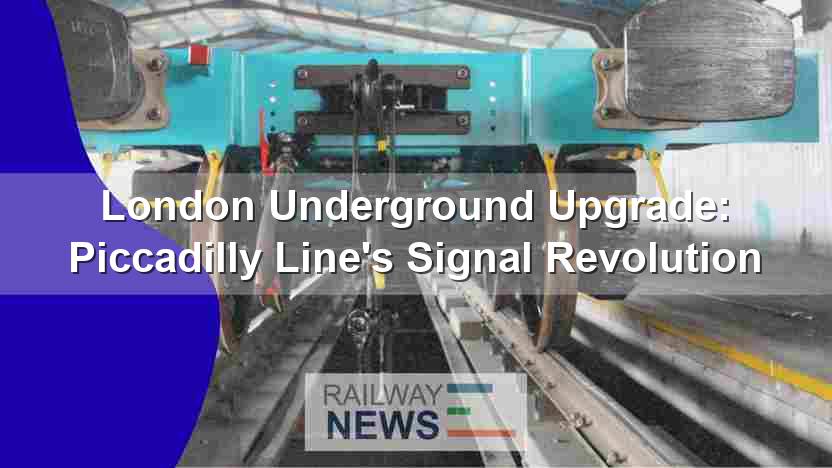
This article examines the crucial role of signaling system upgrades in enhancing the efficiency and reliability of the London Underground, specifically focusing on Costain’s design contract for the Piccadilly line. The Piccadilly line, a deep-level tube line serving north and west London, is undergoing a significant modernization effort to accommodate a new fleet of 24TS passenger trains (24-car Tube Stock) scheduled for introduction in 2025. This modernization necessitates a detailed upgrade of the existing signaling infrastructure to ensure compatibility with both the current and new rolling stock. This project highlights the complexities involved in upgrading legacy systems within a densely populated urban environment and the importance of meticulous planning, design, and execution to minimize disruption and maximize operational improvements. The process, undertaken by Costain in collaboration with Transport for London (TfL), involves extensive surveys, advanced technologies, and a commitment to ensuring passenger safety and satisfaction. The case study of this Piccadilly Line upgrade will serve as an example of the challenges and solutions inherent in modernizing aging railway infrastructure.
Signal System Compatibility and Integration
The core challenge lies in integrating the new 24TS trains with the existing signaling system between Heathrow Airport and Baron’s Court. This requires a thorough understanding of the current signaling technology, its limitations, and its compatibility with the advanced communication and control systems of the new rolling stock. Costain’s work encompasses not only the design of new signaling components but also the careful adaptation of existing infrastructure to seamlessly accommodate the new trains. This involves detailed analysis of train control protocols, communication interfaces, and safety systems to ensure interoperability and avoid conflicts. The successful integration of the new signaling system is paramount for maintaining the safe and efficient operation of the Piccadilly line during and after the upgrade.
Extensive Site Surveys and Data Acquisition
Before any design work can commence, detailed site surveys are essential. Costain’s contract includes conducting nearly 200 individual surveys of existing signals. These surveys cover a wide range of aspects, including ecological and environmental impact assessments, ground condition and contamination analysis, structural integrity checks of existing infrastructure, line level and track clearance evaluations, and detailed mapping of buried utilities (services). This meticulous data collection process is critical for informing the design, ensuring accurate modeling of the existing infrastructure, and minimizing potential unforeseen issues during the construction phase. The use of automated tools and standardized processes further enhances the accuracy and efficiency of this crucial step.
Design and Technical Assurance
Based on the detailed survey data, Costain will develop the detailed design for the upgraded signaling system. This includes the specification of new signaling equipment, the design of cable routes, and the planning of the installation process. The design process will leverage advanced modeling and simulation techniques to ensure optimal performance and reliability. Moreover, Costain will provide crucial technical assurance services throughout the construction phase, working closely with TfL and the construction partners to ensure that the project remains on schedule and within budget while adhering to the highest safety standards. This proactive approach minimizes the risks associated with complex infrastructure projects.
Project Outcomes and Future Implications
The successful completion of this project will significantly improve the Piccadilly line’s operational efficiency. The upgraded signaling system will allow for more frequent and faster train services, leading to enhanced passenger capacity and reduced journey times. The improved reliability of the system will result in fewer delays and disruptions, increasing passenger satisfaction and overall network resilience. This project serves as a model for future upgrades on other London Underground lines and railway networks globally, demonstrating the importance of a phased approach to modernization, thorough planning, and robust technical assurance. The use of automated tools and standardized processes emphasizes a shift towards more efficient and cost-effective methods in railway infrastructure projects. Finally, the emphasis on passenger experience highlights the increasing importance of prioritizing user needs in railway modernization strategies.
Conclusions
Costain’s contract to upgrade the Piccadilly line’s signaling system represents a significant step towards modernizing the London Underground. The project’s scope encompasses the complexities of integrating new rolling stock with existing infrastructure, necessitating extensive surveys, detailed design, and rigorous technical assurance. The meticulous site surveys, encompassing ecological, environmental, and structural assessments, underscore the importance of thorough planning. The application of automated tools and standardized processes highlights the adoption of modern techniques for enhanced efficiency and accuracy. The project’s ultimate success will not only improve the operational efficiency and reliability of the Piccadilly line, offering more frequent and faster services, but also serve as a blueprint for future upgrades across the London Underground and other railway systems worldwide. The focus on passenger experience and the collaboration between Costain and TfL demonstrate a commitment to delivering a modernized and improved passenger experience. The successful completion of this project will be a significant achievement in railway infrastructure modernization, proving the effectiveness of a detailed and collaborative approach to upgrading legacy systems.

Railway infrastructure, rolling stock and transport technologies specialist focused on global rail industry developments, high-speed rail systems, signaling technologies and freight transportation. Covering railway investments, public transport modernization, rail operations and international mobility projects across Europe, Asia and North America.
RELATED POSTS

September 5, 2026 4:19 pm
CPK launched formal tender talks with four consortia to design...

September 5, 2026 7:14 pm
HS2 Ltd signed renegotiated civils contracts with EKFB and Align...

September 6, 2026 4:12 am
Alstom delivered the first of 100 new G Class trams...
September 6, 2026 8:17 am
DB InfraGO reopened the Nuremberg-Regensburg line in Bavaria on 31...
September 5, 2026 6:17 pm
Universal Signalling won a deal to install its U-Cross system...
September 6, 2026 12:20 pm
Indian Railways ordered a probe after a fire destroyed 2...